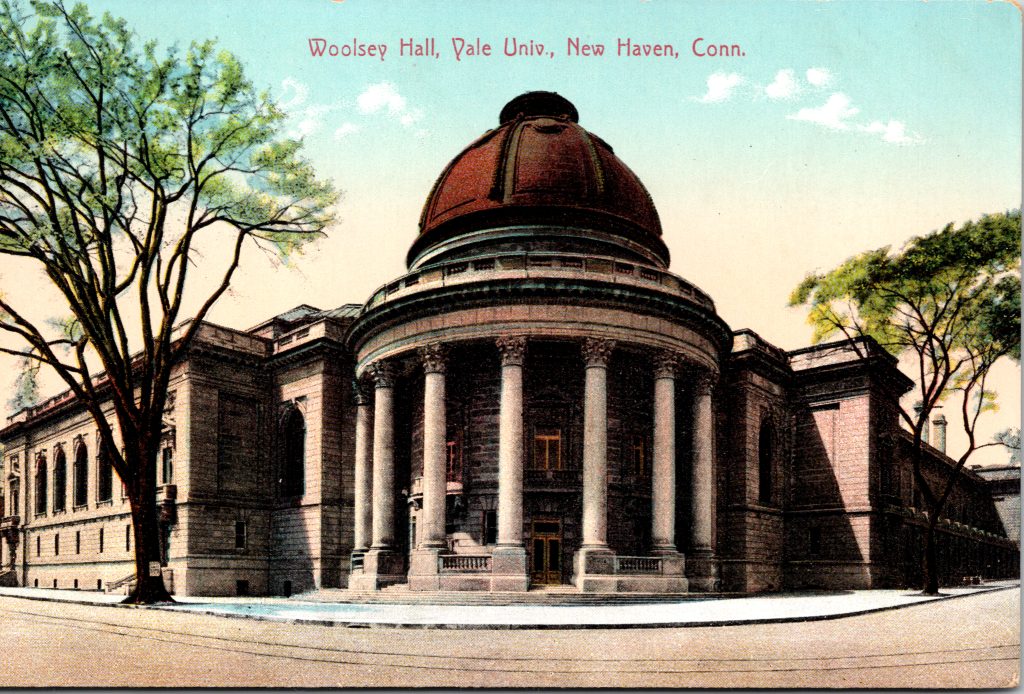
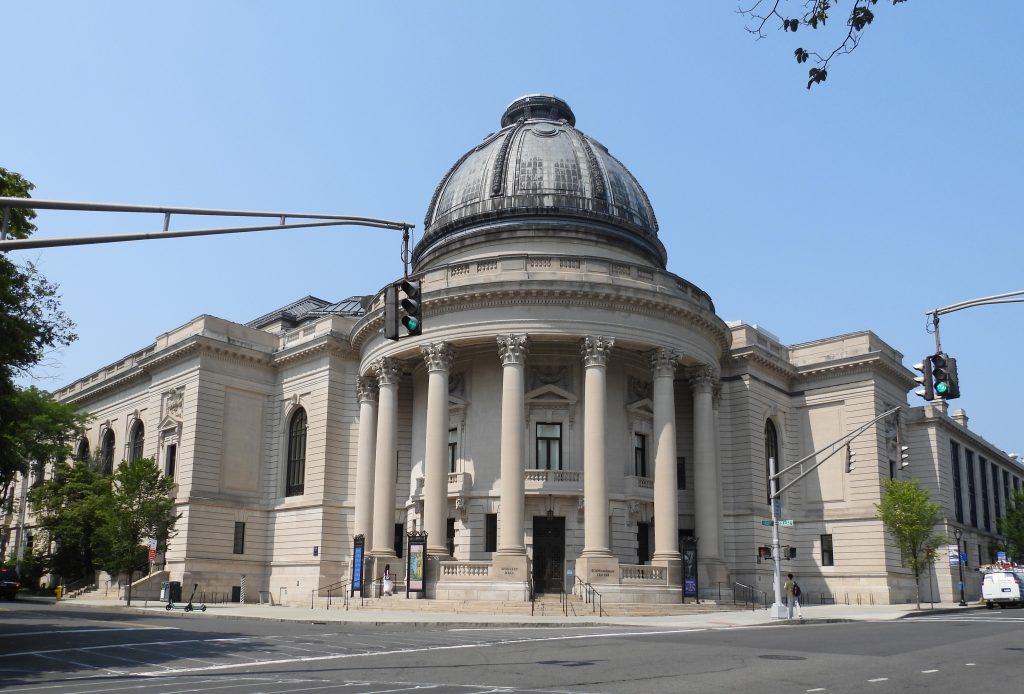
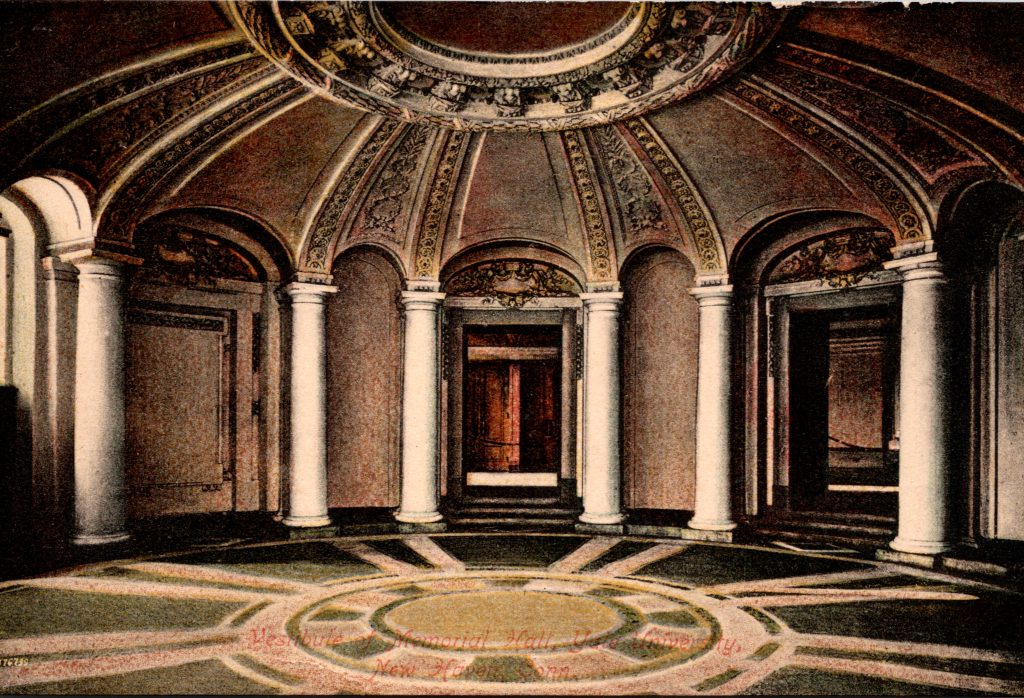
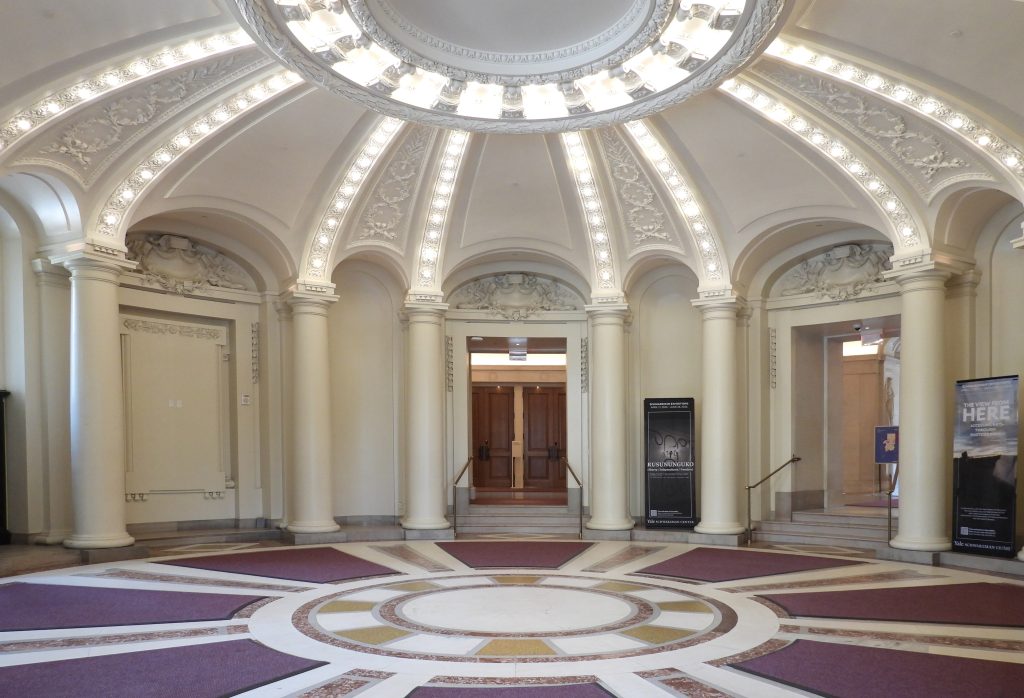
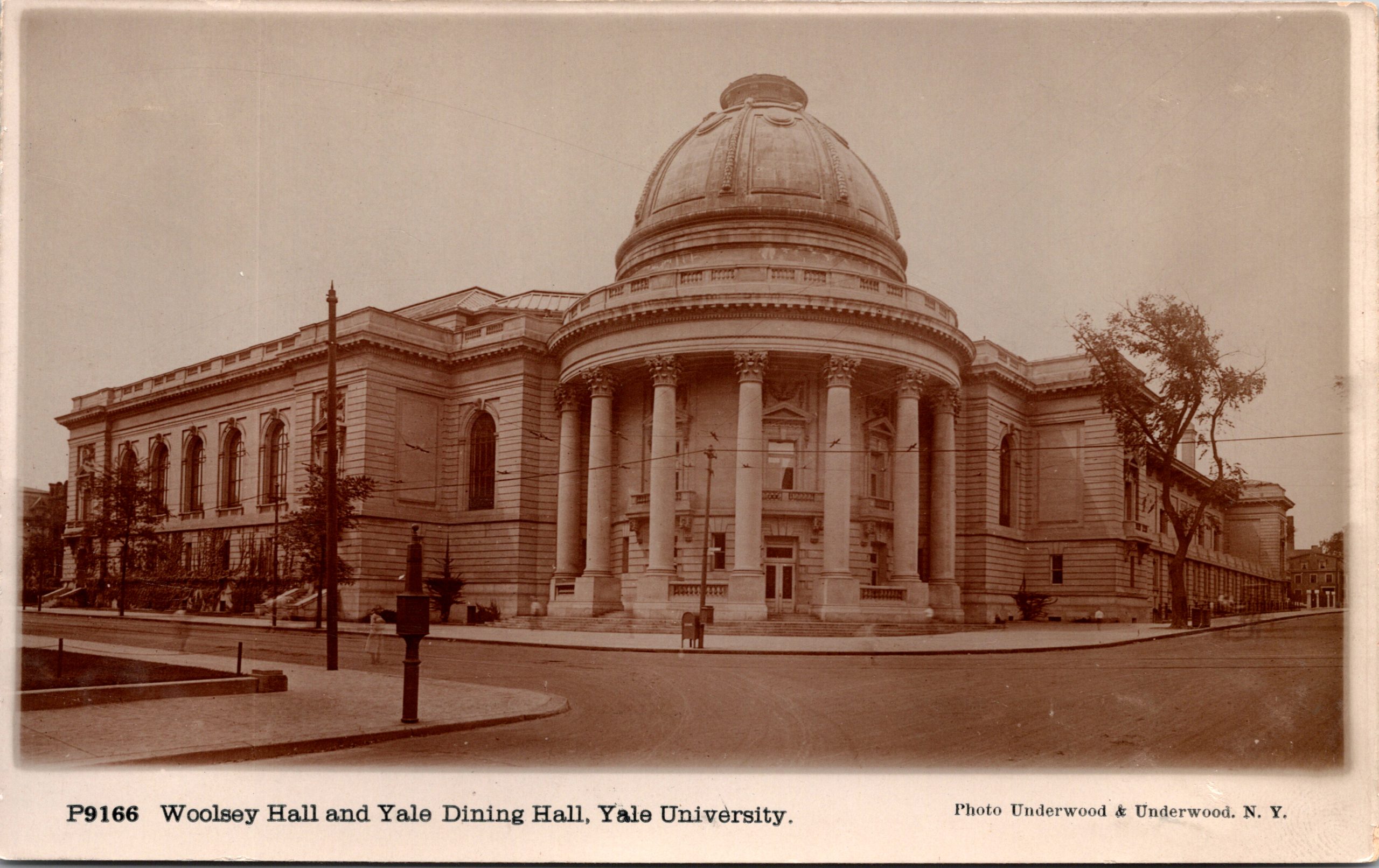
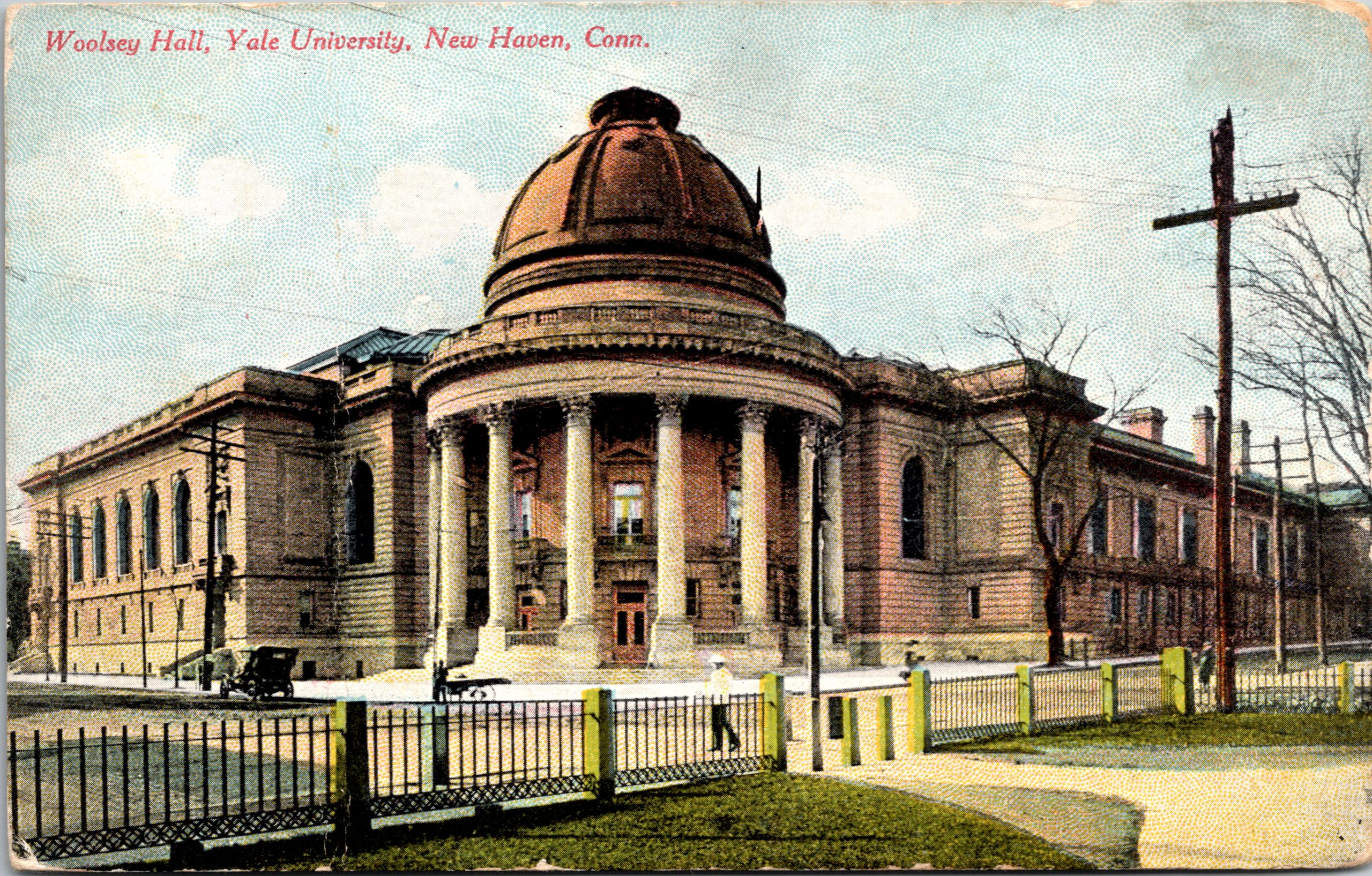
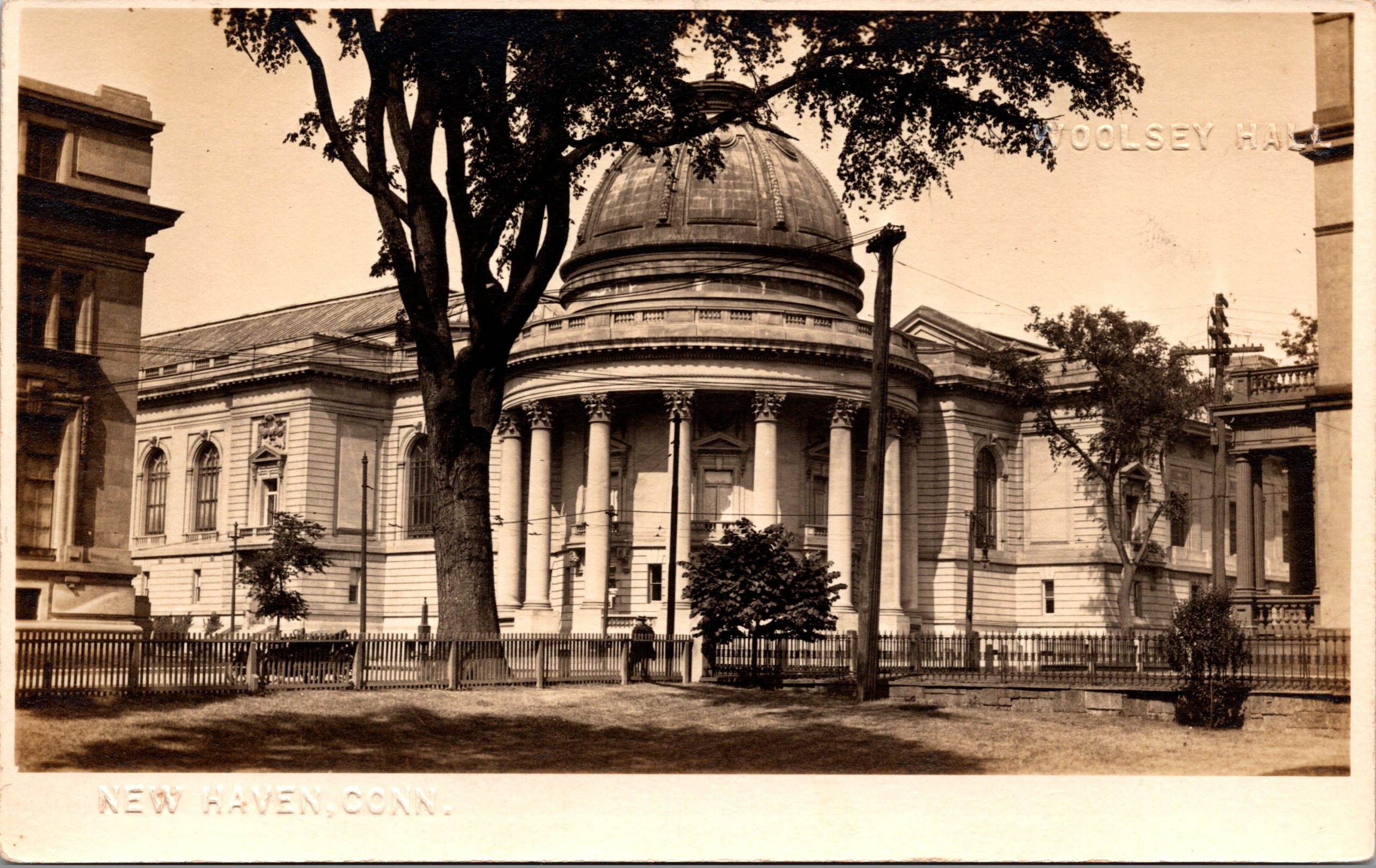
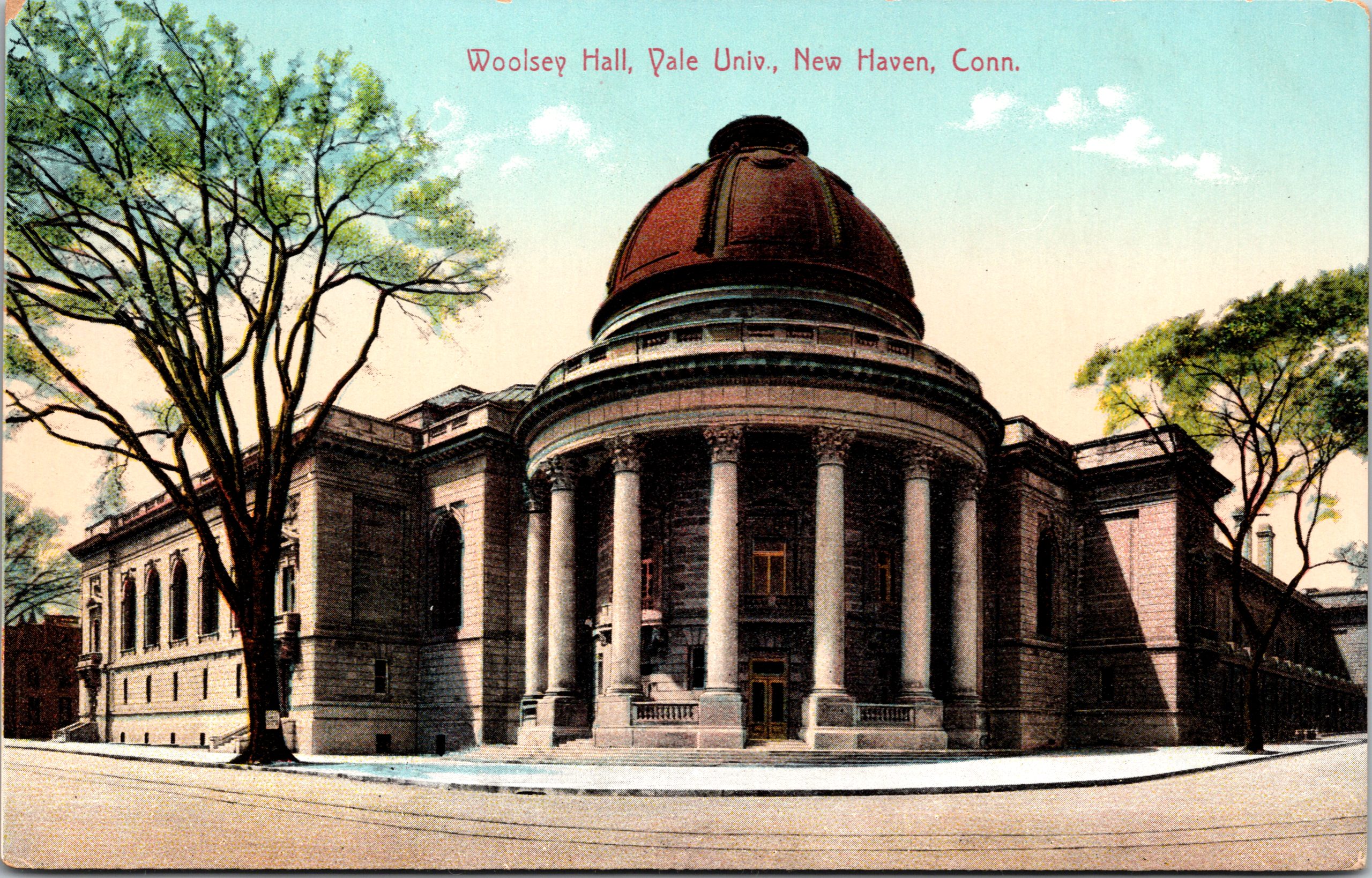
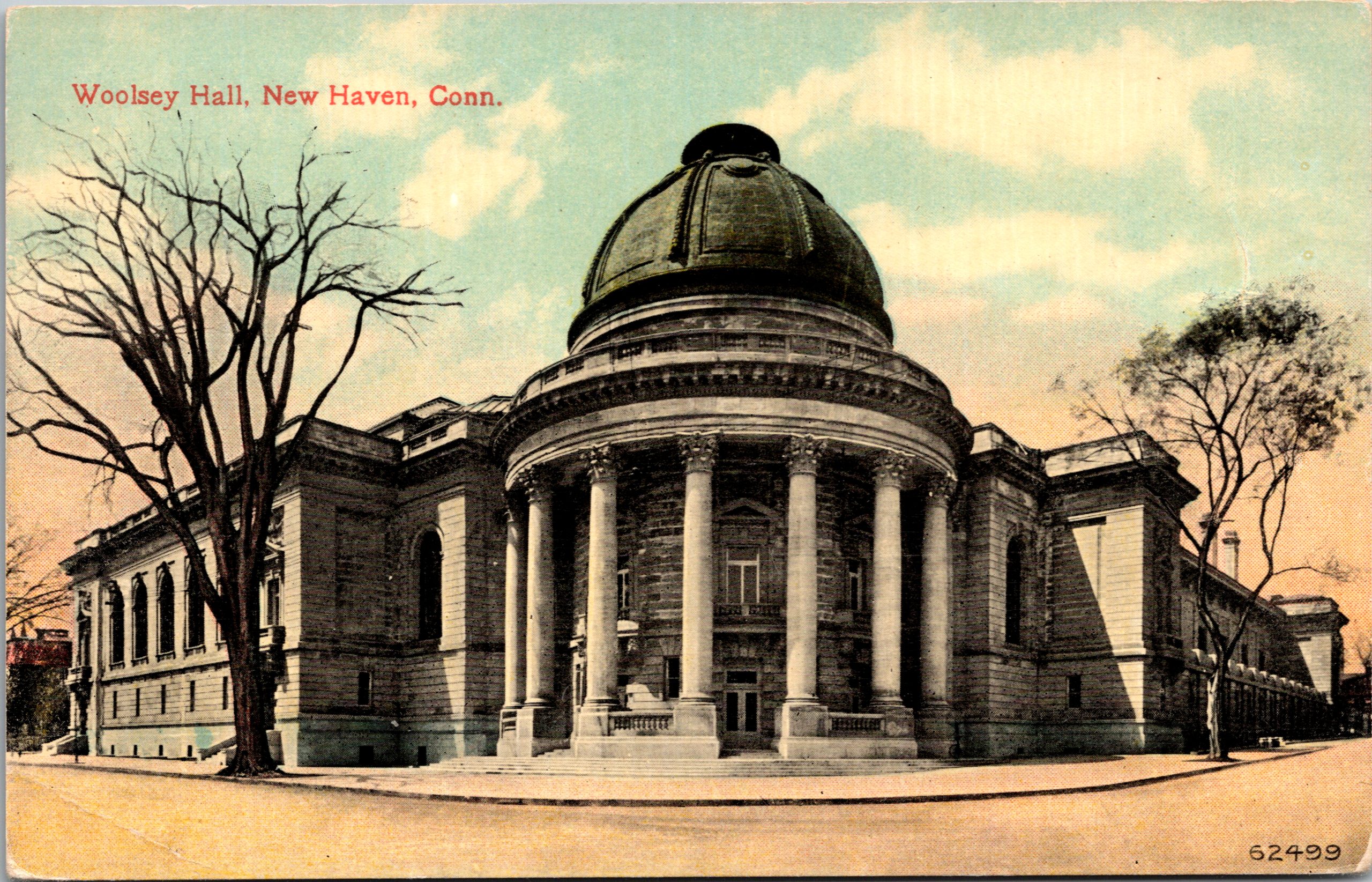
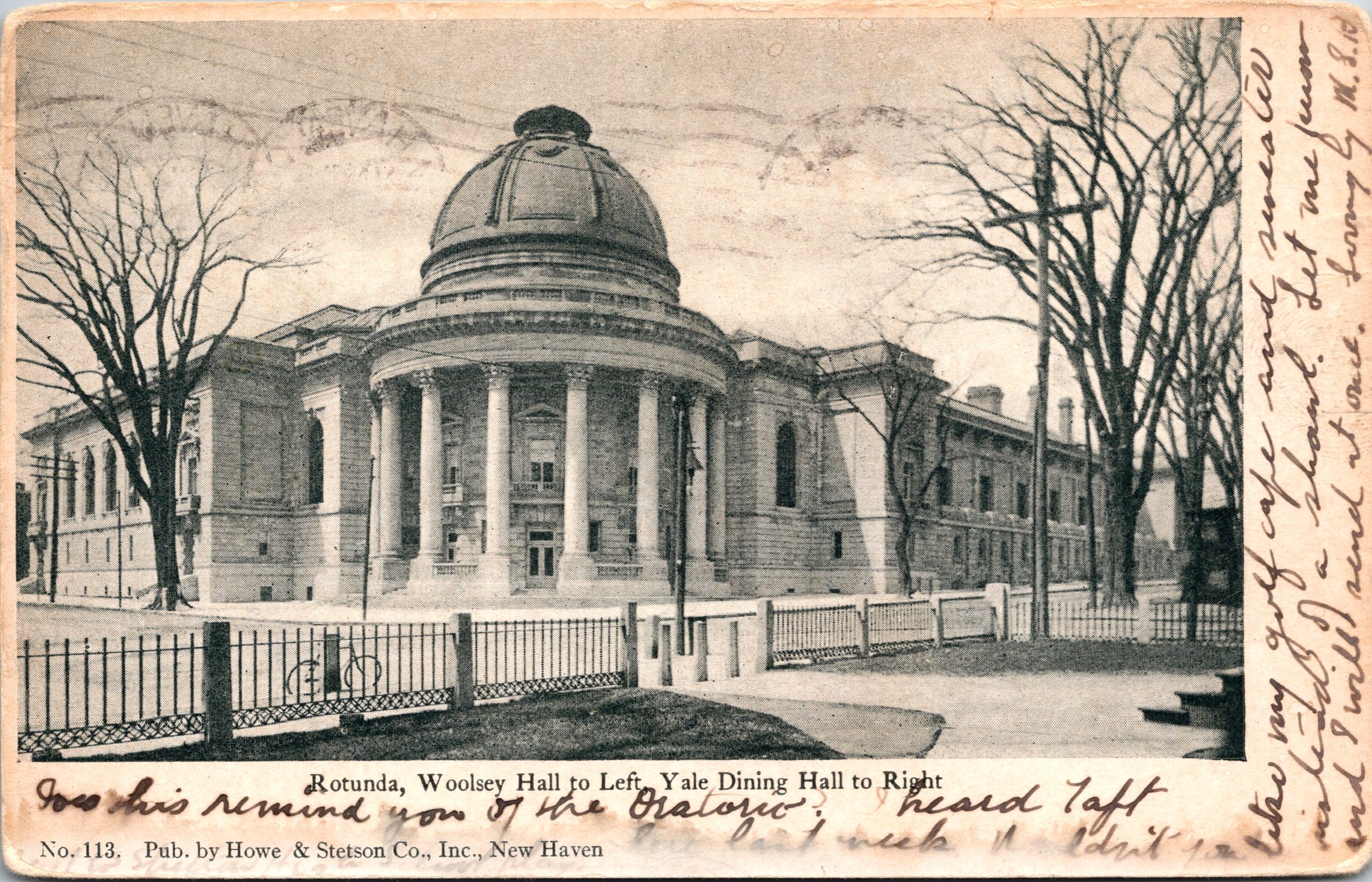
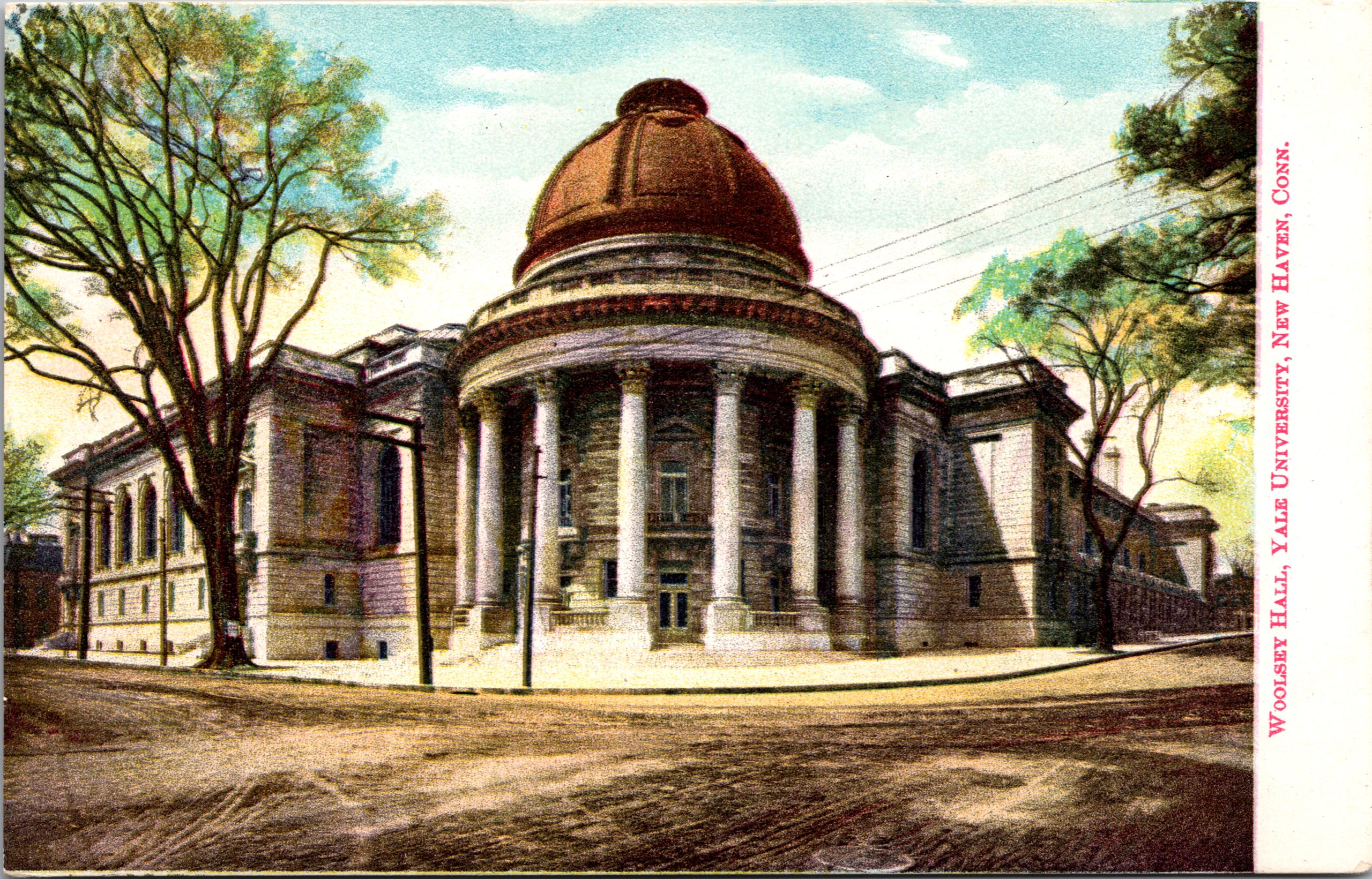
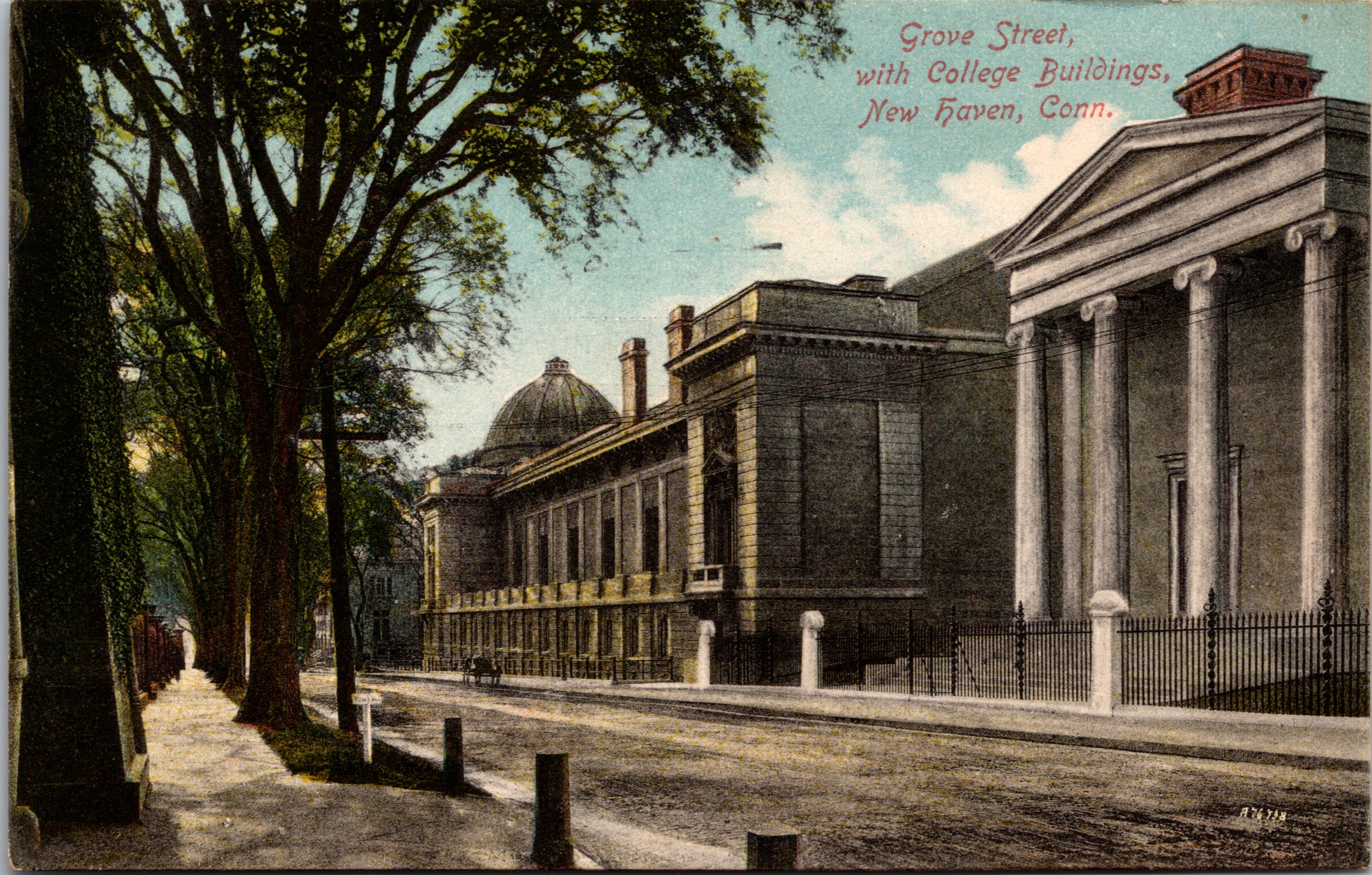
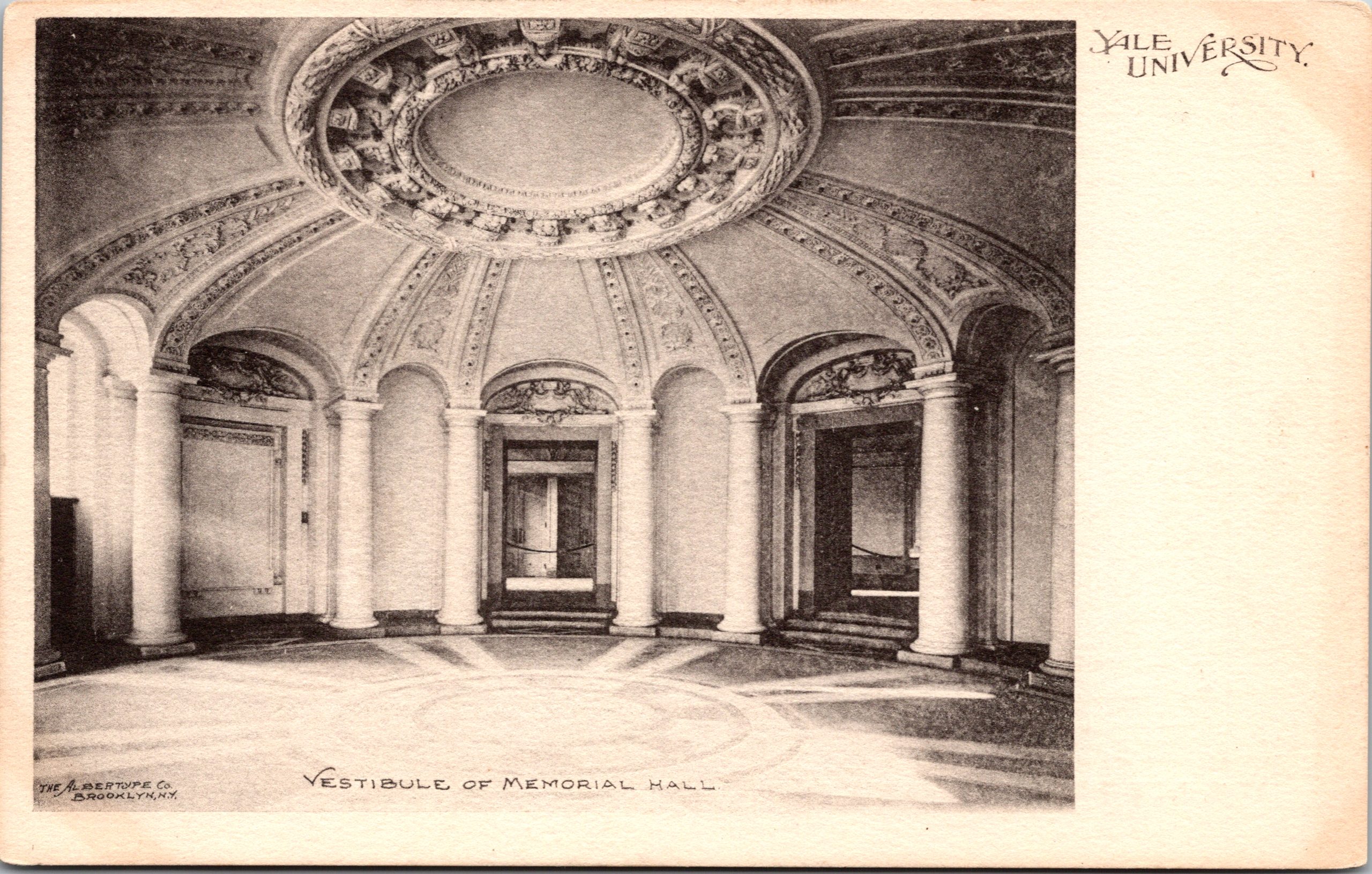
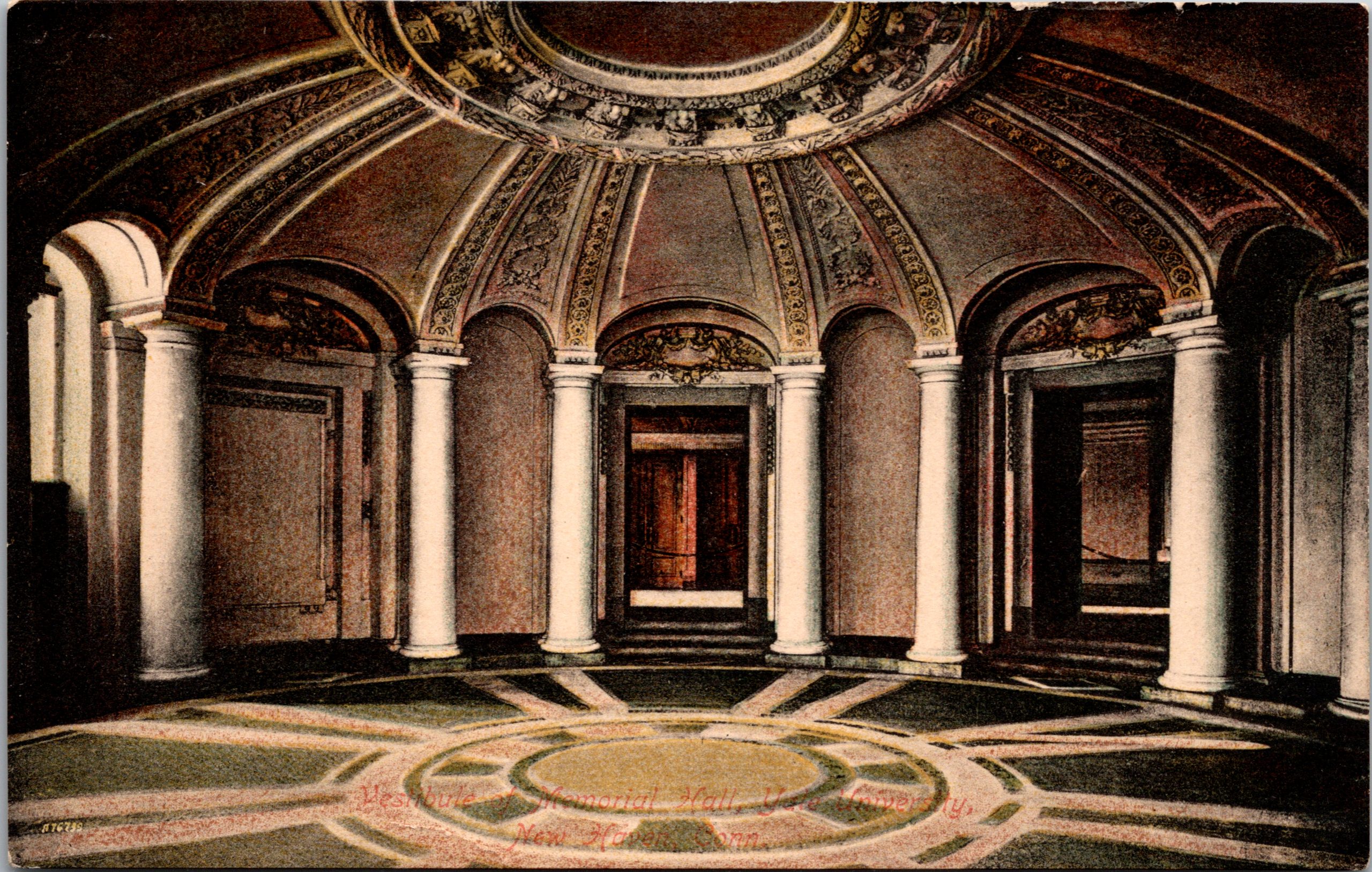
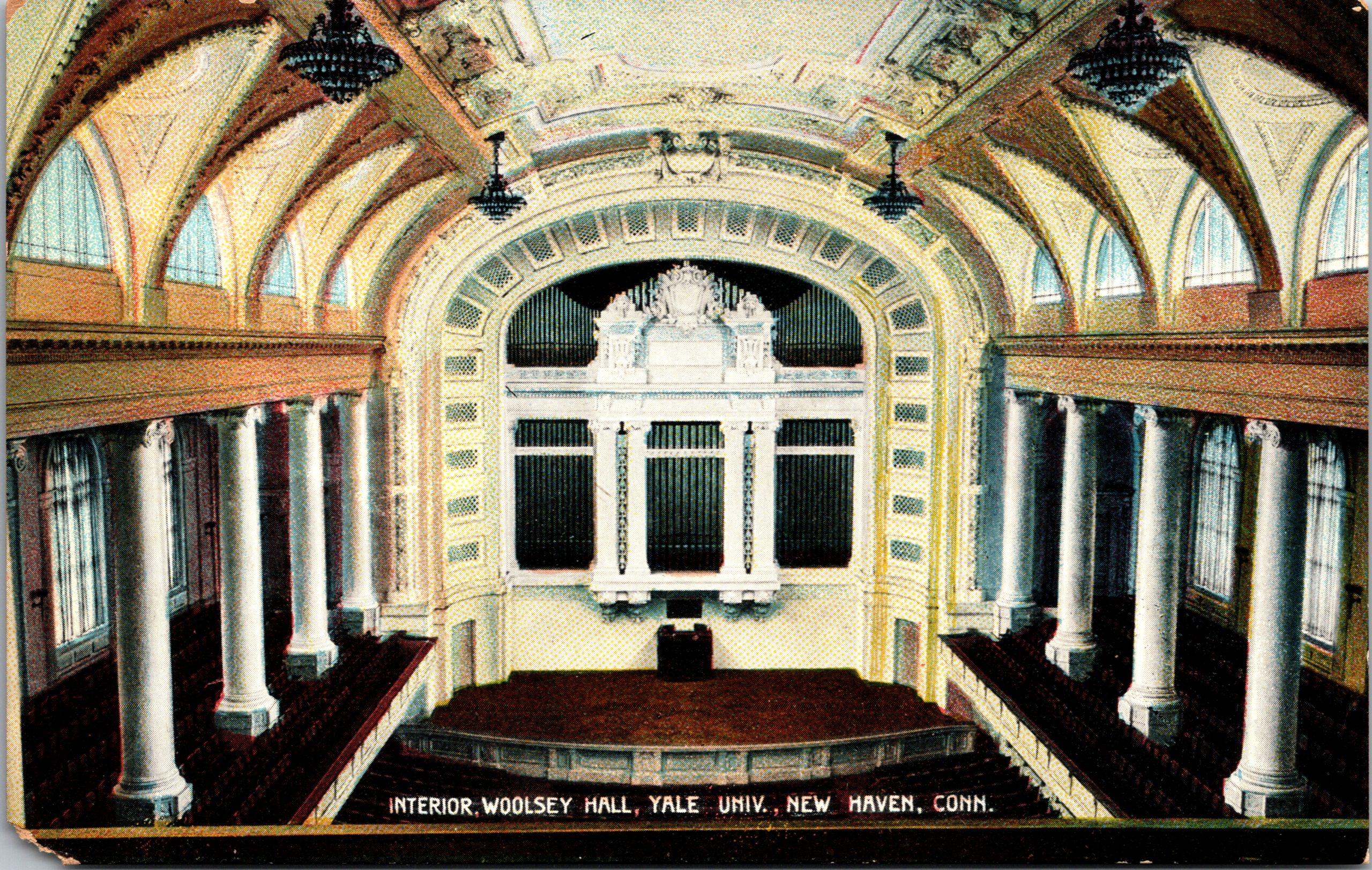
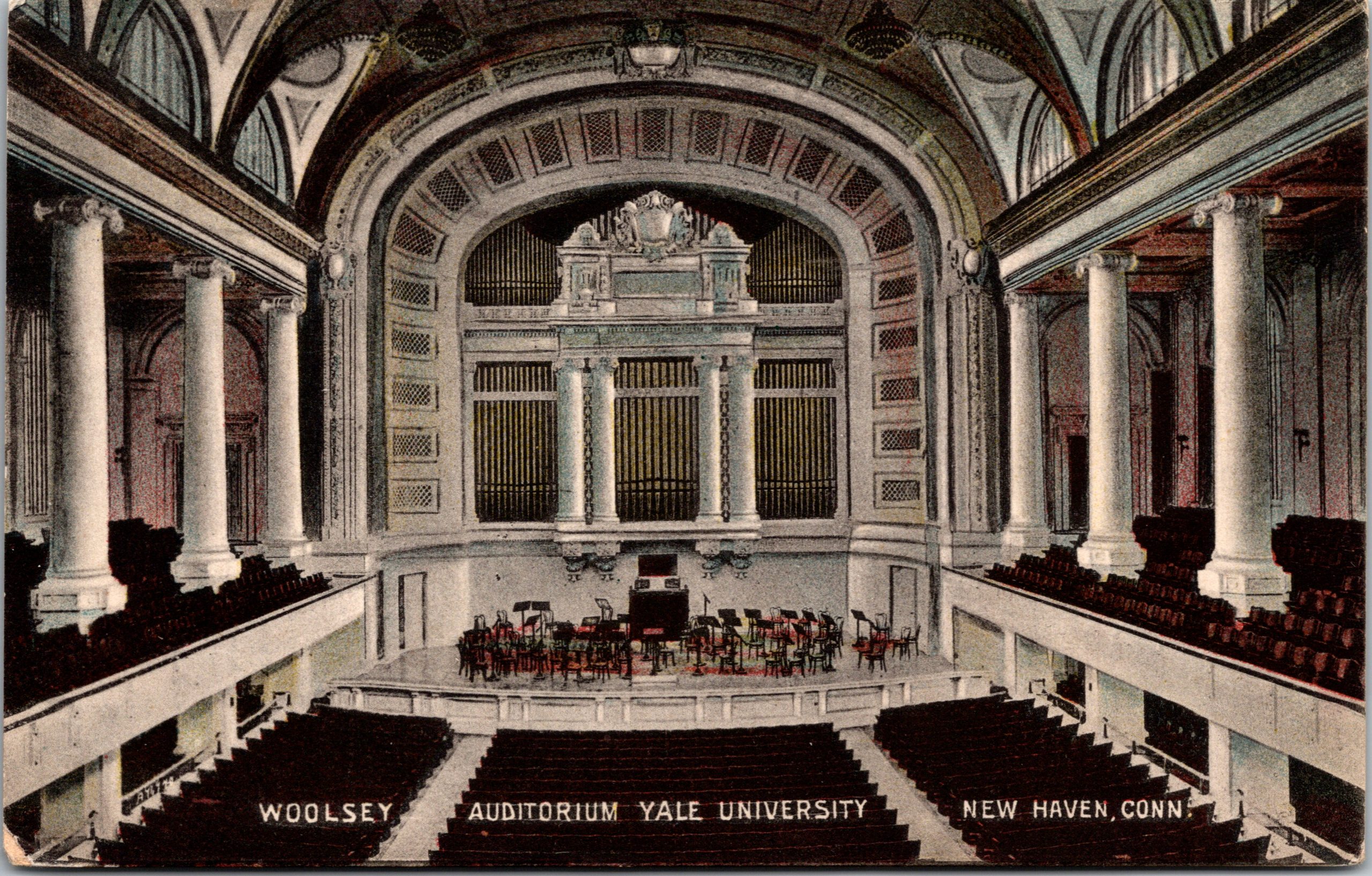
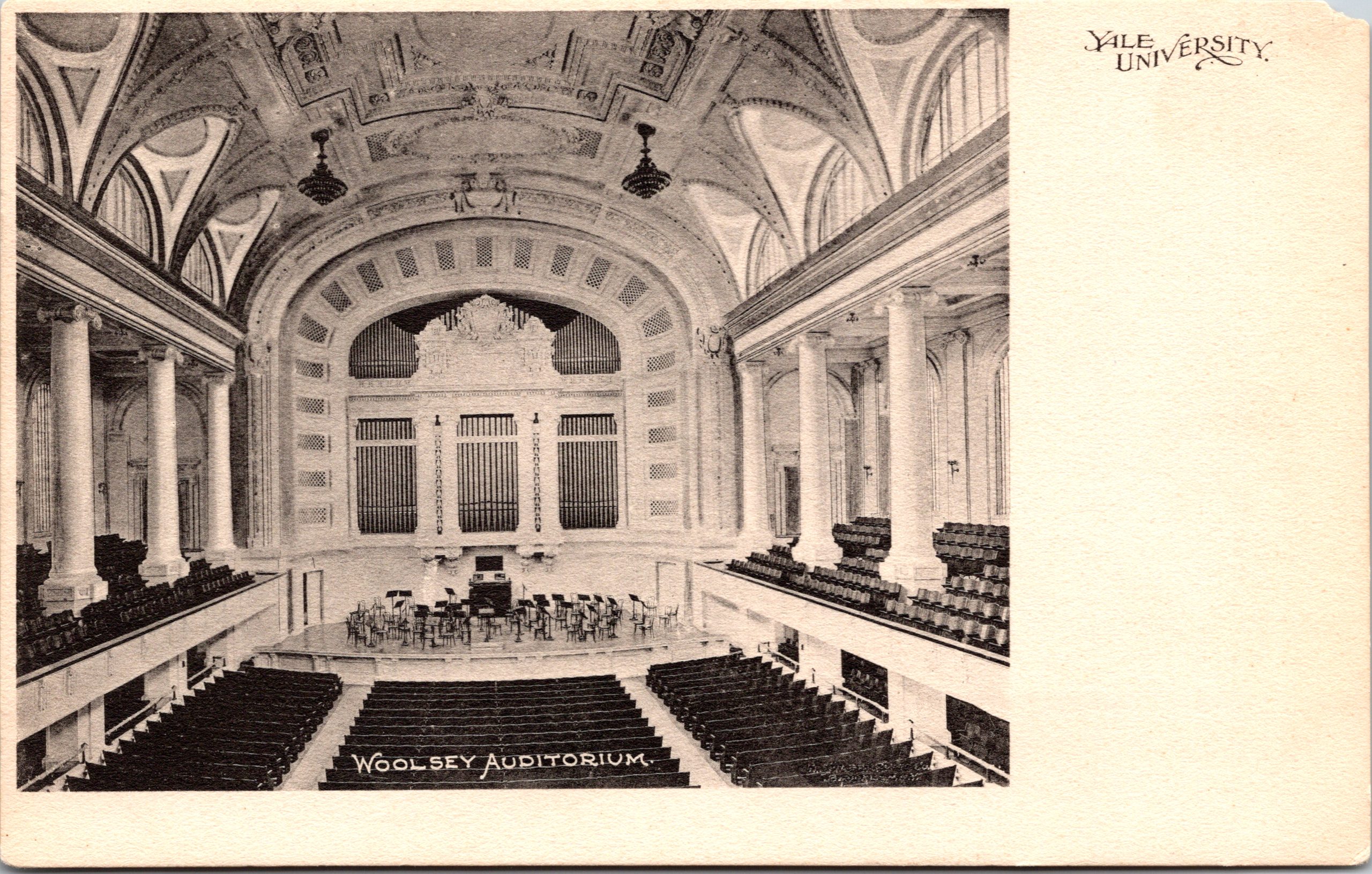
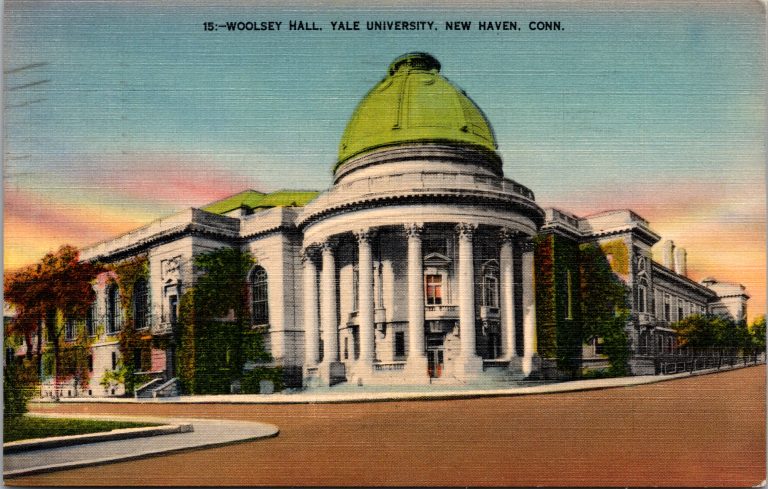
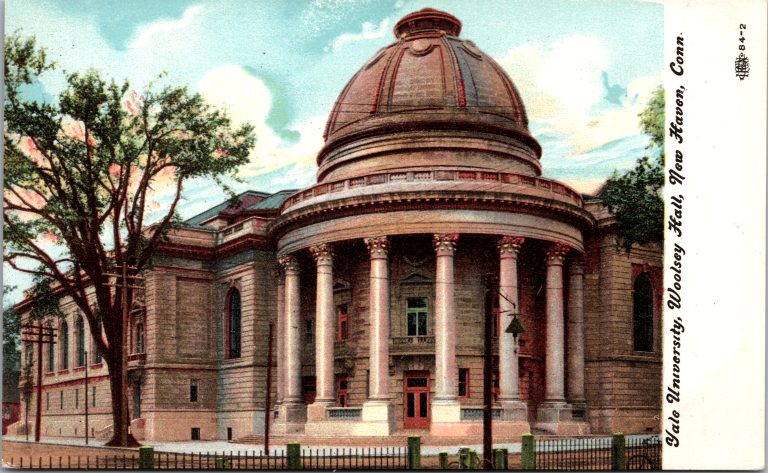
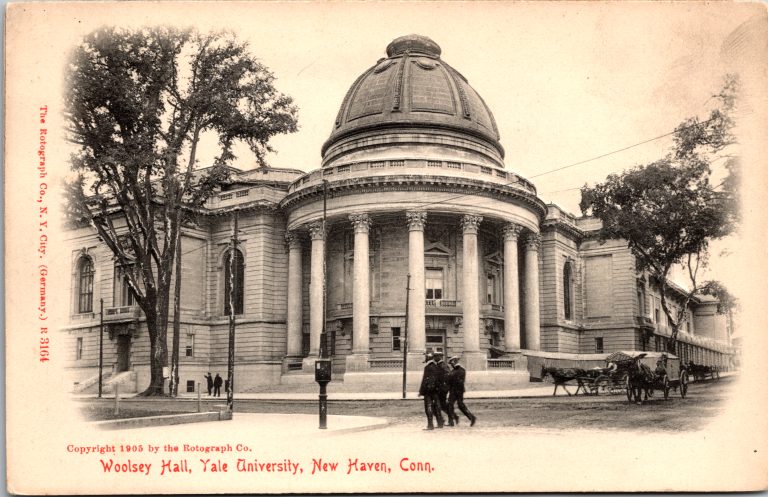
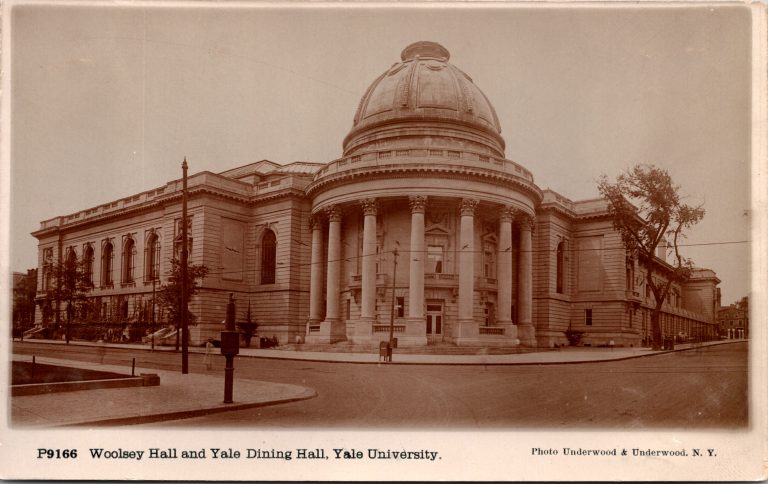
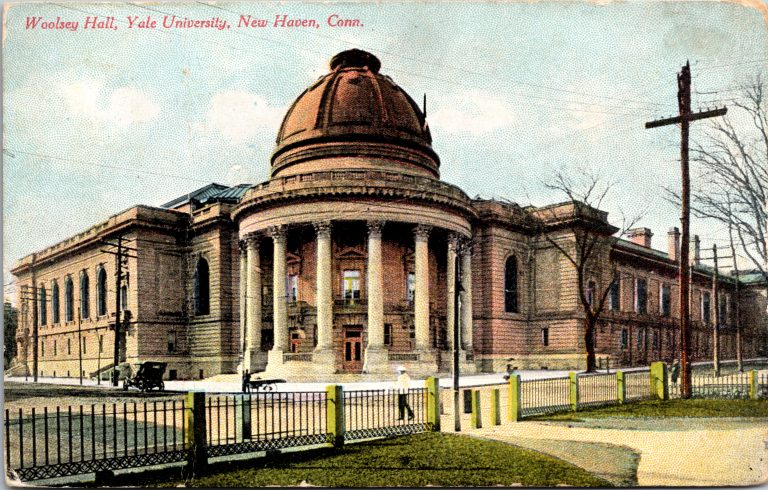
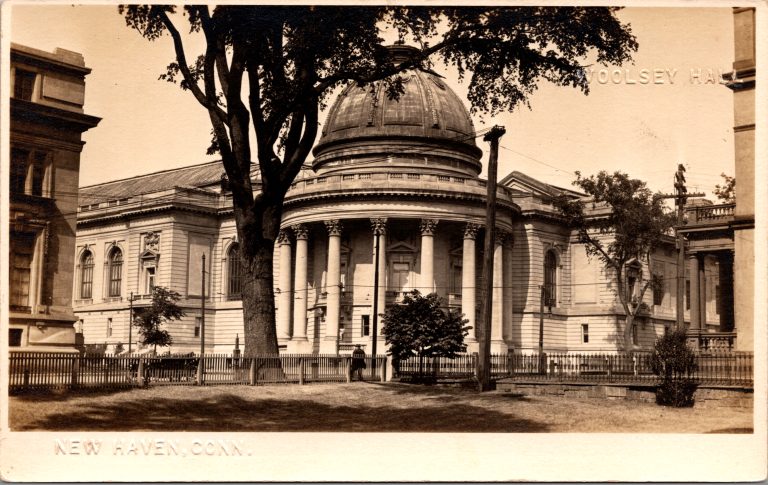
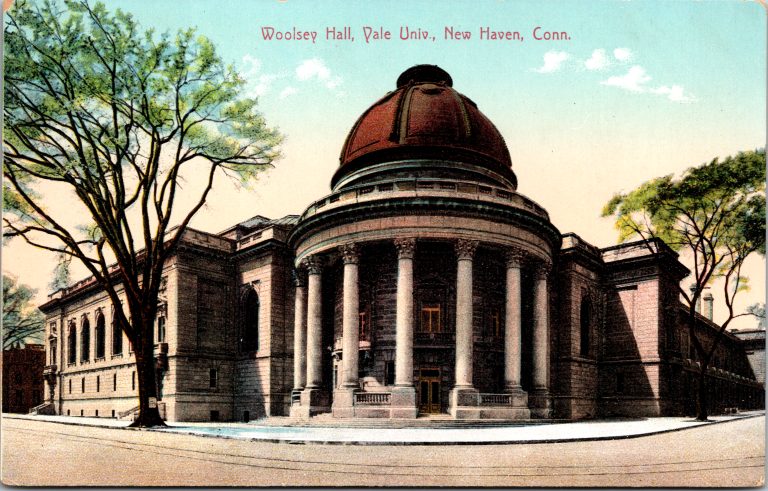
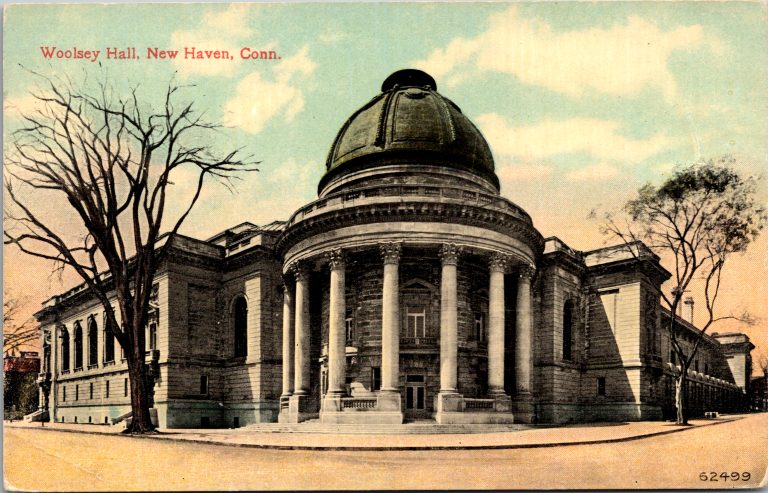
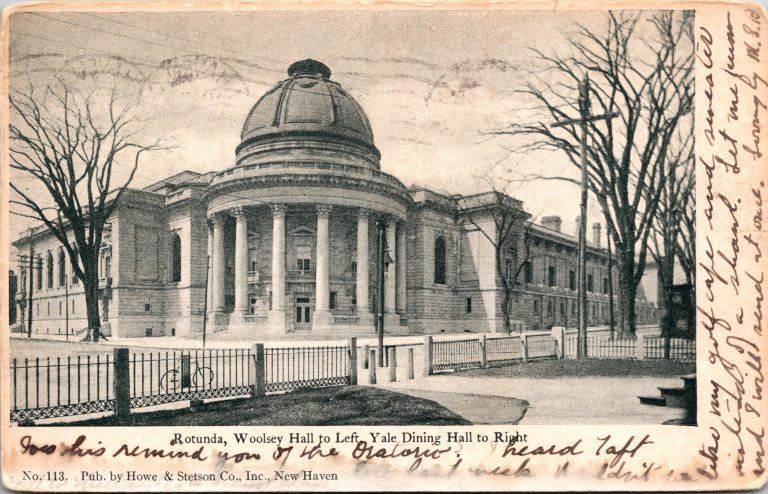
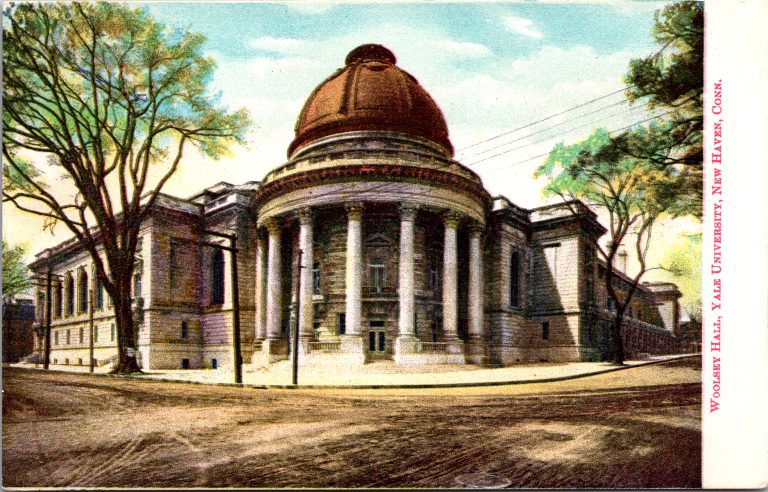
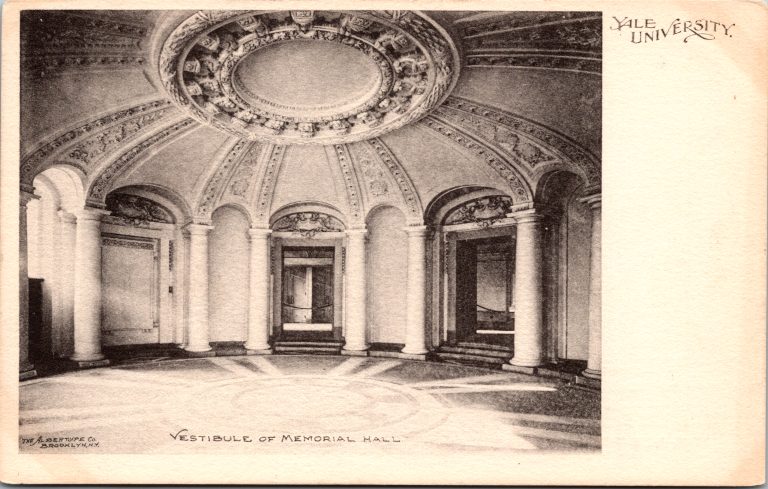
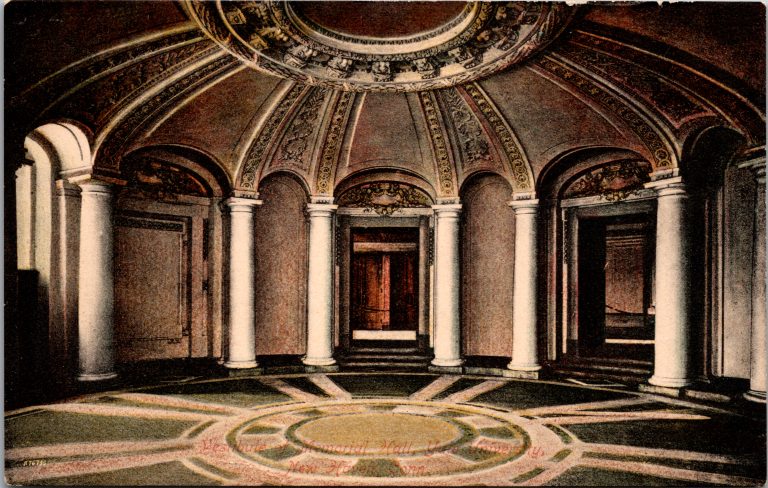
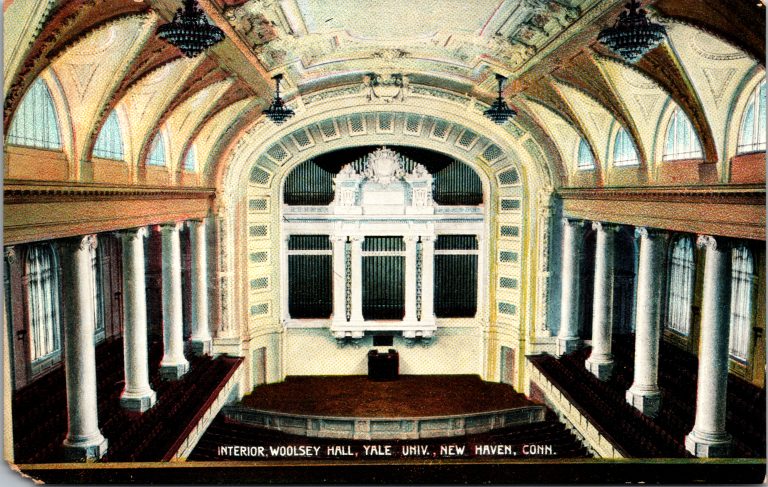
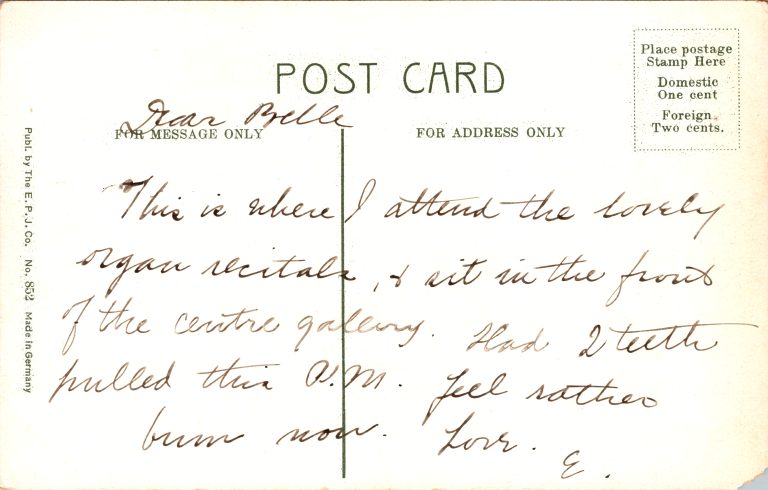
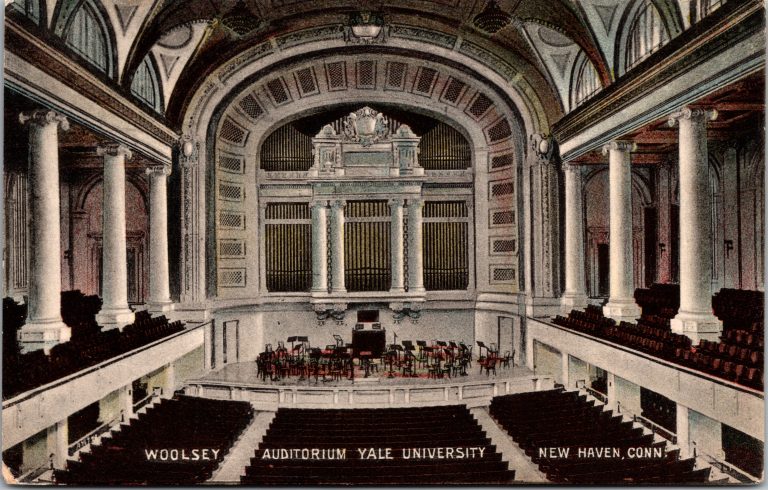
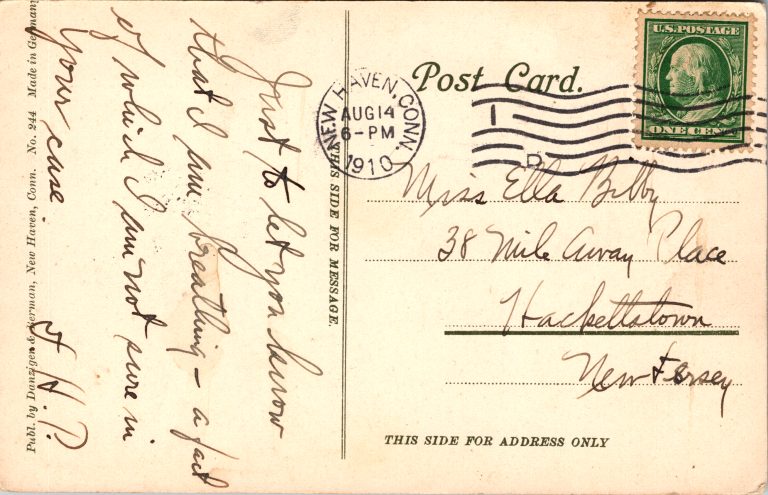
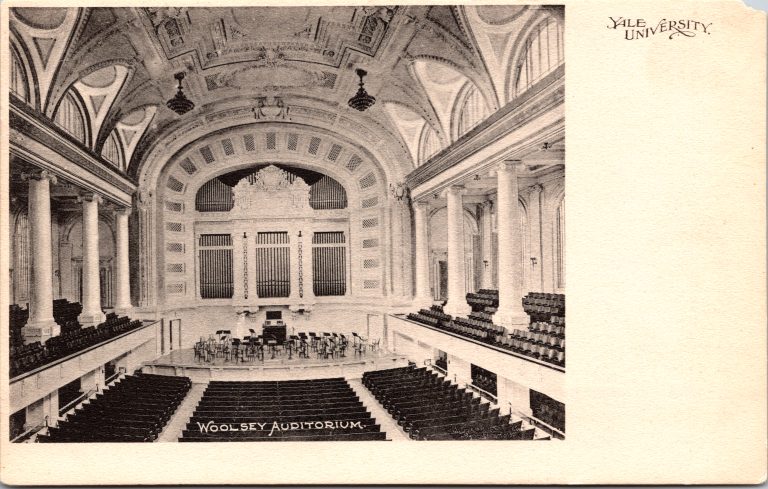
Woolsey Hall, completed in 1901 for Yale’s bicentennial, was designed by the Beaux-Arts architects Carrère and Hastings as the university’s first major secular auditorium. Built alongside University Commons and the Memorial Rotunda, it formed a new civic center for the unified Yale University, strategically sited between Old Campus and the heart of Yale College, and the Sheffield Scientific School. With more than 2,600 seats, Woolsey Hall quickly became Yale’s primary venue for concerts, ceremonies, and convocations, and it gained fame for housing the Newberry Memorial Organ, one of the world’s foremost organs. Visitors enter through the Memorial Rotunda, whose walls commemorate Yale students who gave their lives in every American conflict from the Revolutionary through the Vietnam War. Though critics initially saw the hall’s exuberant Beaux-Arts style as a departure from Yale’s characteristic gothic design, Woolsey remains one of the university’s most important and enduring public spaces.
Then-and-Now at Woolsey Hall
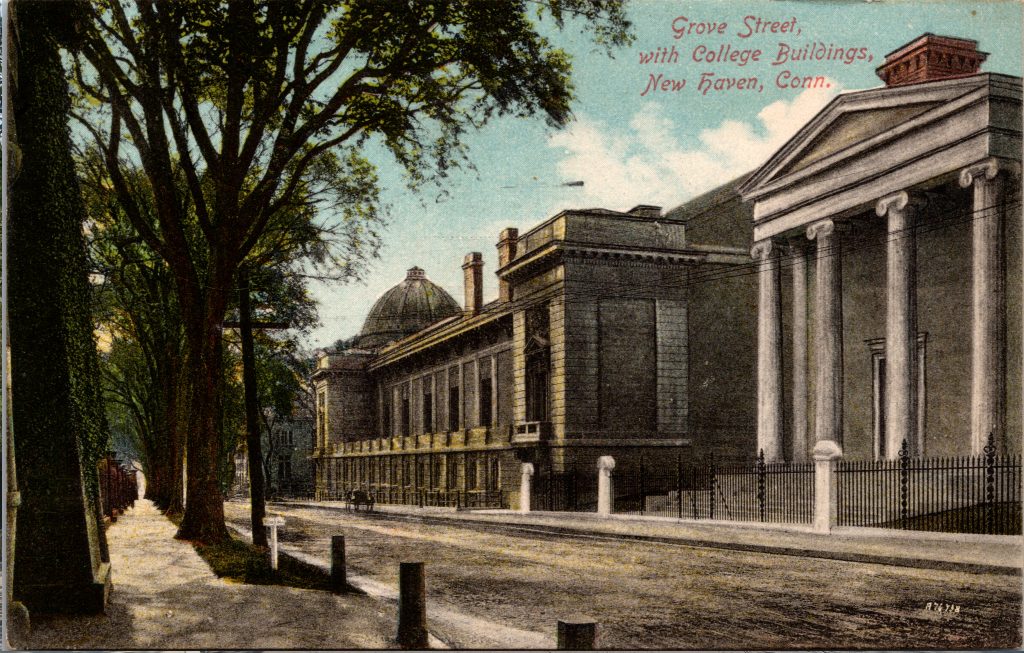
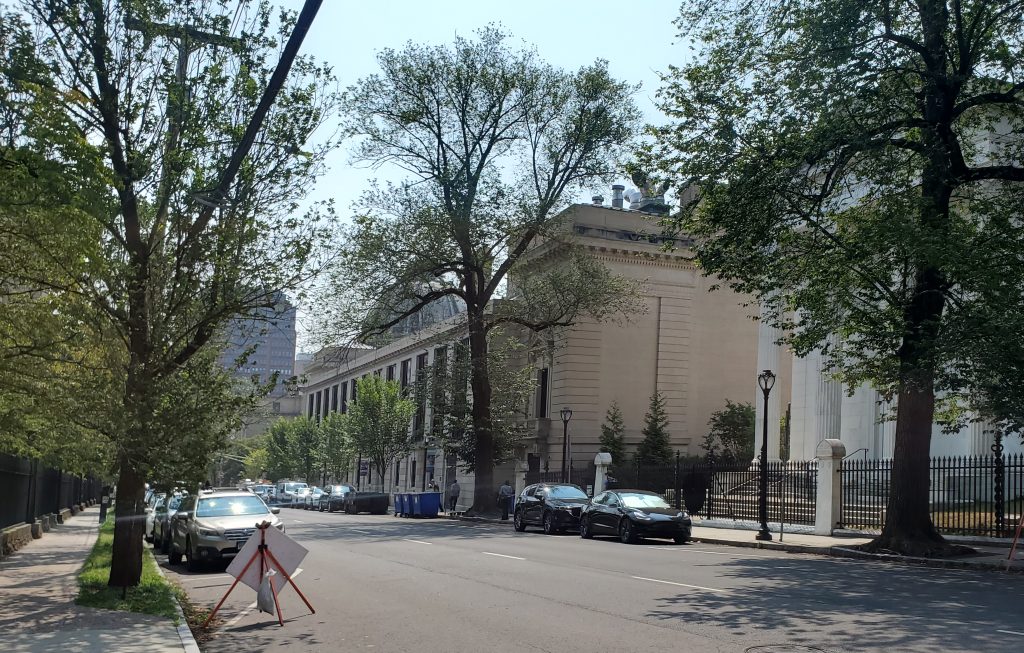
In the below, the view on the left is what appears in one of the postcards from the collection, and the view on the right is a photo taken of the same camera angle in 2025. Use the slider to see how these views compare more than a century apart!
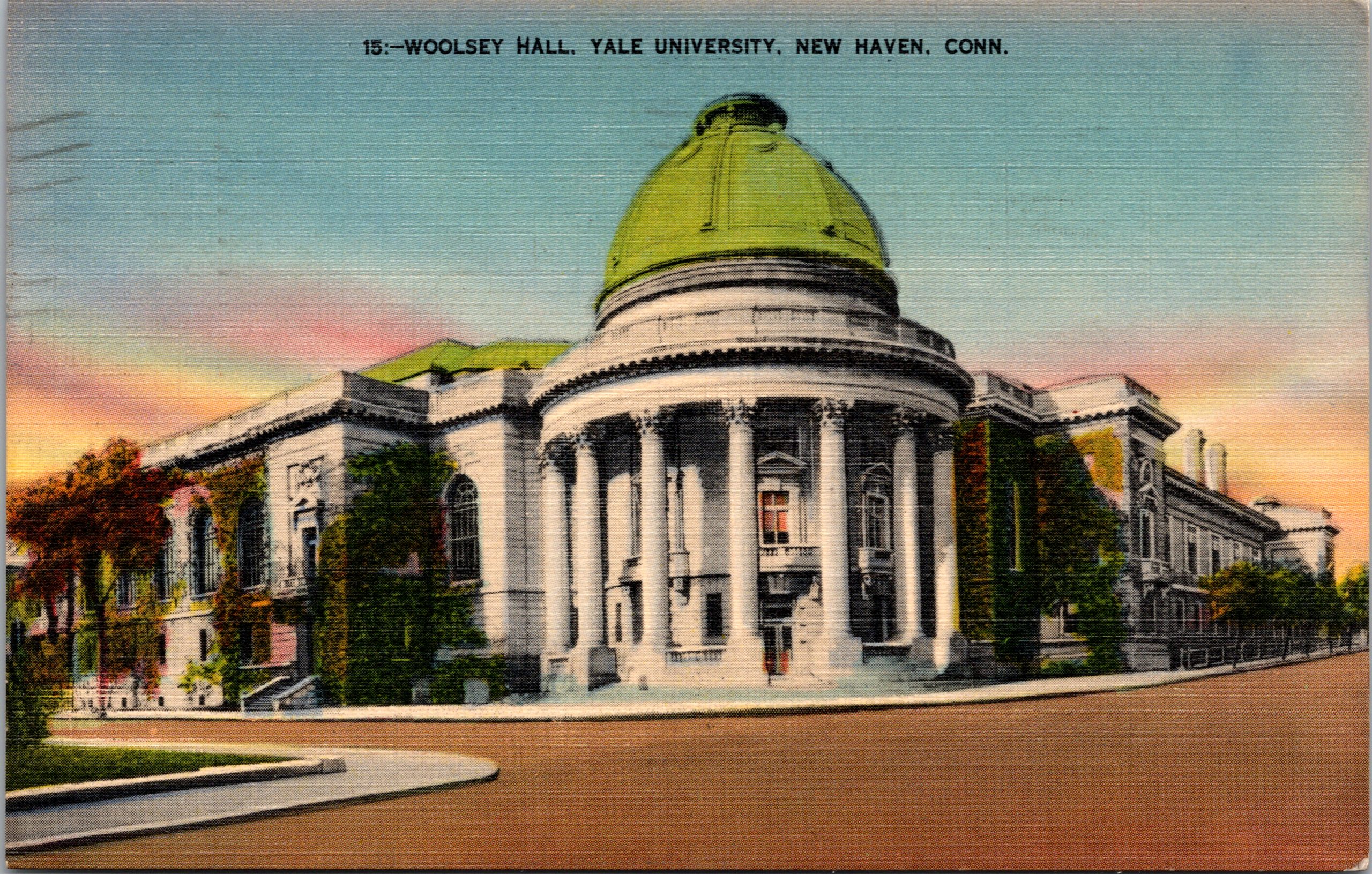
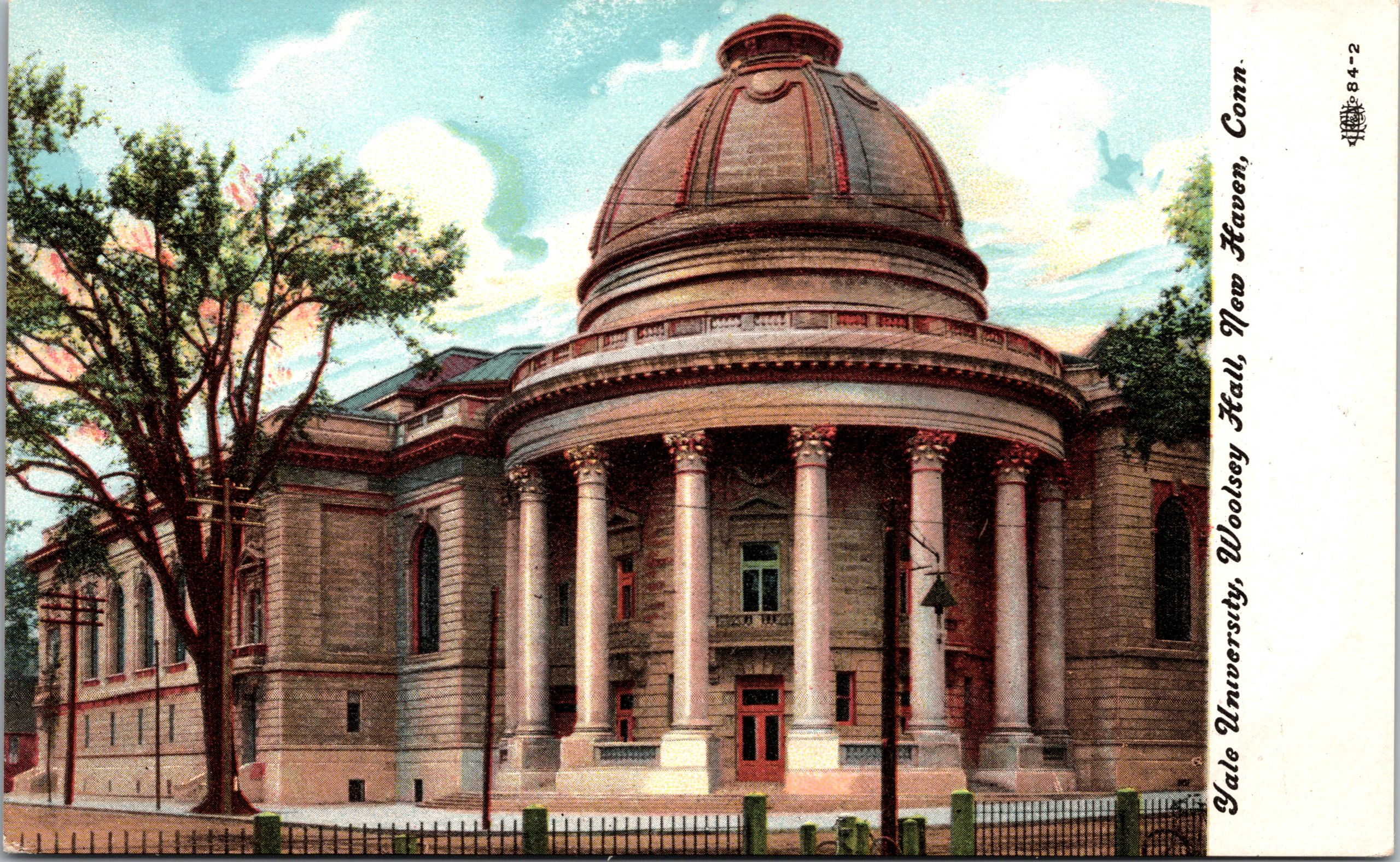
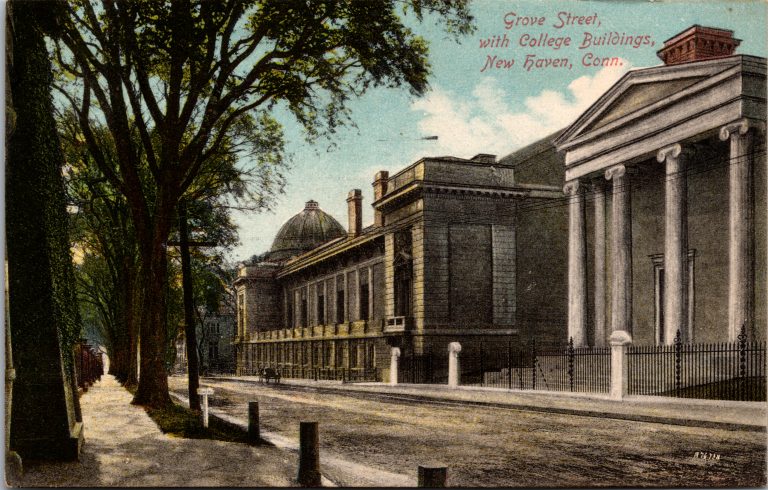
Postcard Views of Woolsey Hall
Click or tap any of the postcard photos in the below gallery to zoom-in and explore further.
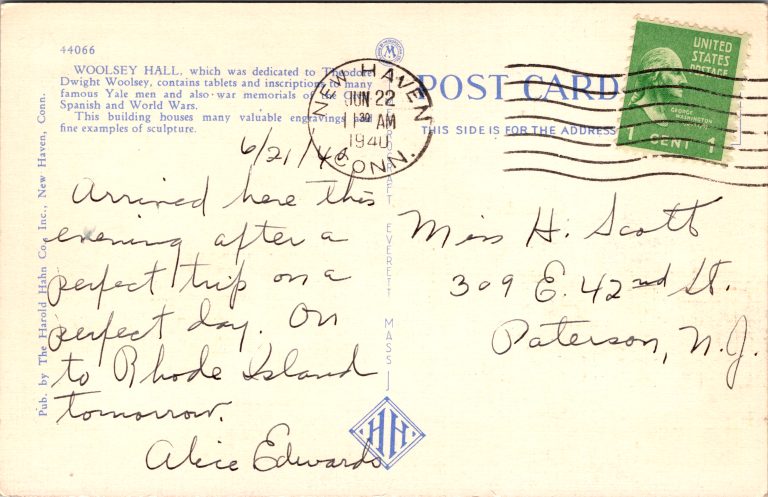
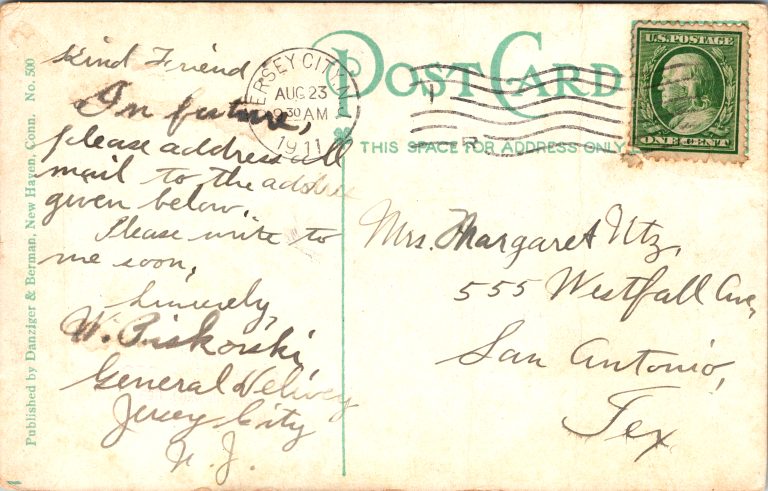
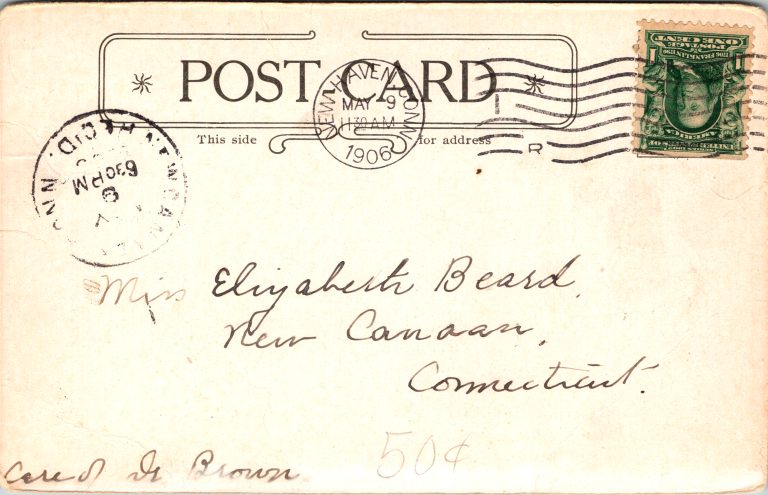
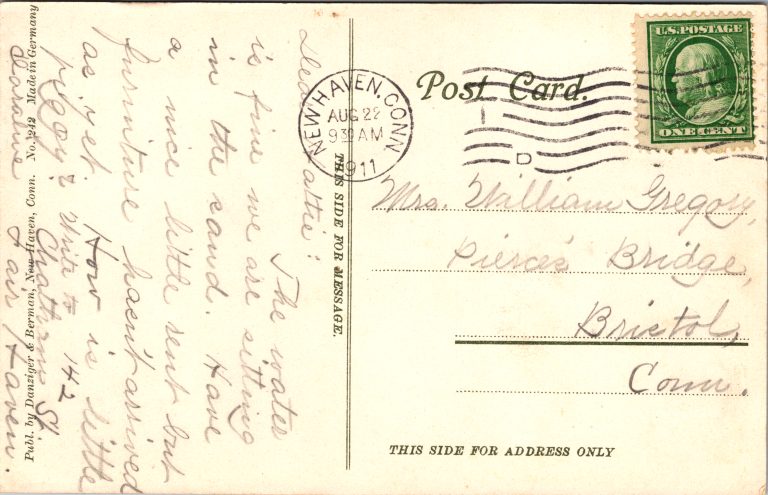
Front and Back of Woolsey Hall Postcards
Mouse-over or tap any of the below postcards to see what the other side looks like!