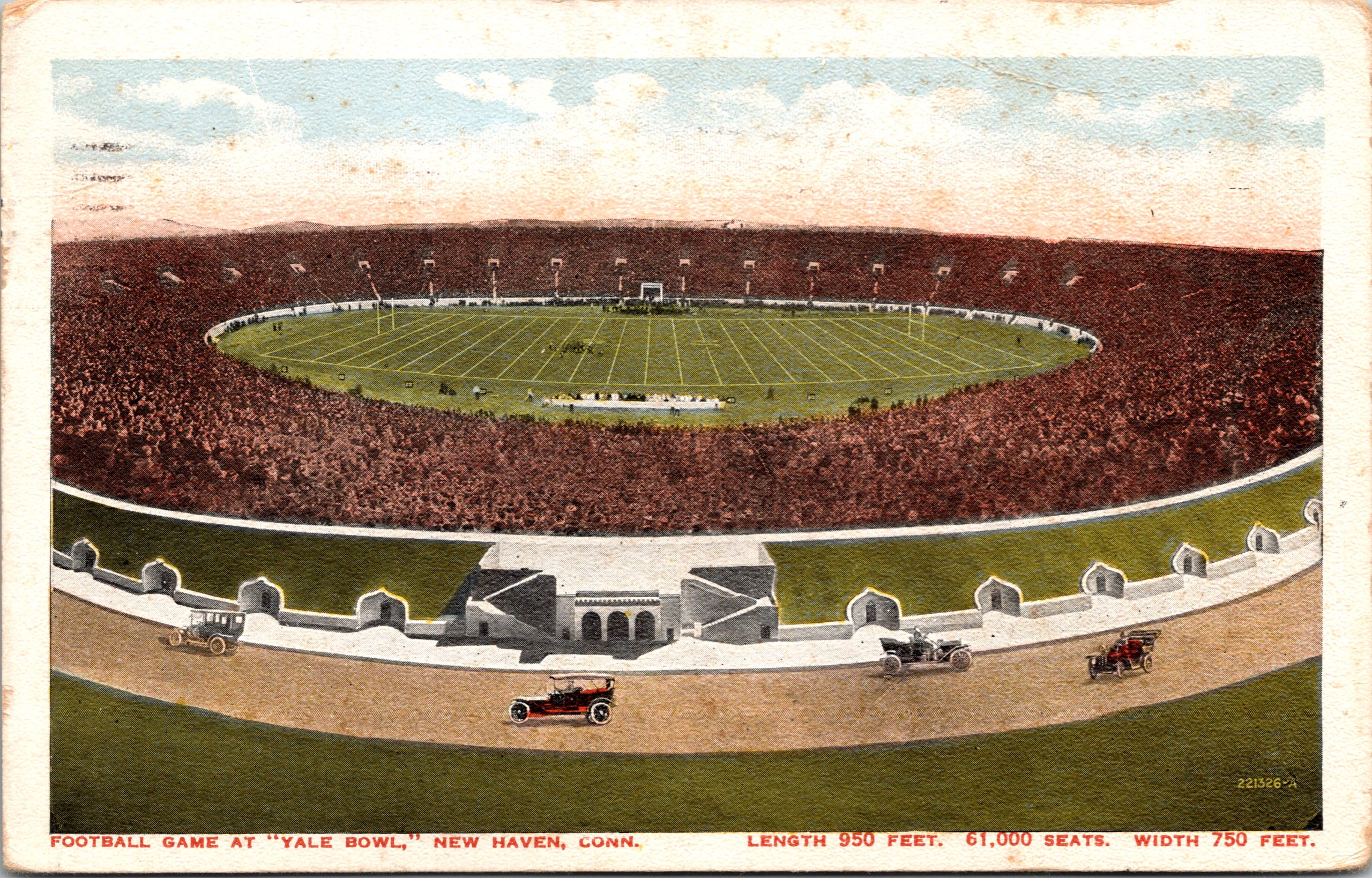
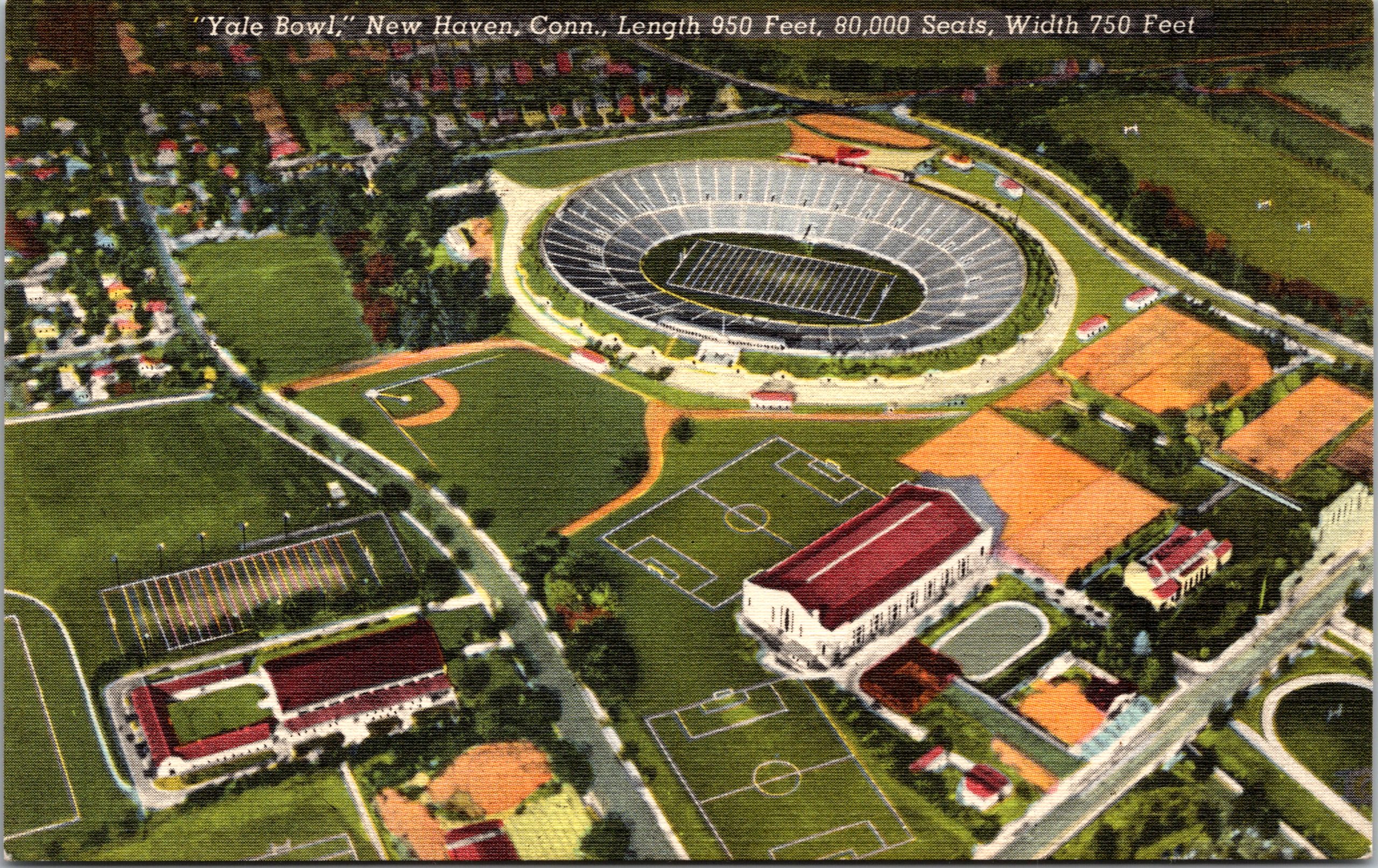
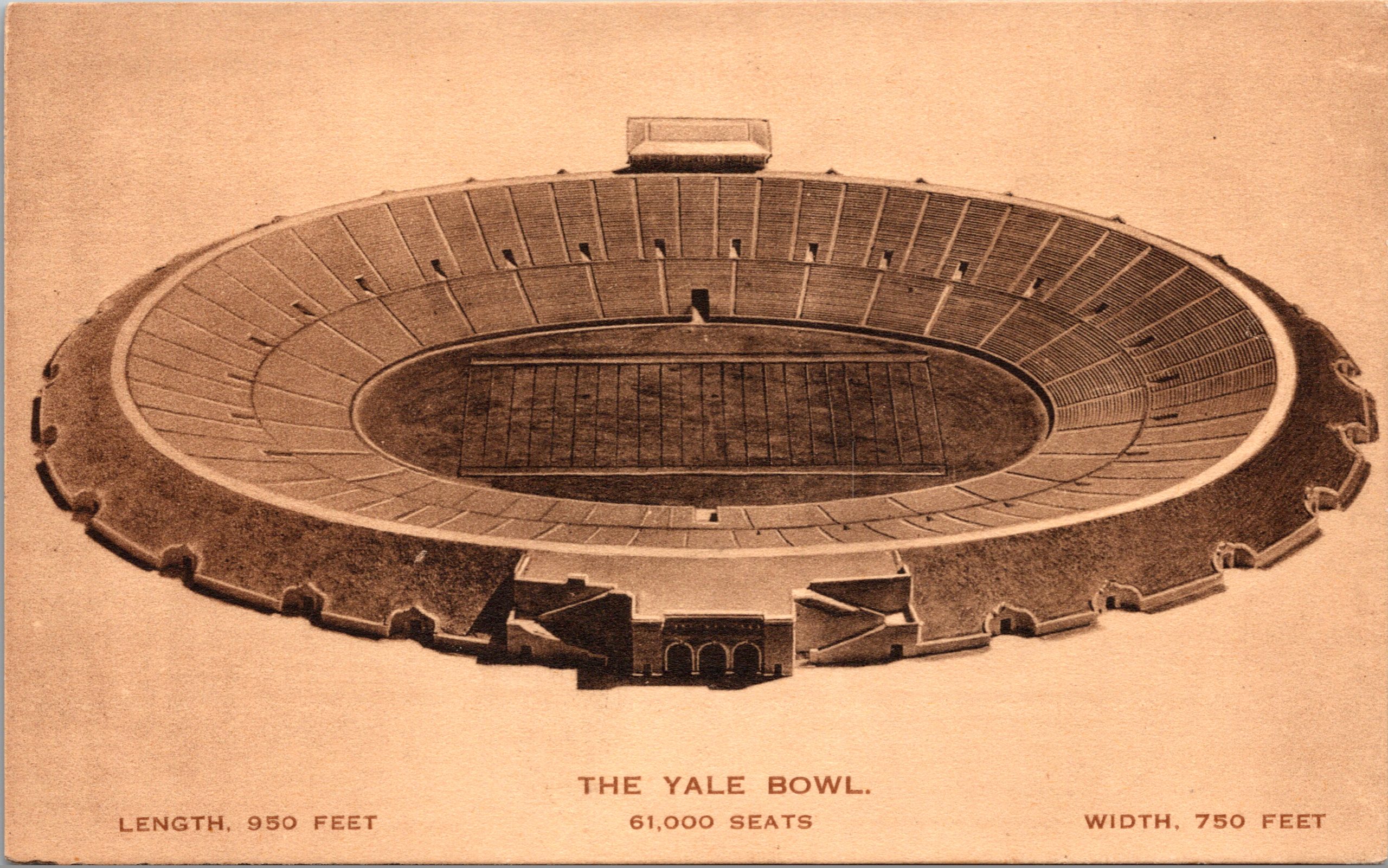
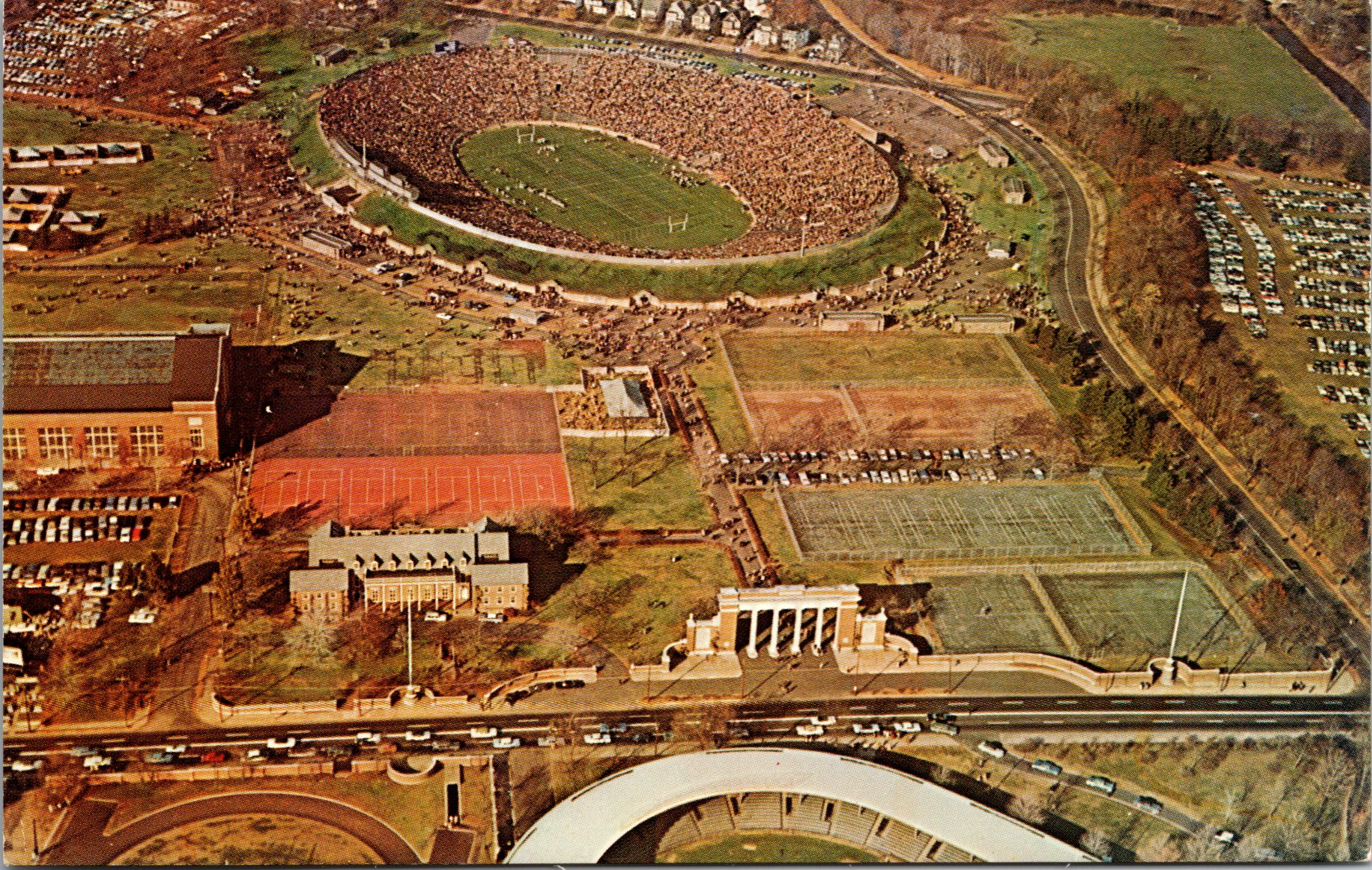
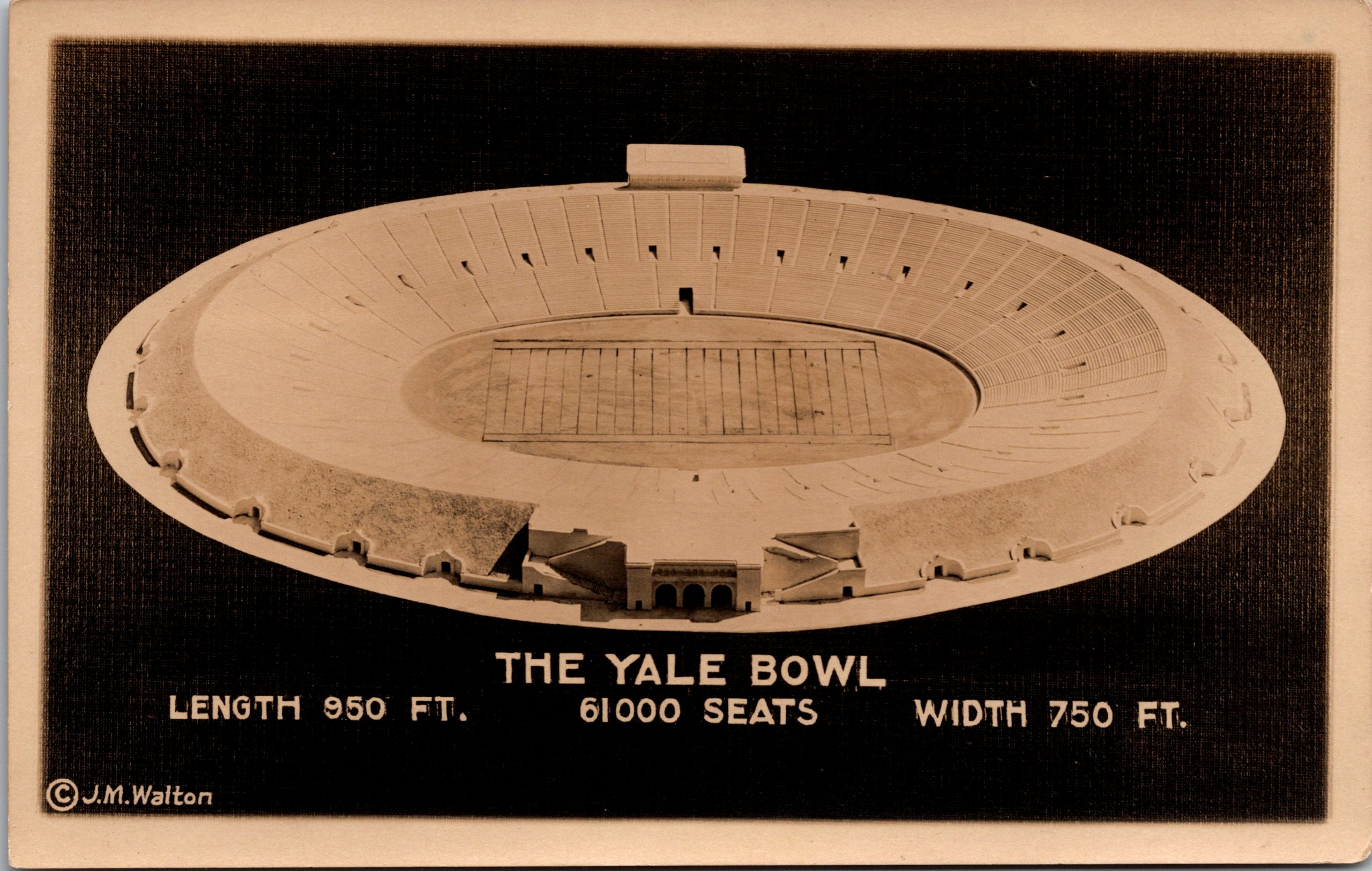
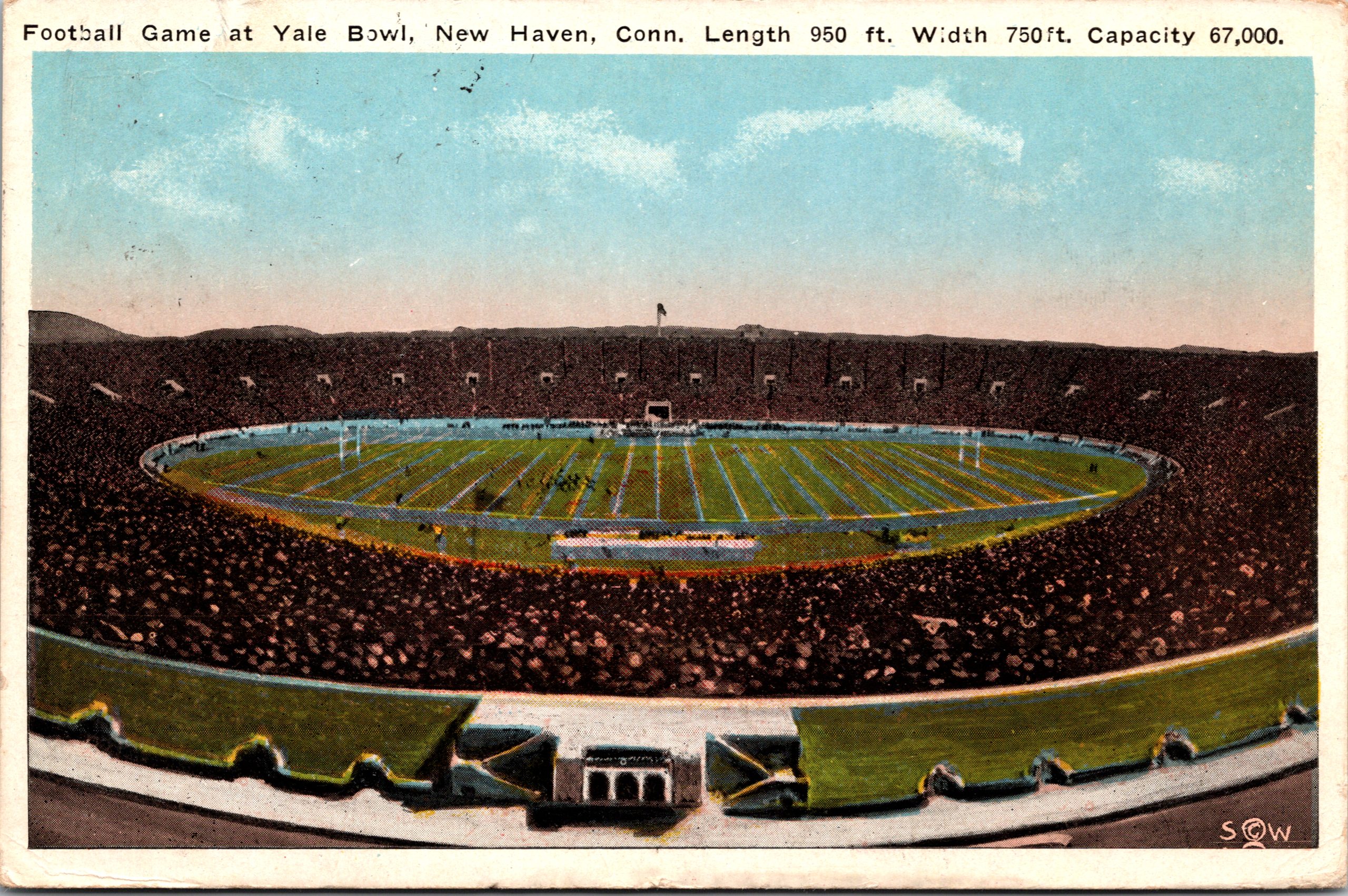
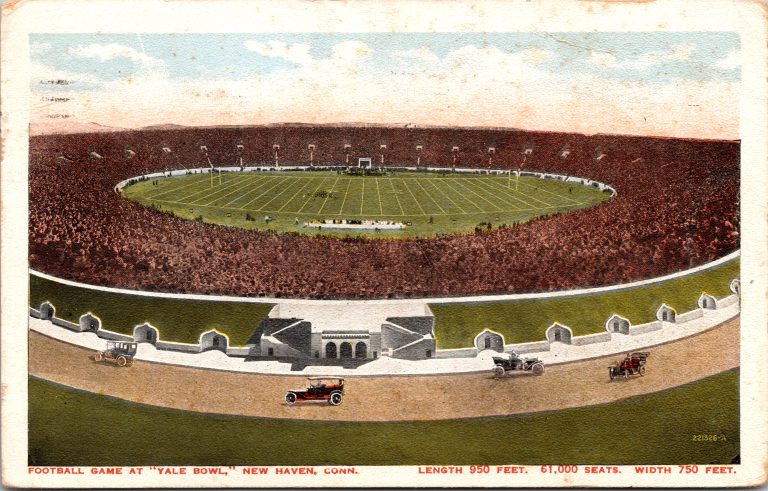
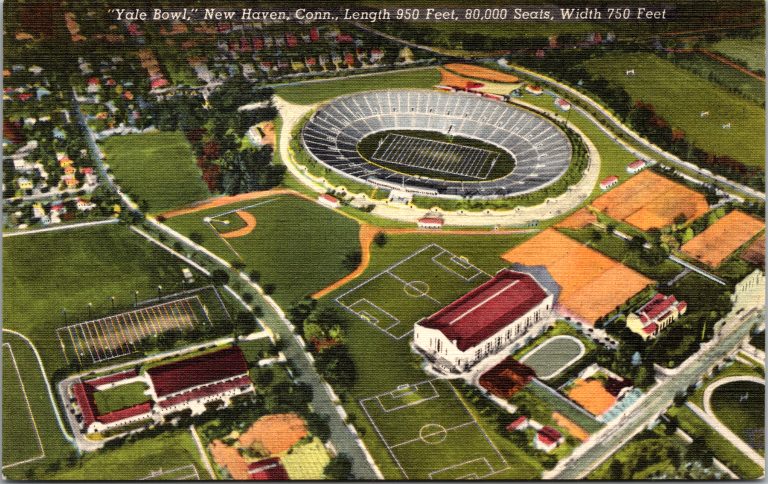
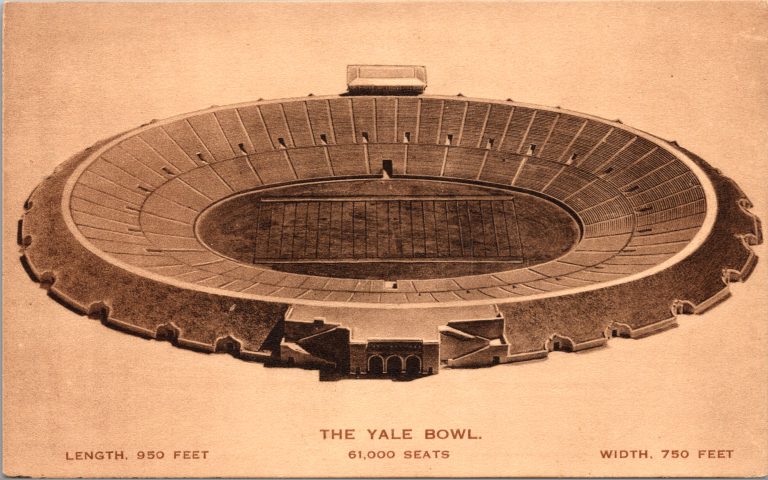
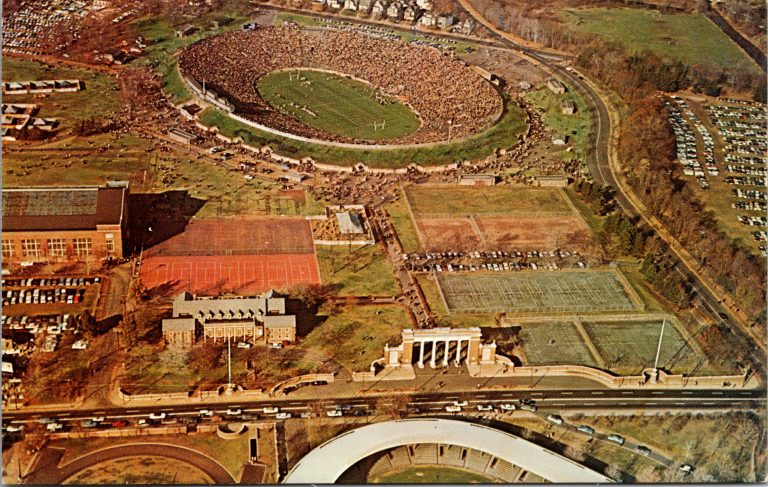
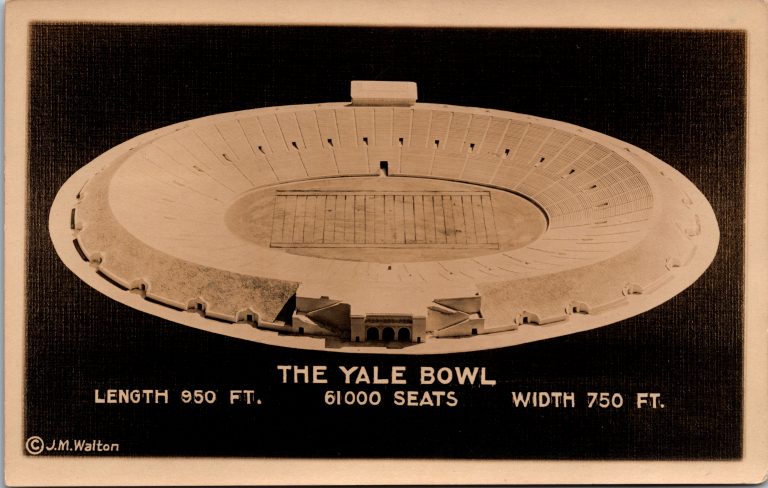
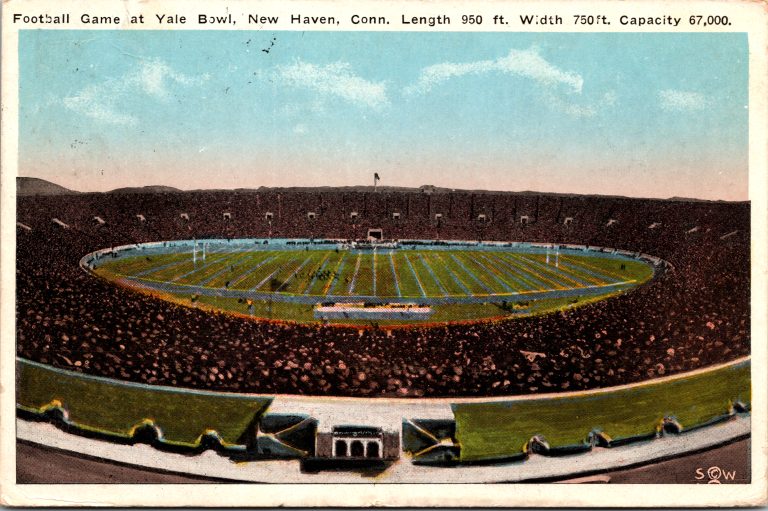
The Yale Bowl, completed in 1914, was the first bowl-shaped stadium in the United States and became a landmark of modern stadium design—directly inspiring the Rose Bowl, the naming of college football “bowl games,” and ultimately the Super Bowl. Designed by Yale alumnus Charles A. Ferry, the stadium was built by excavating the playing field and using the displaced earth to form its massive elliptical berm, with a façade treated to mimic the patina of Yale’s Neo-Gothic campus. Its opening game on November 21, 1914, drew more than 68,000 spectators for the storied Yale–Harvard rivalry, inaugurating a century of major athletic events, concerts, and campus ceremonies. The stadium was designated a National Historic Landmark in 1987 for its pioneering role in American sports architecture. Today the Yale Bowl remains the spiritual home of Yale football and continues to host The Game every other year.
Postcard Views of the Yale Bowl
Click or tap any of the postcard photos in the below gallery to zoom-in and explore further.
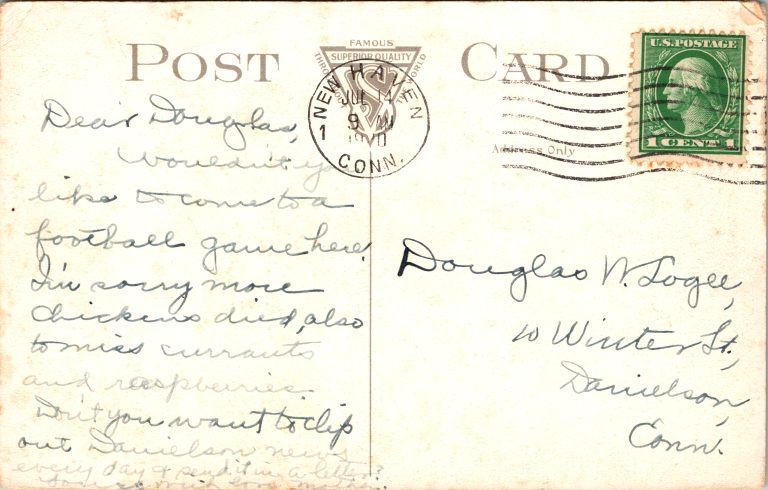
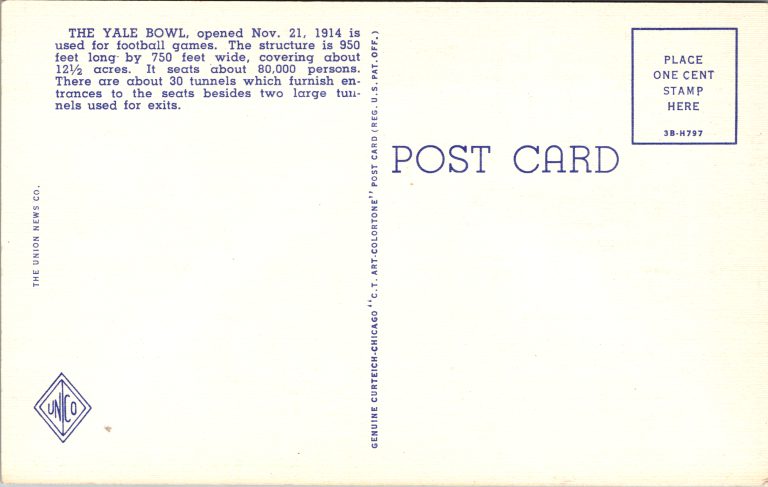
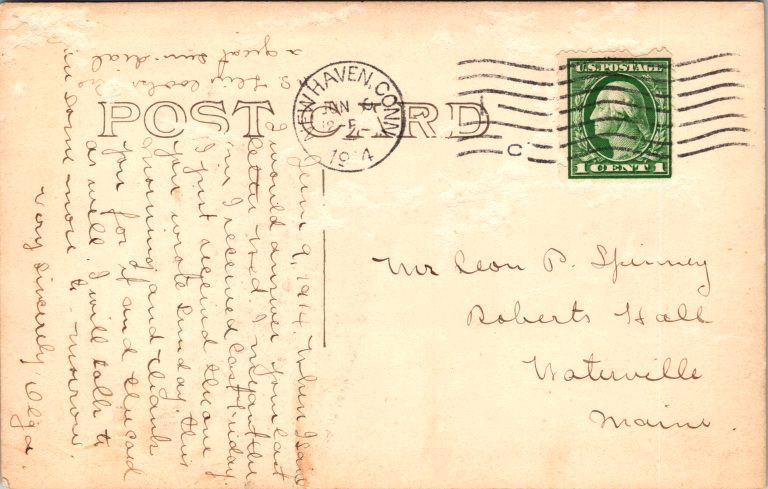
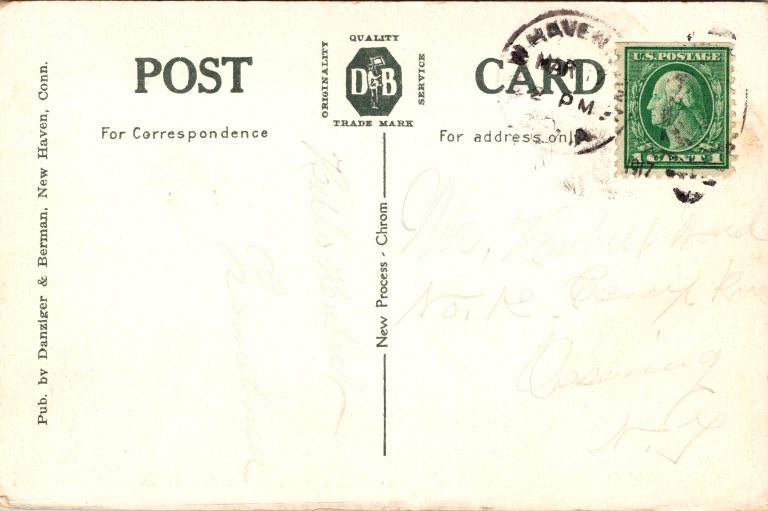
Front and Back of Yale Bowl Postcards
Mouse-over or tap any of the below postcards to see what the other side looks like!