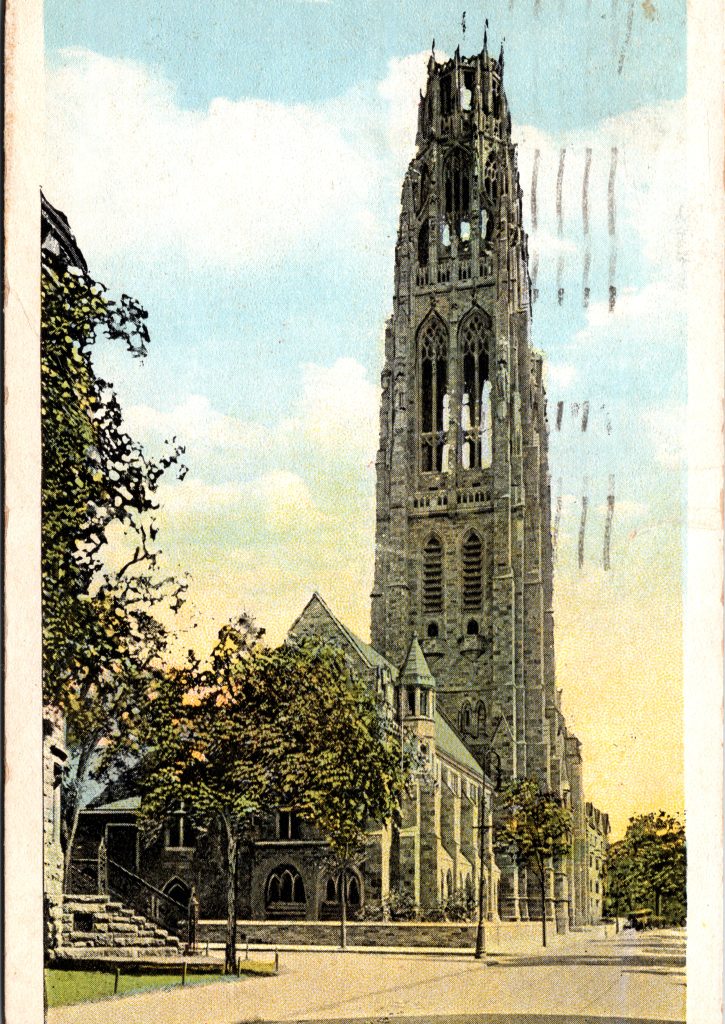
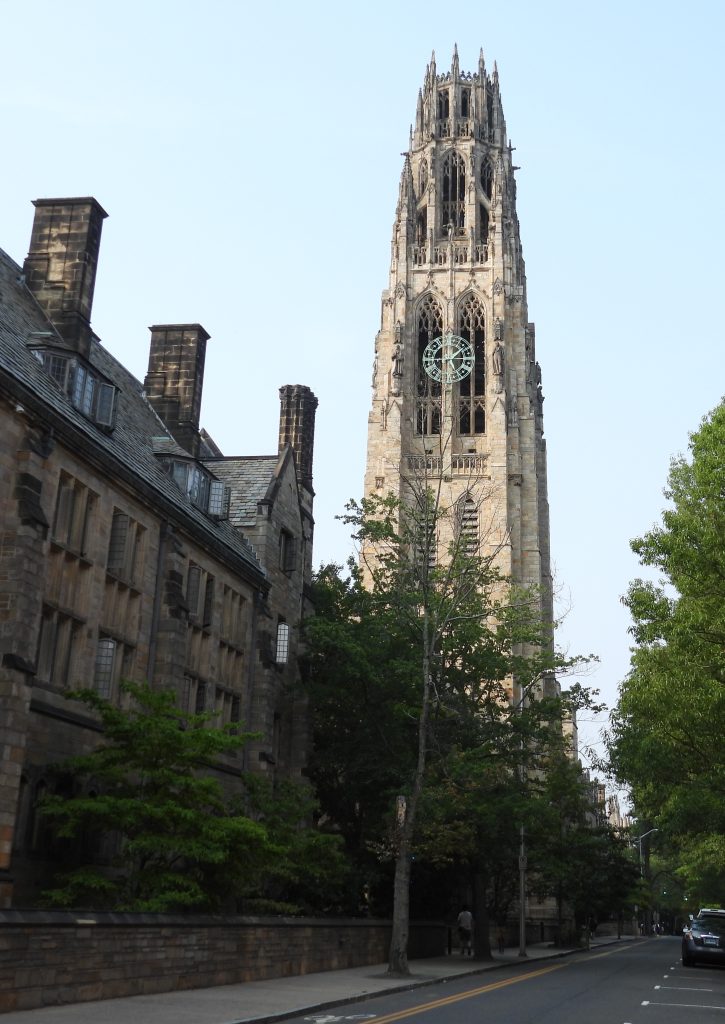
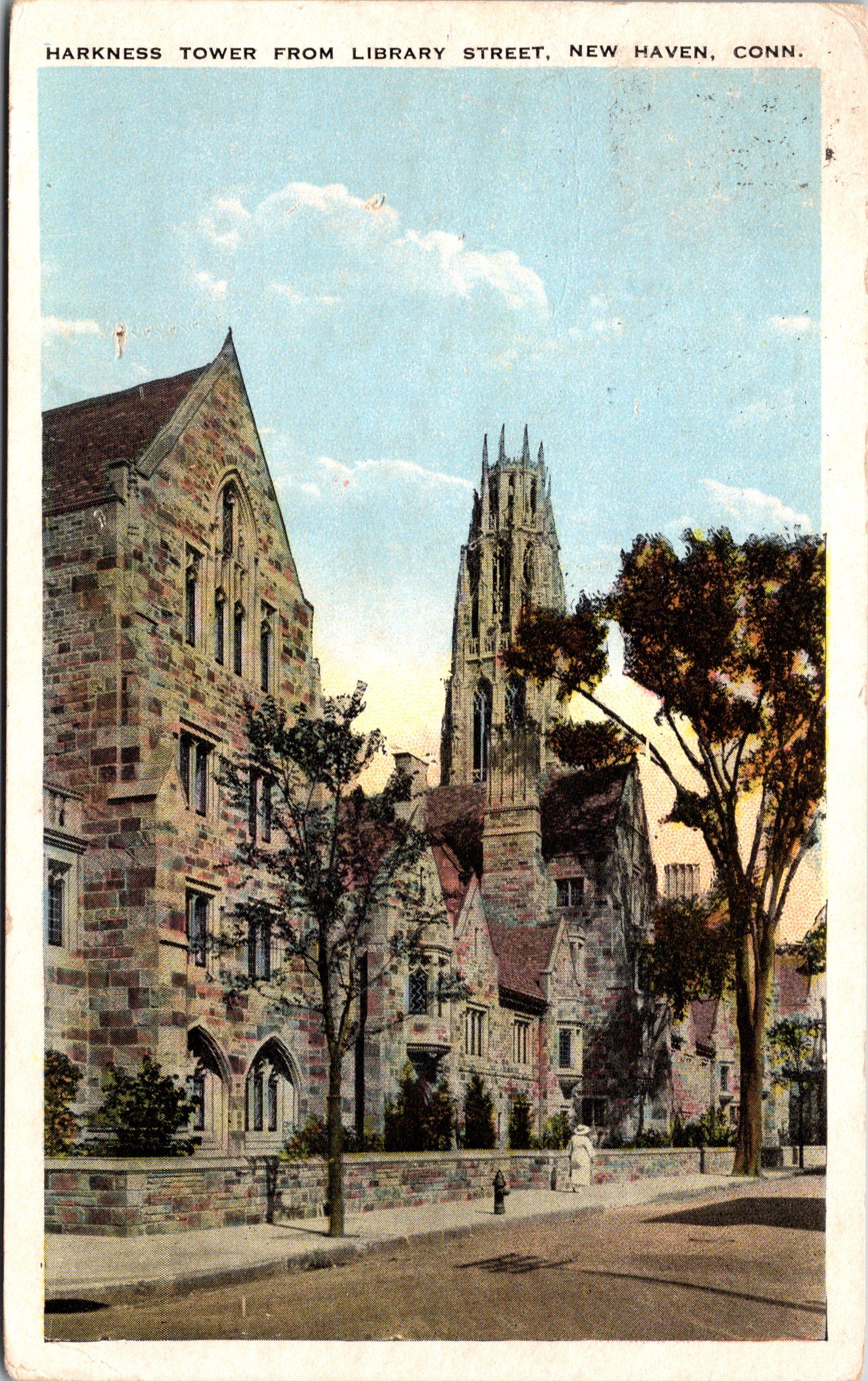
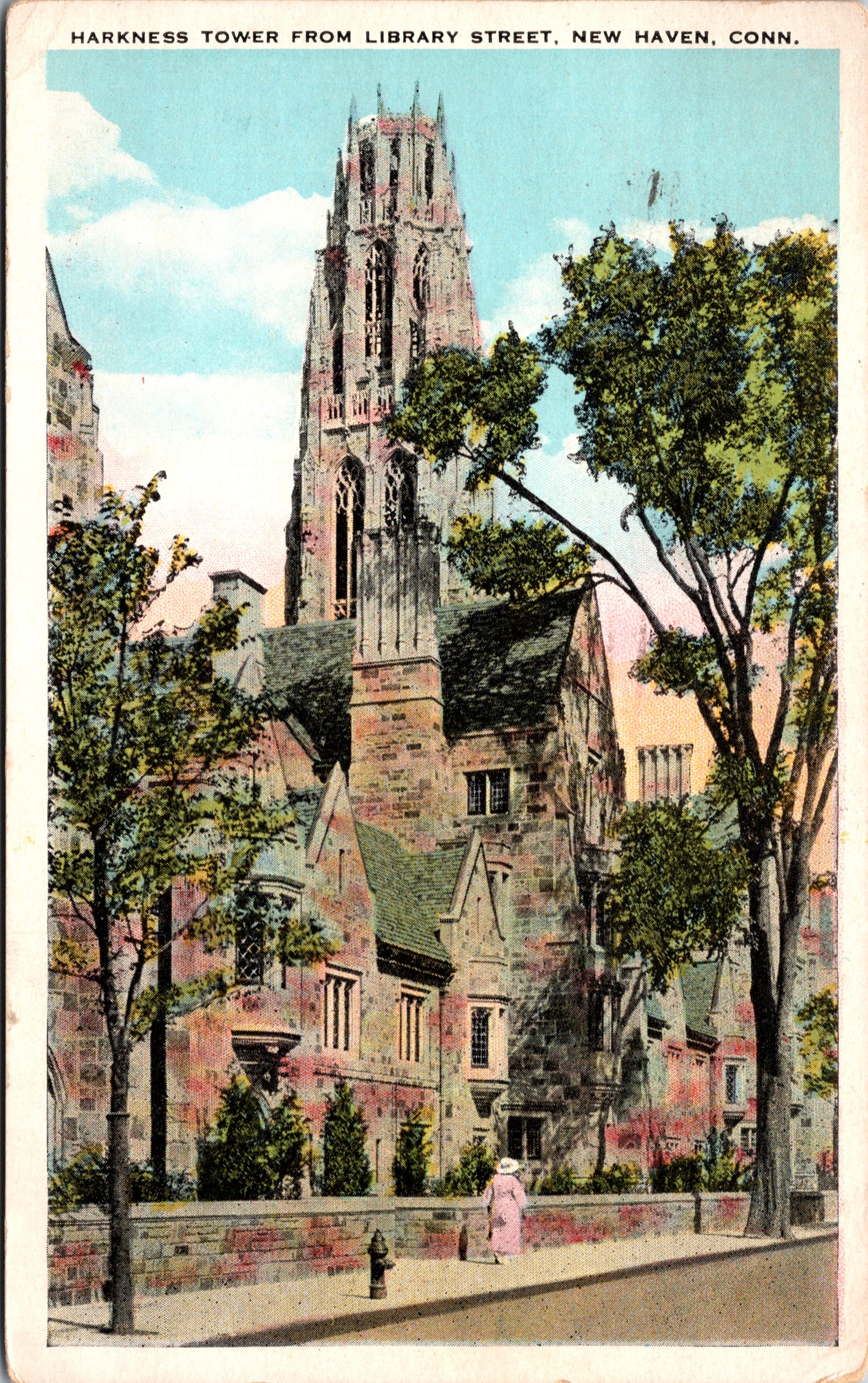
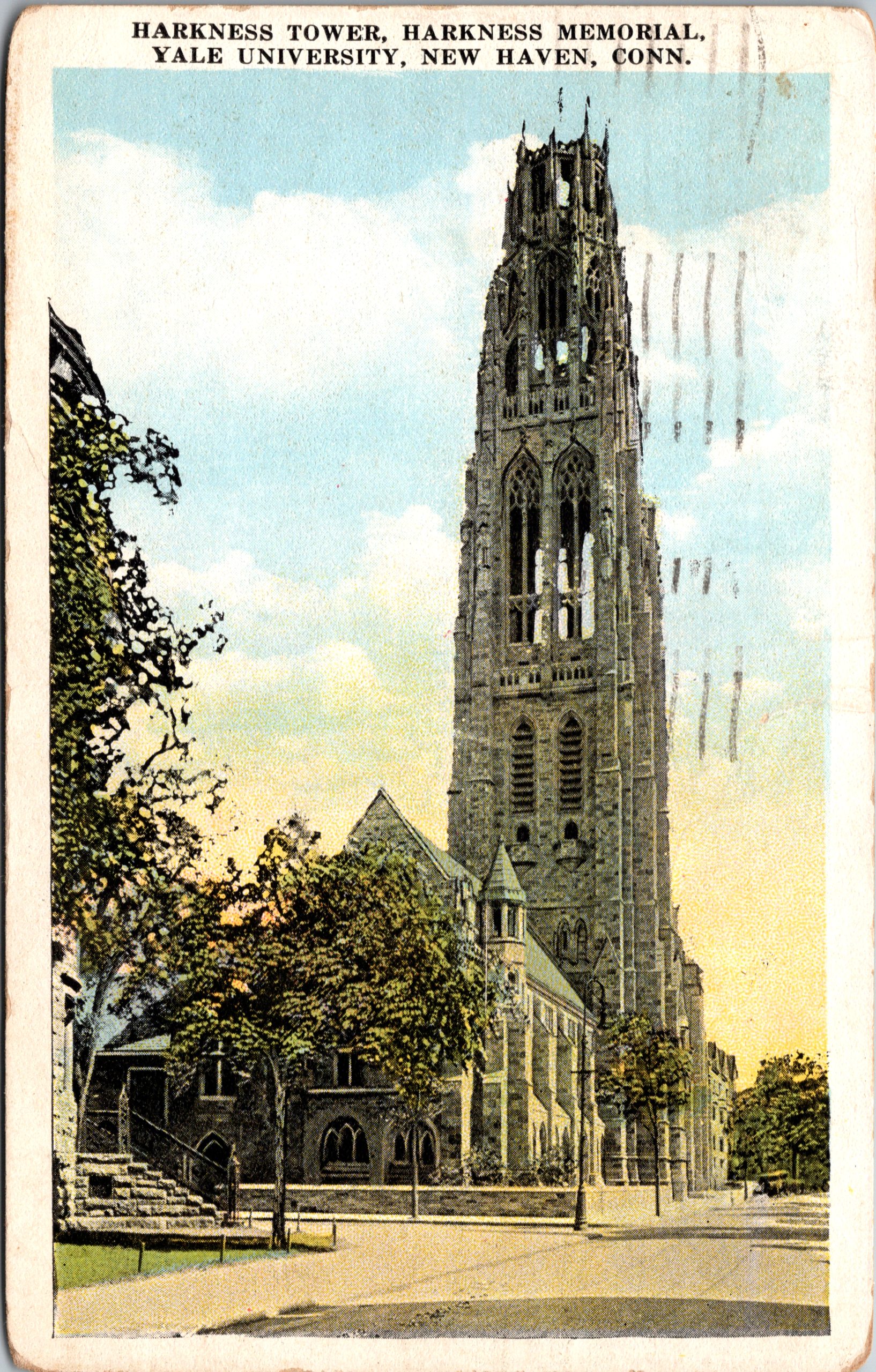
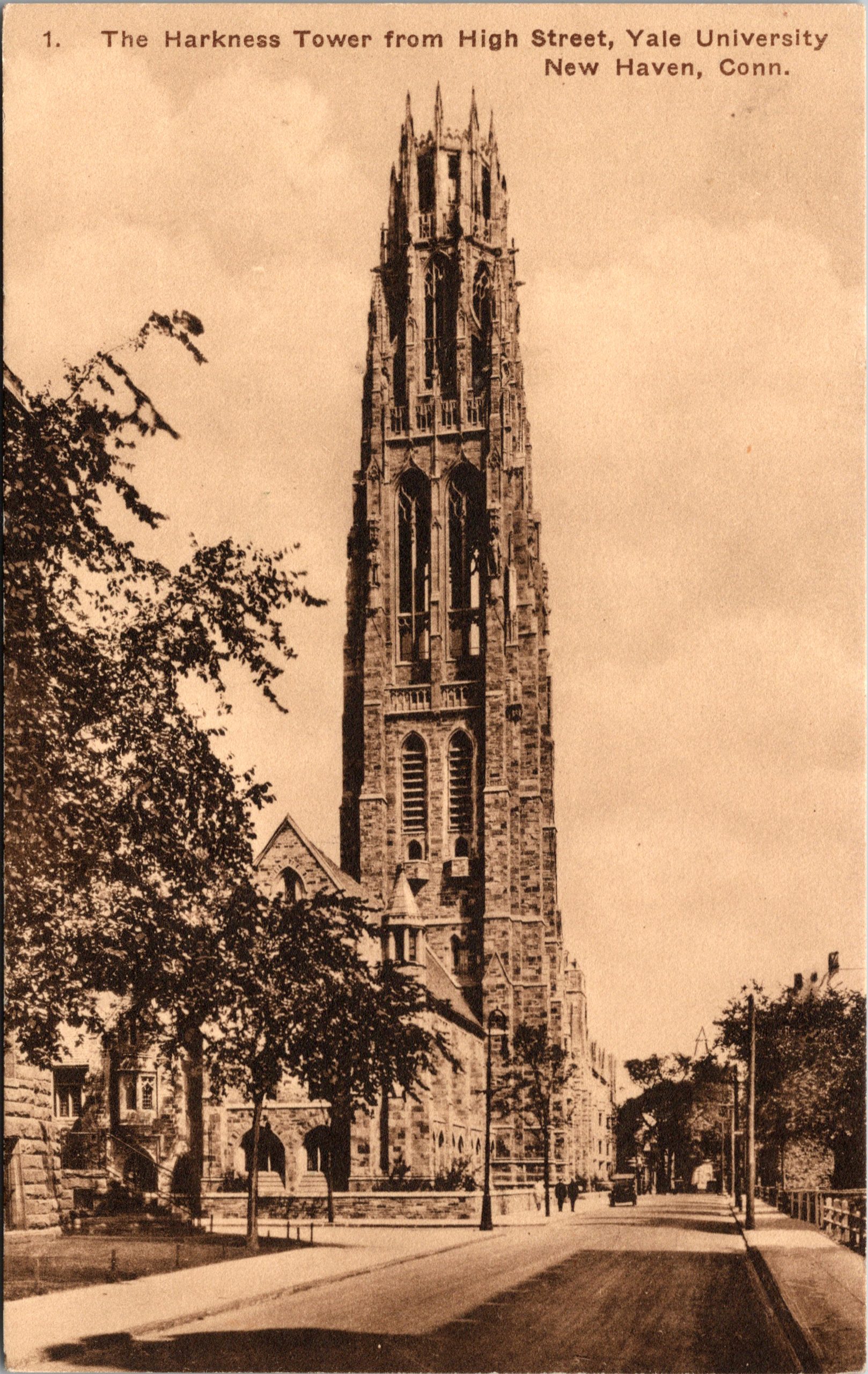
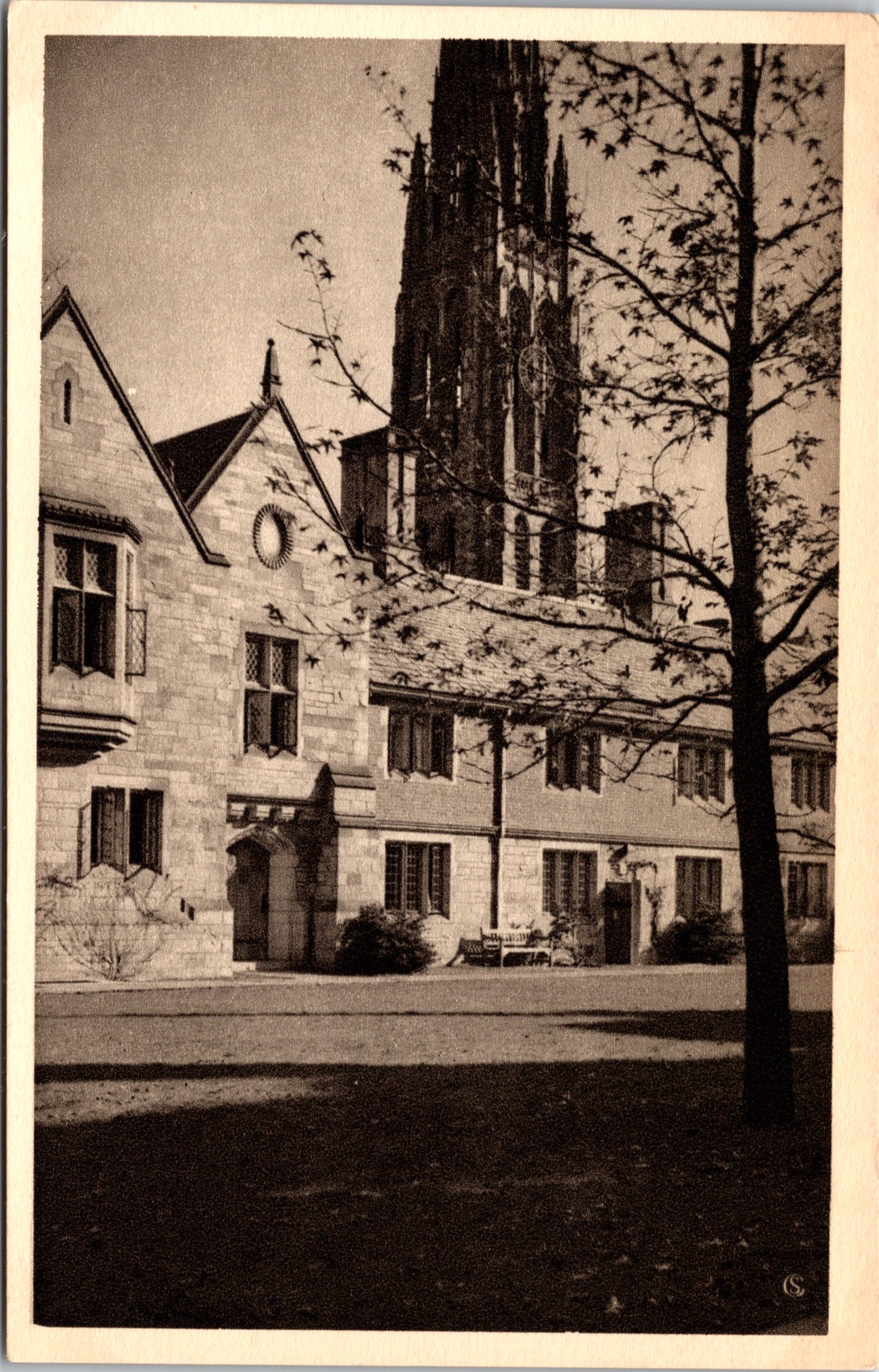
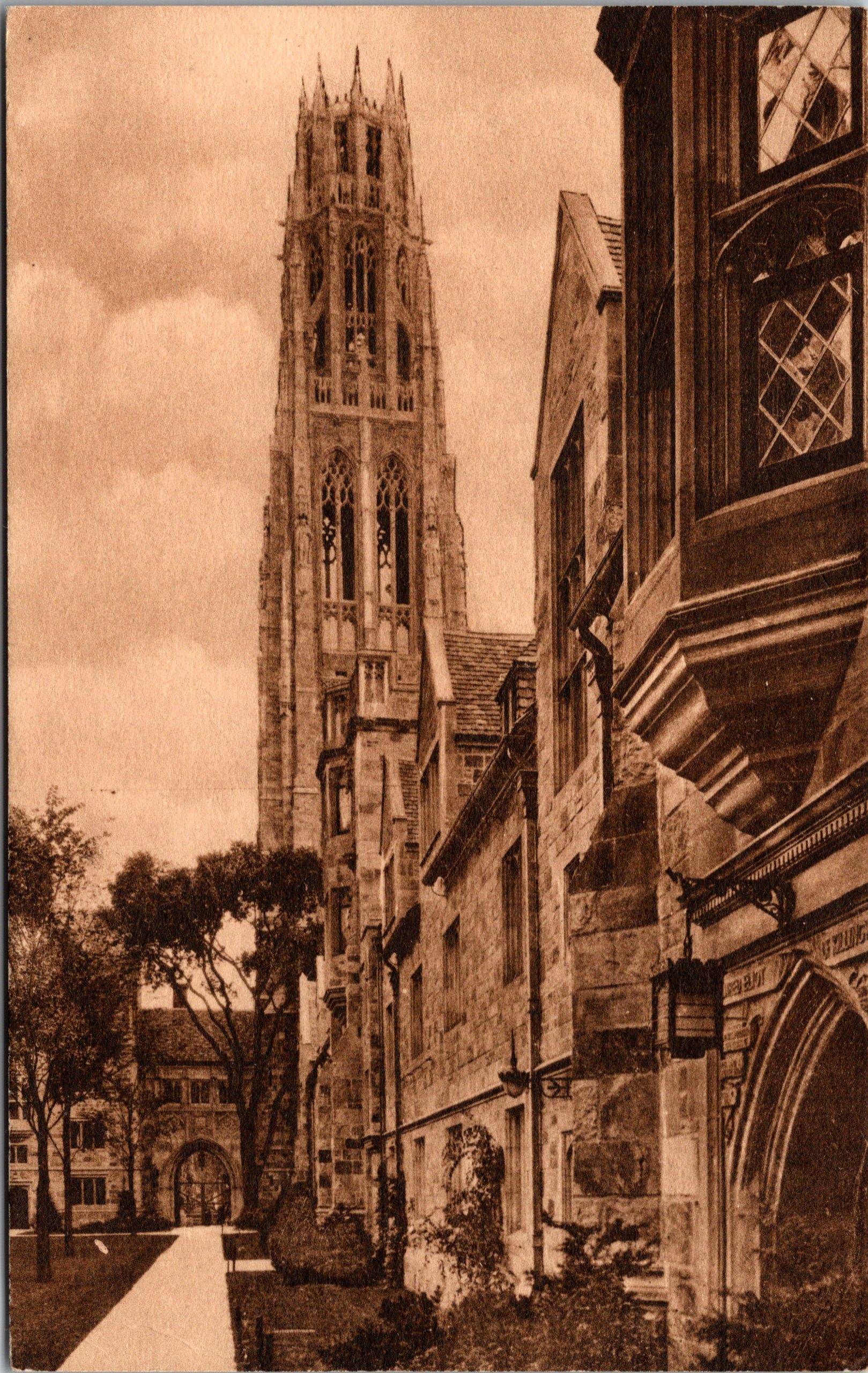
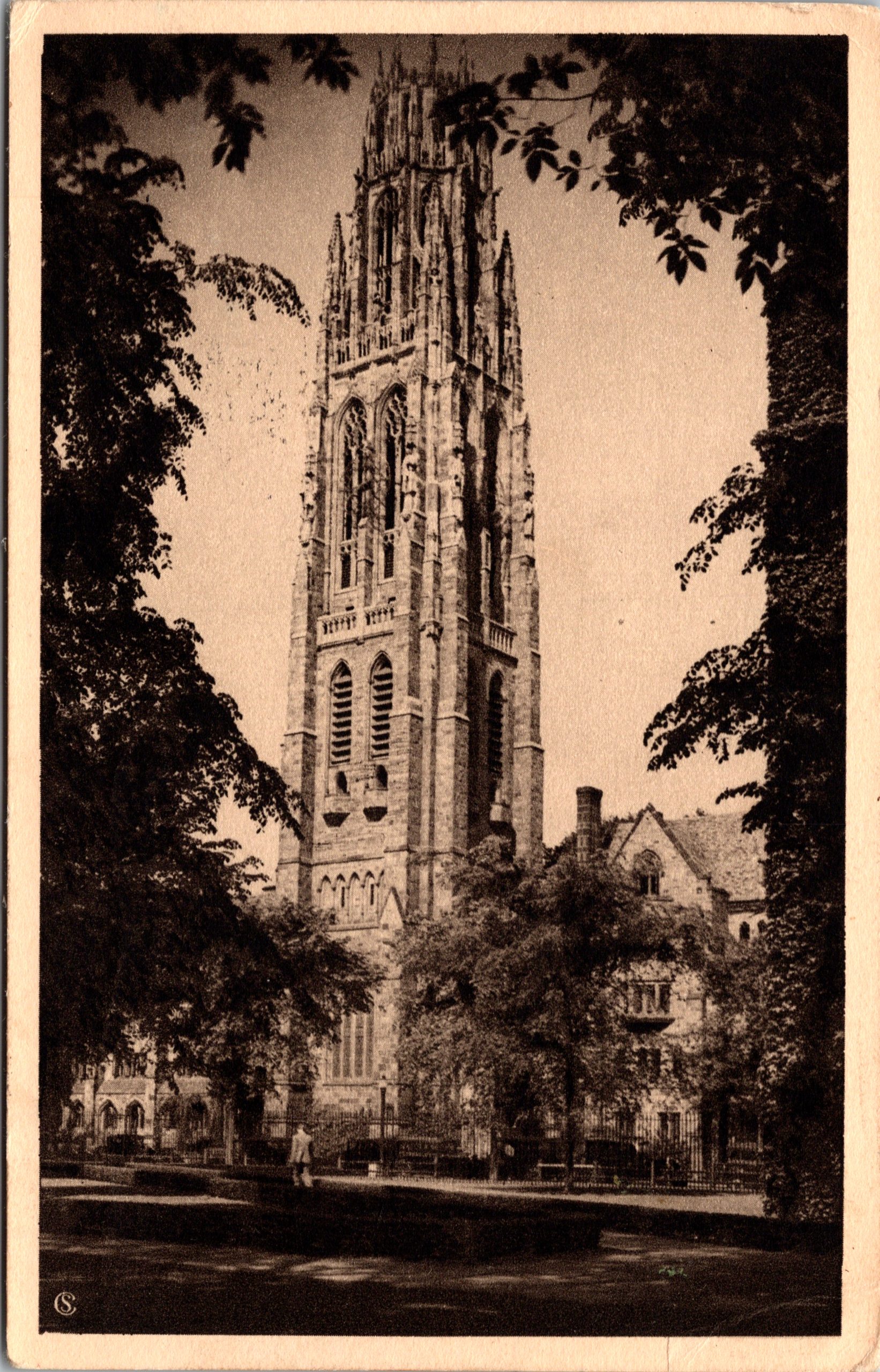
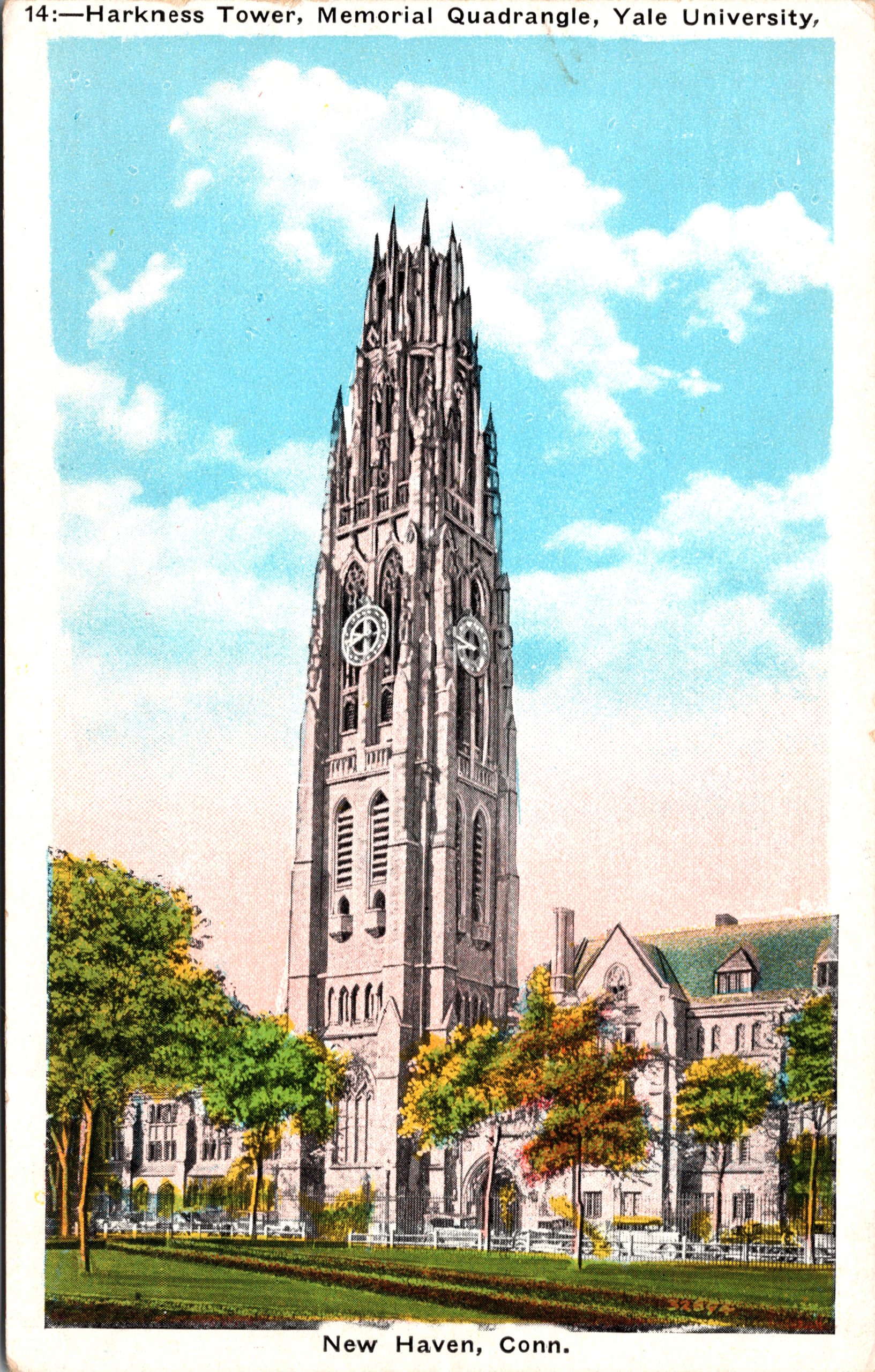
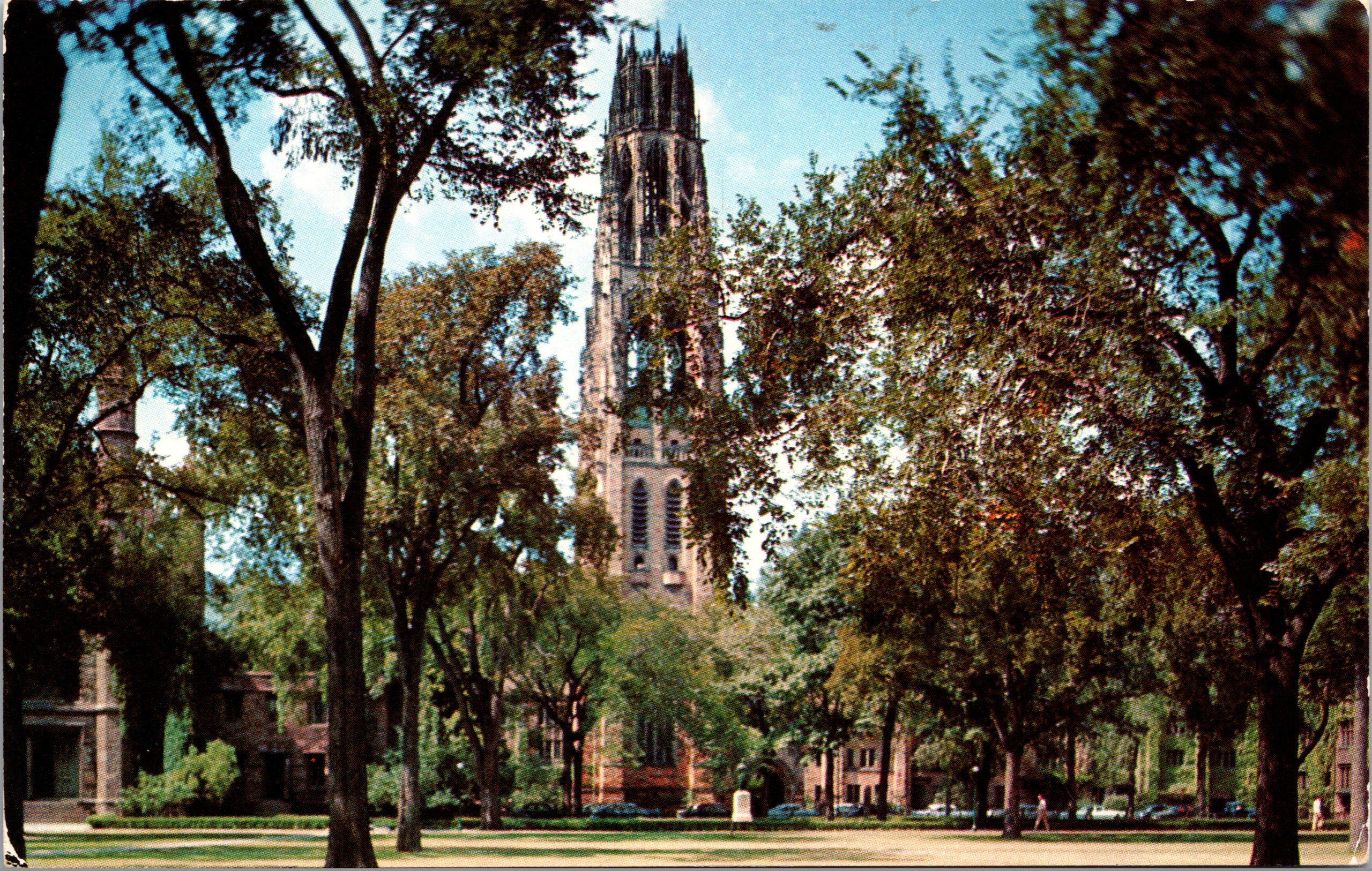
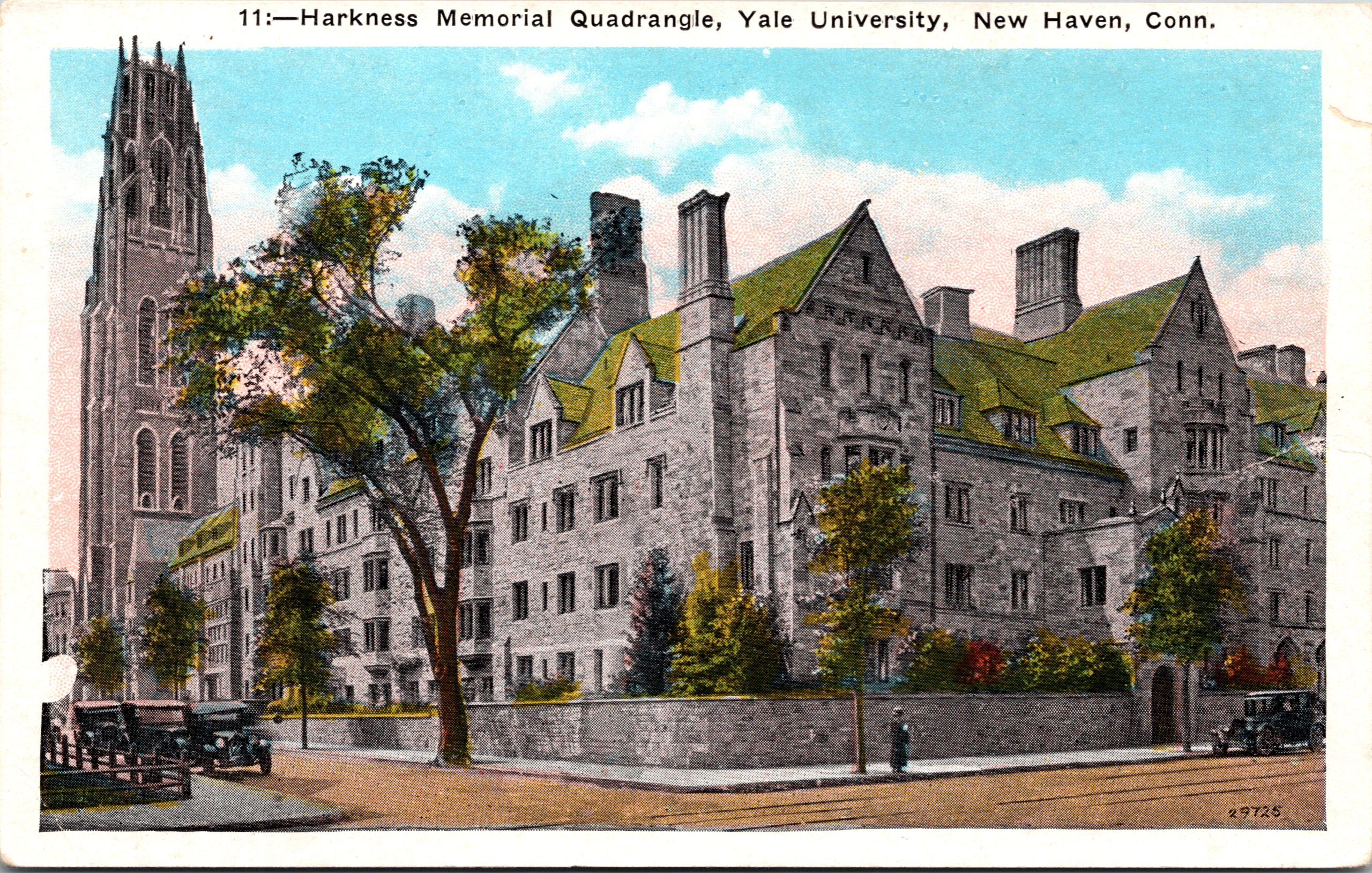
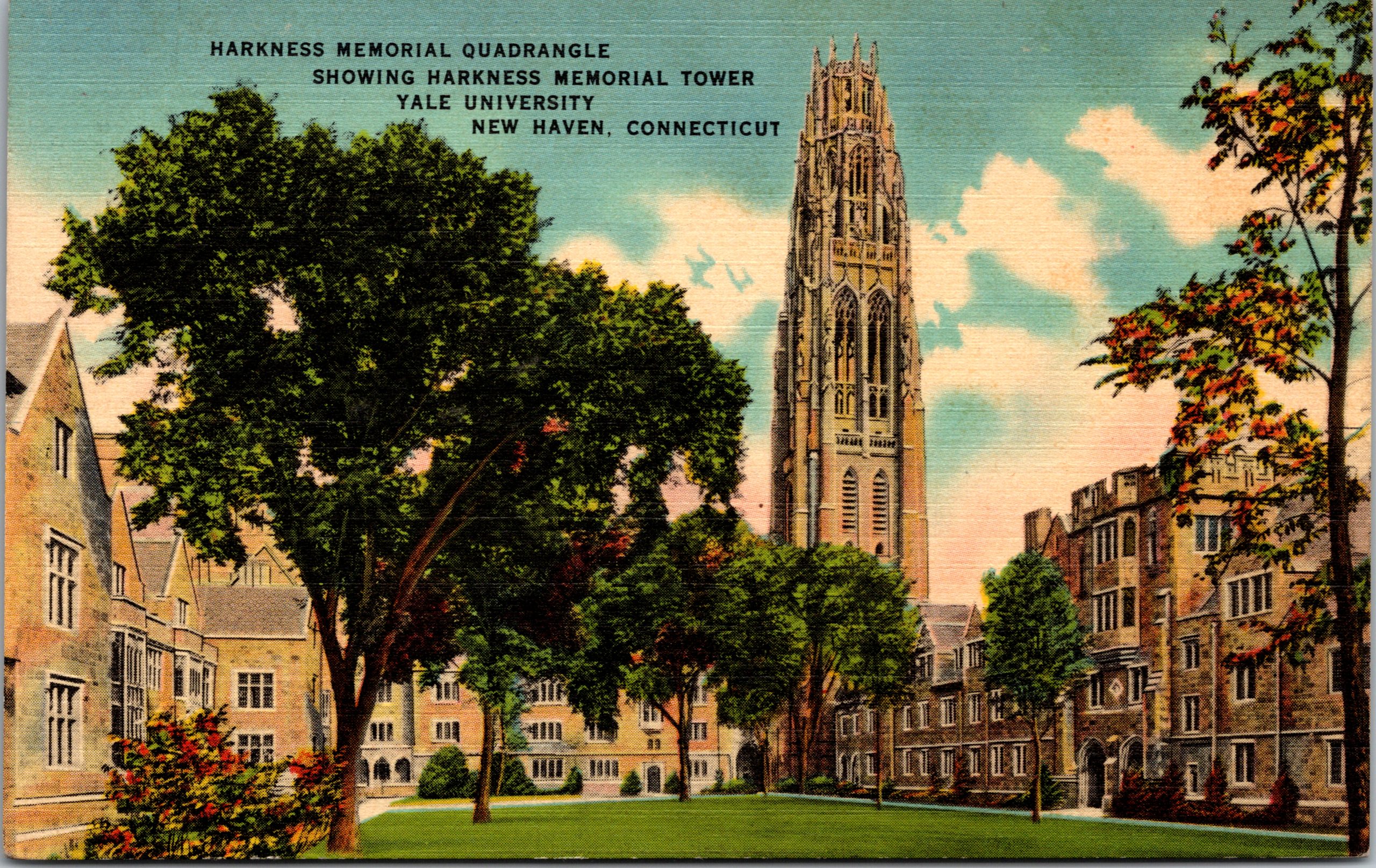
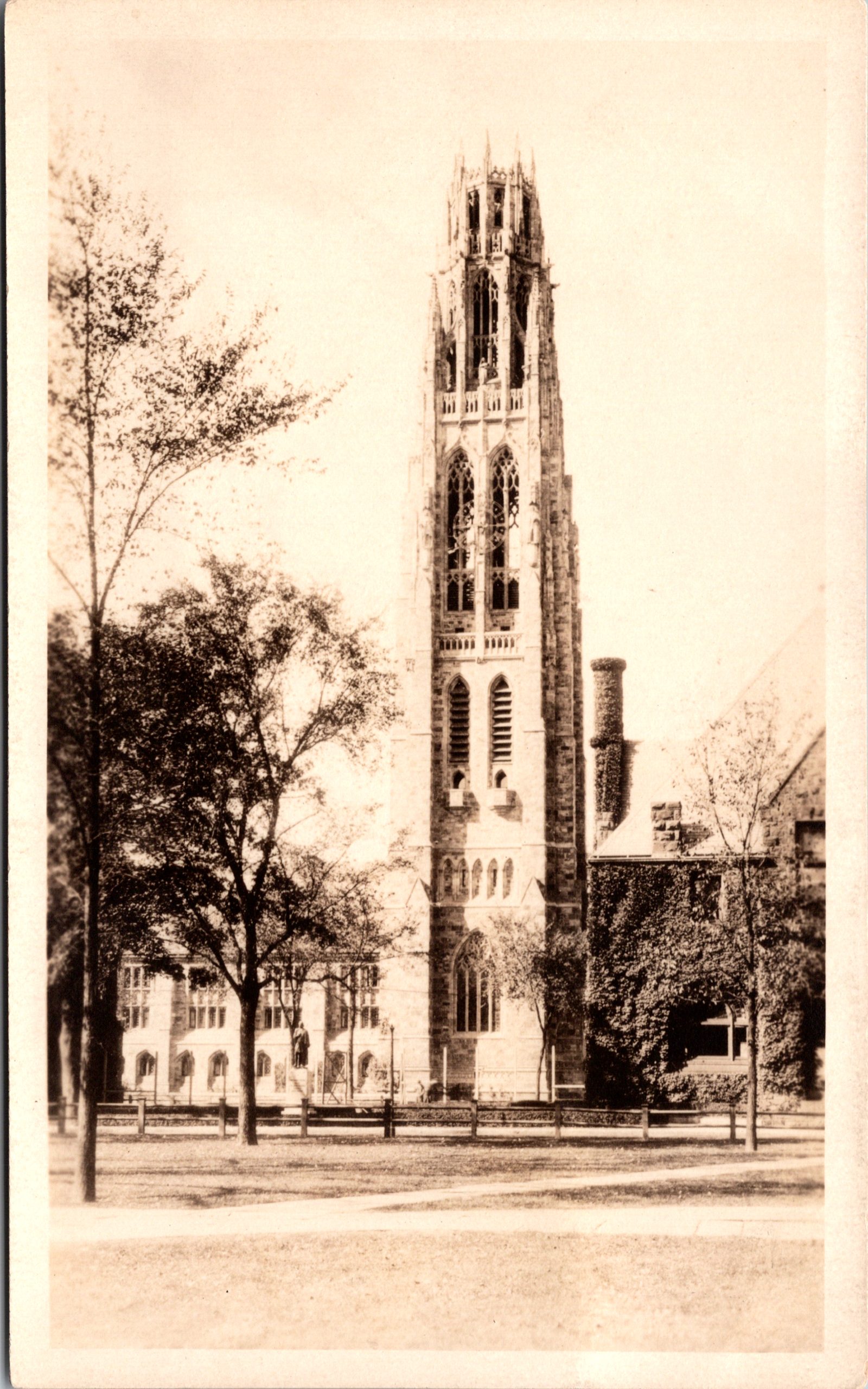
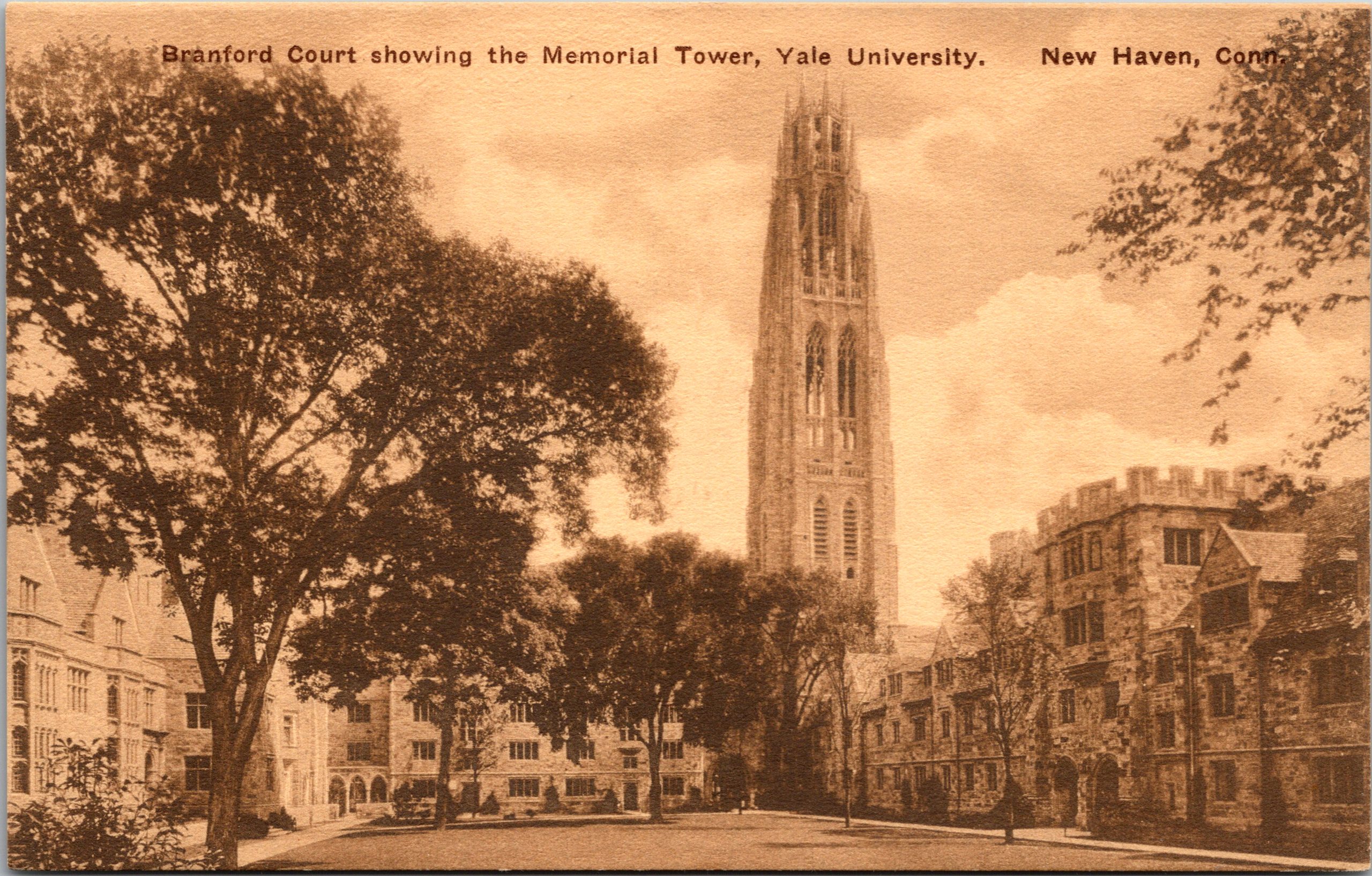
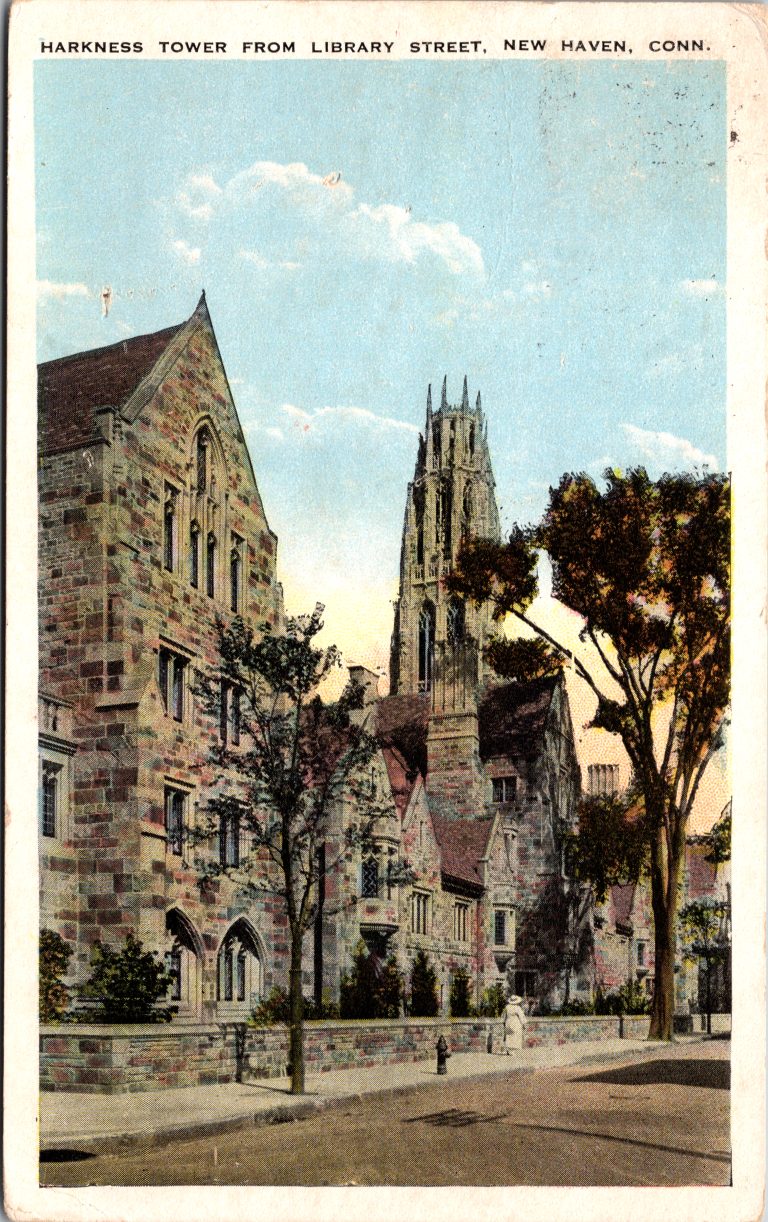
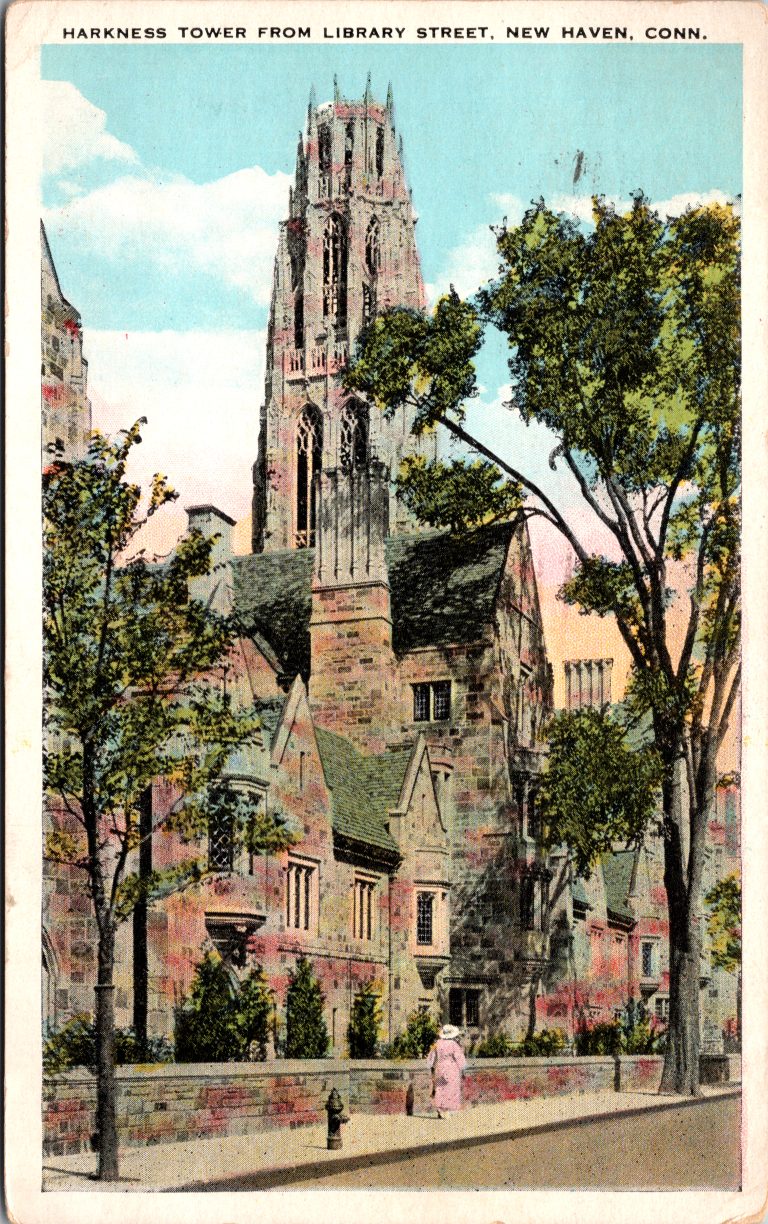
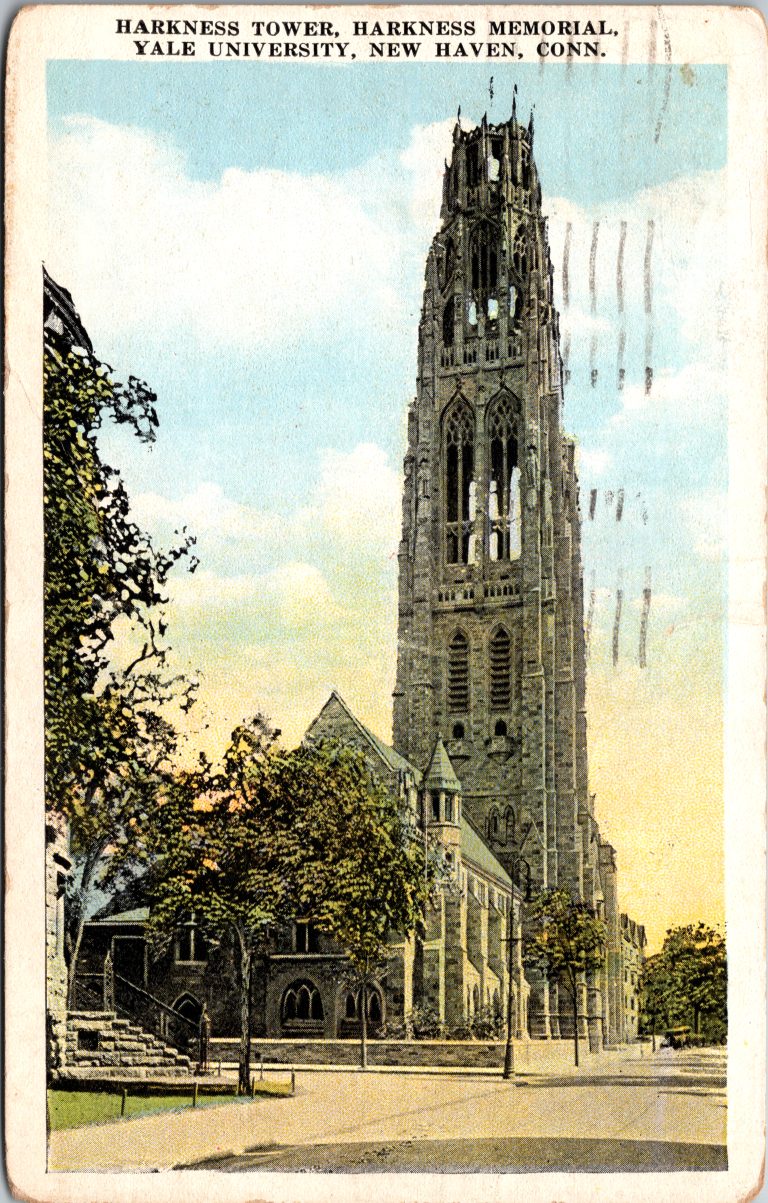
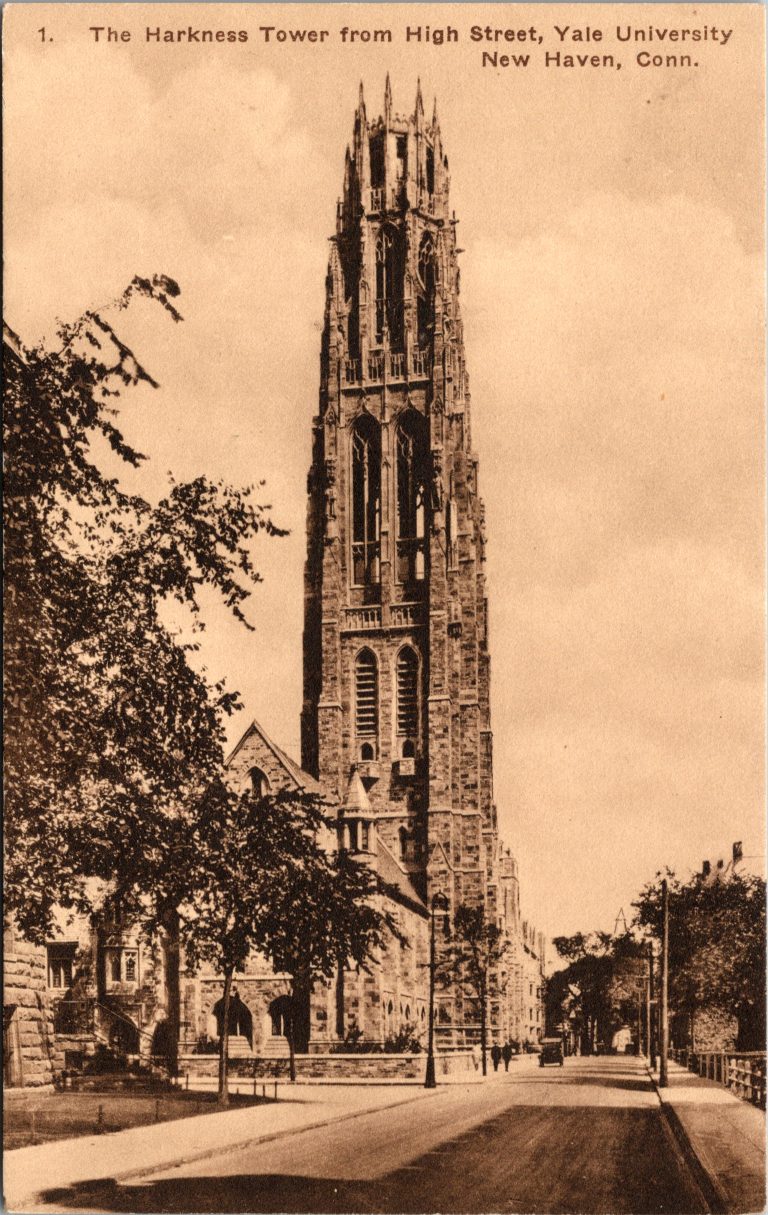
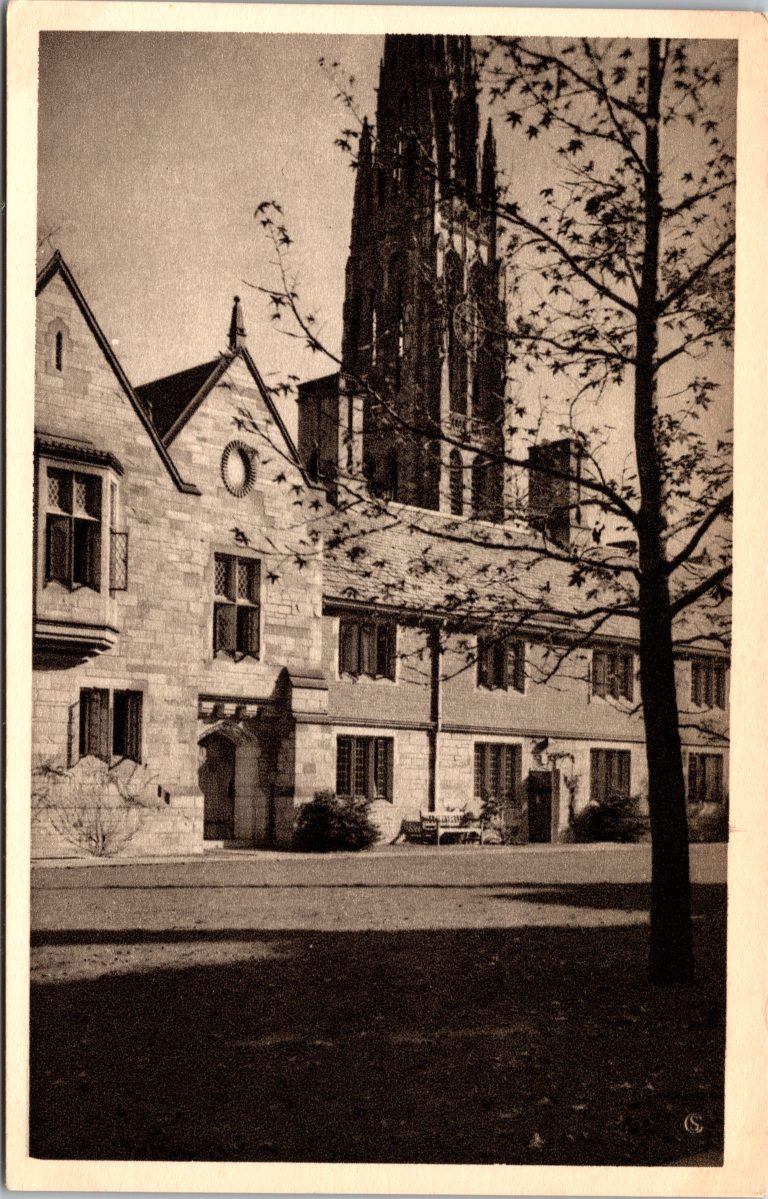
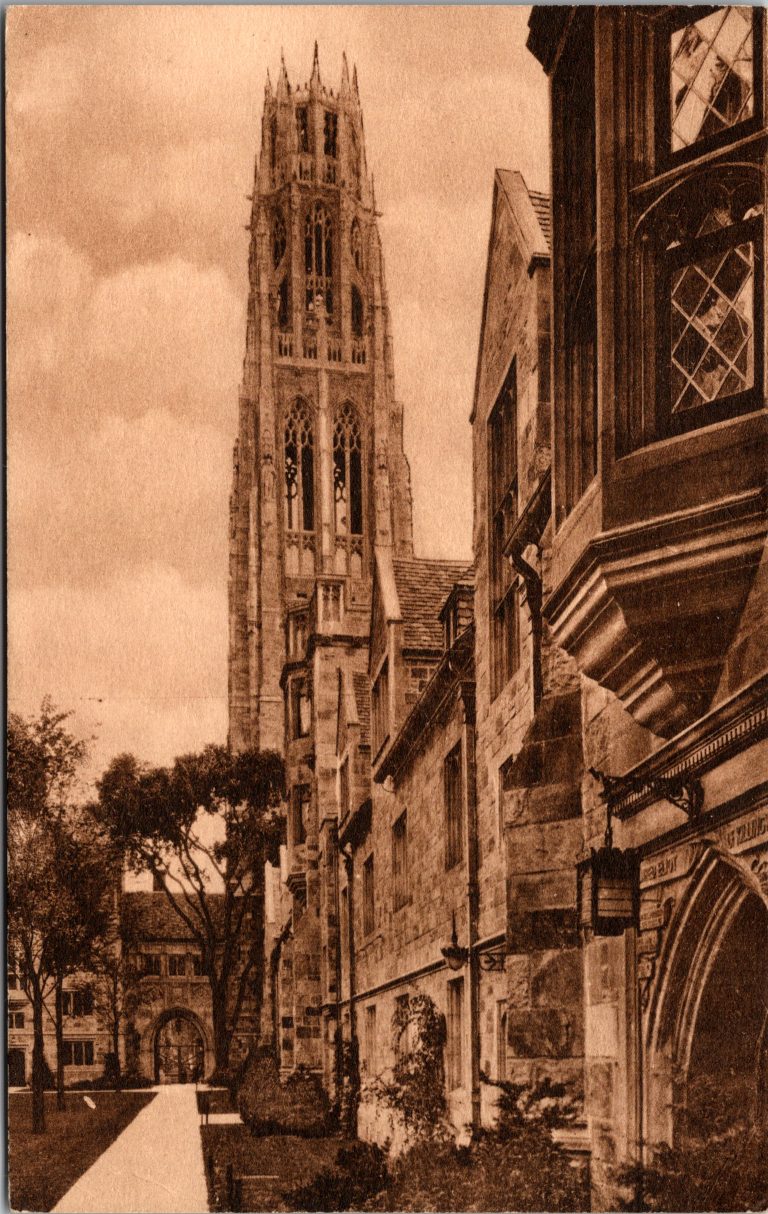
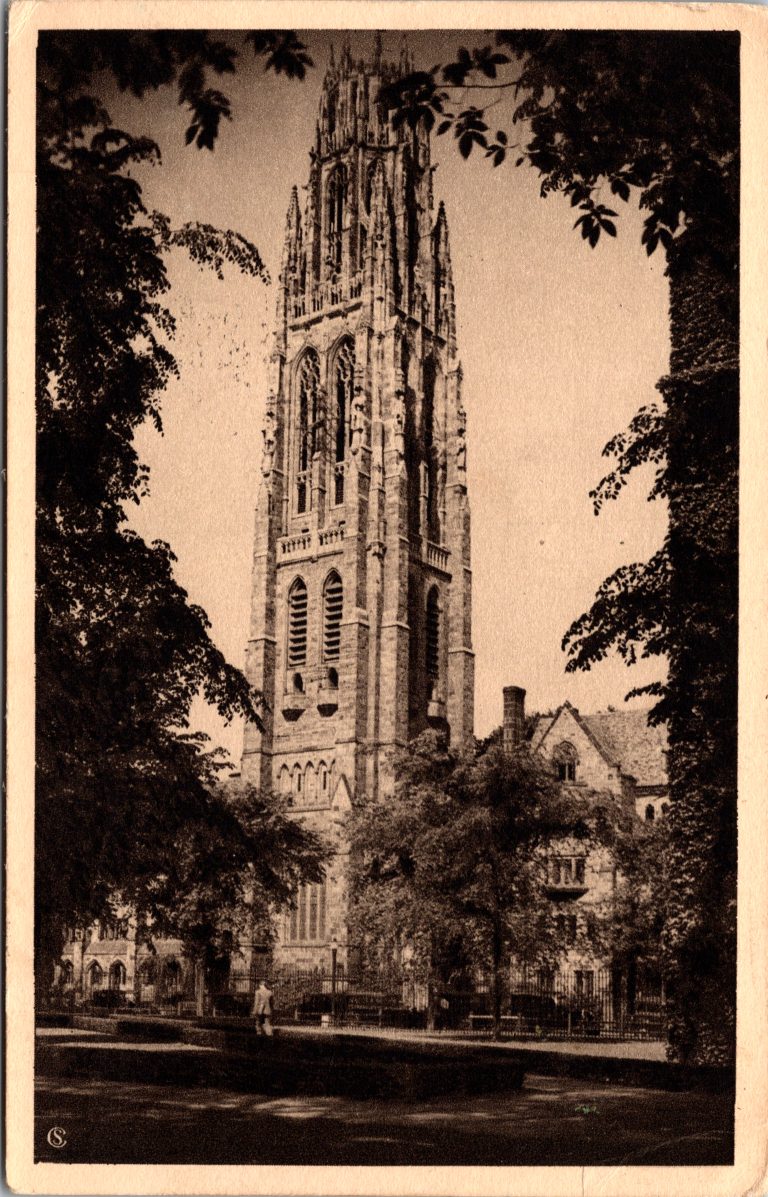
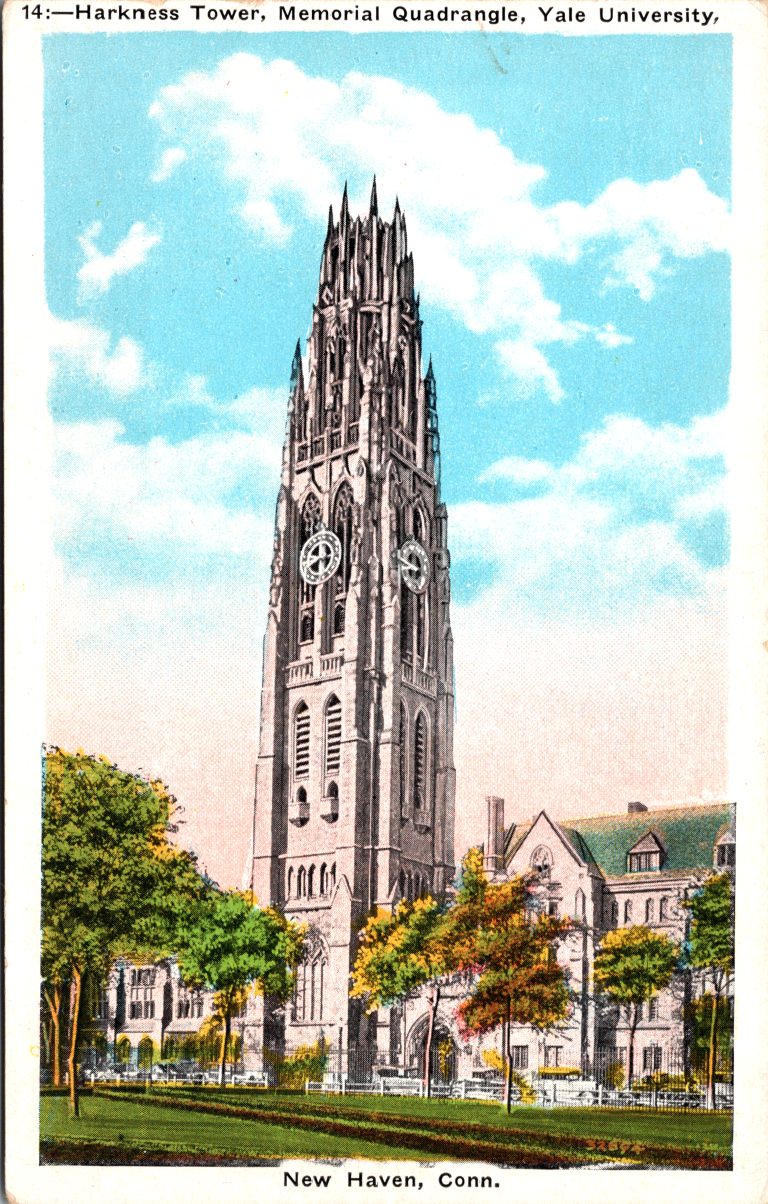
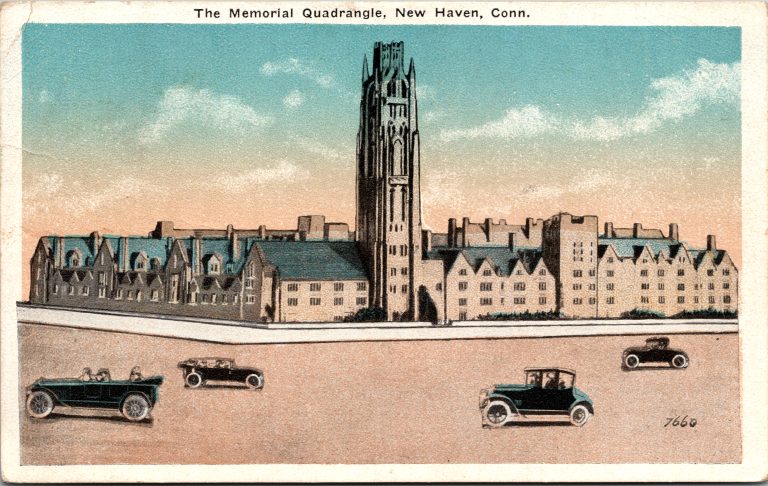
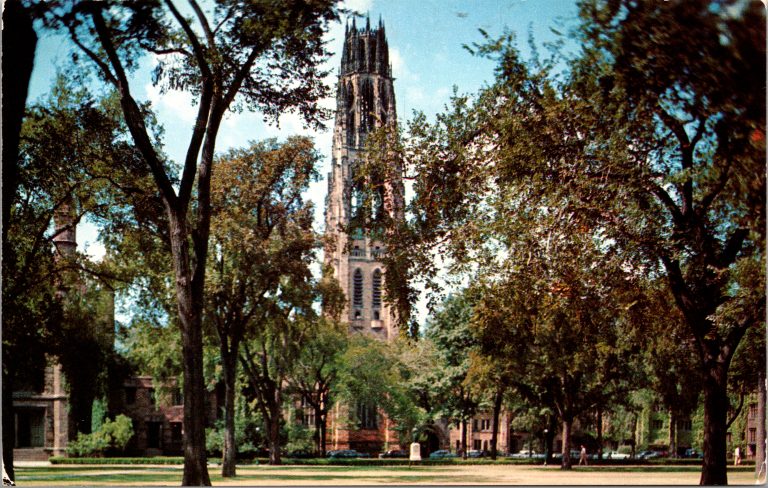
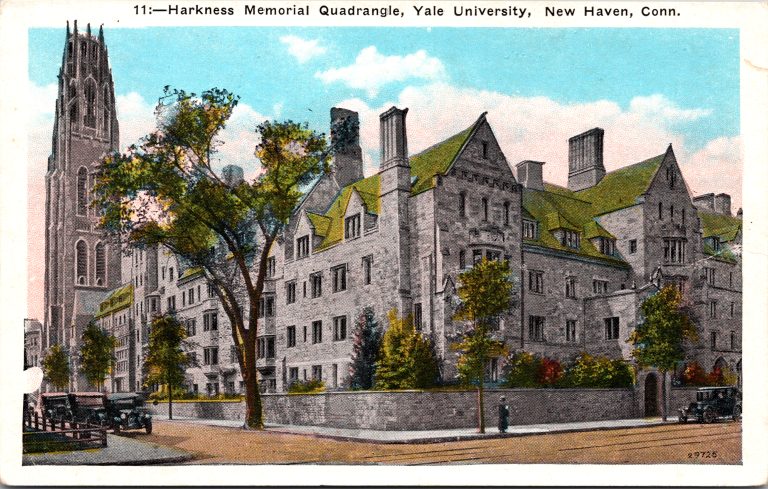
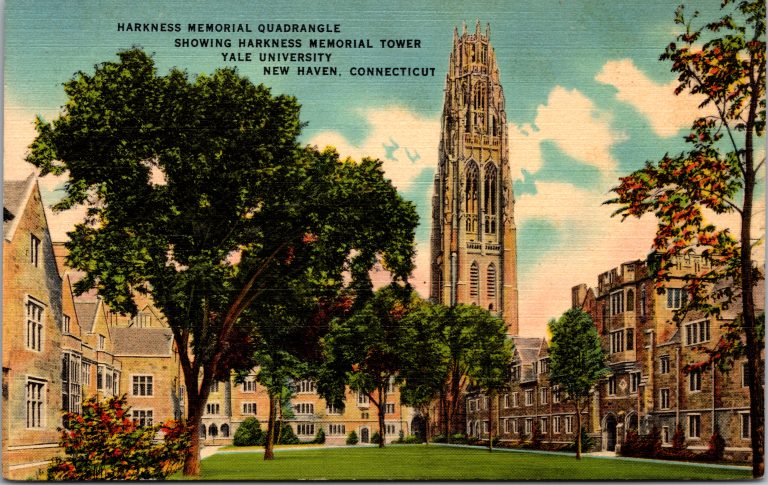
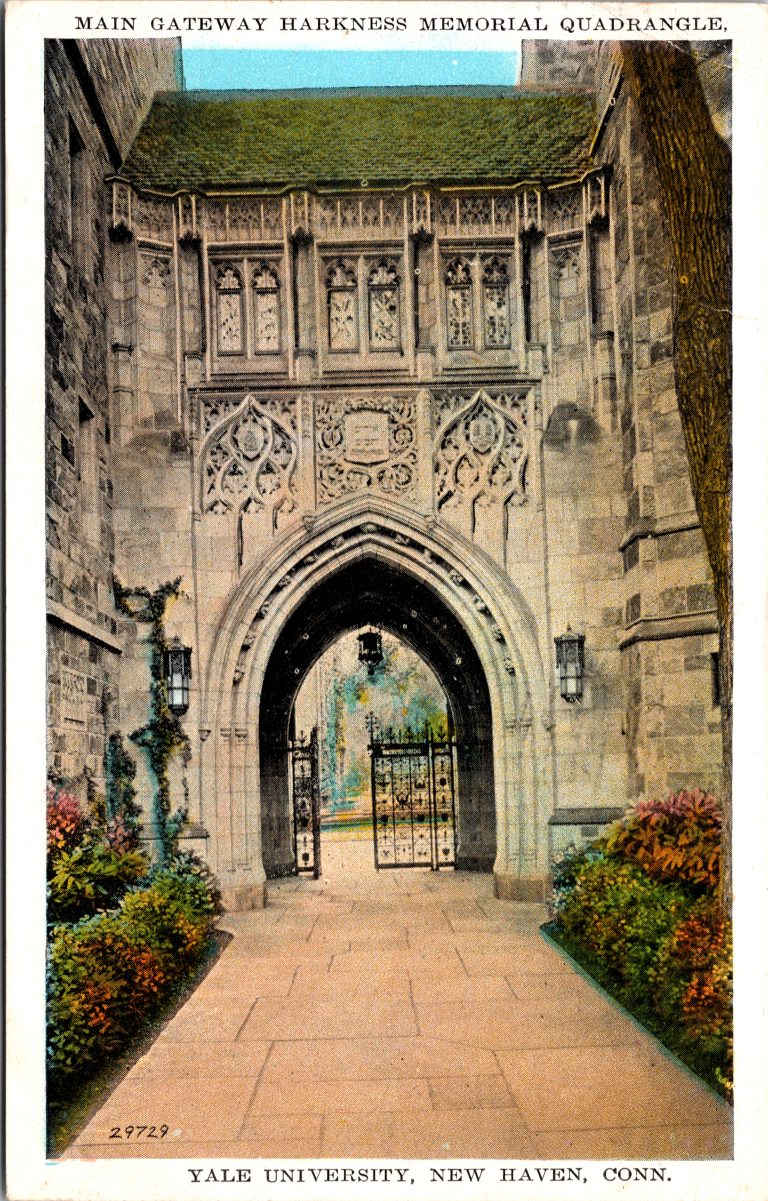
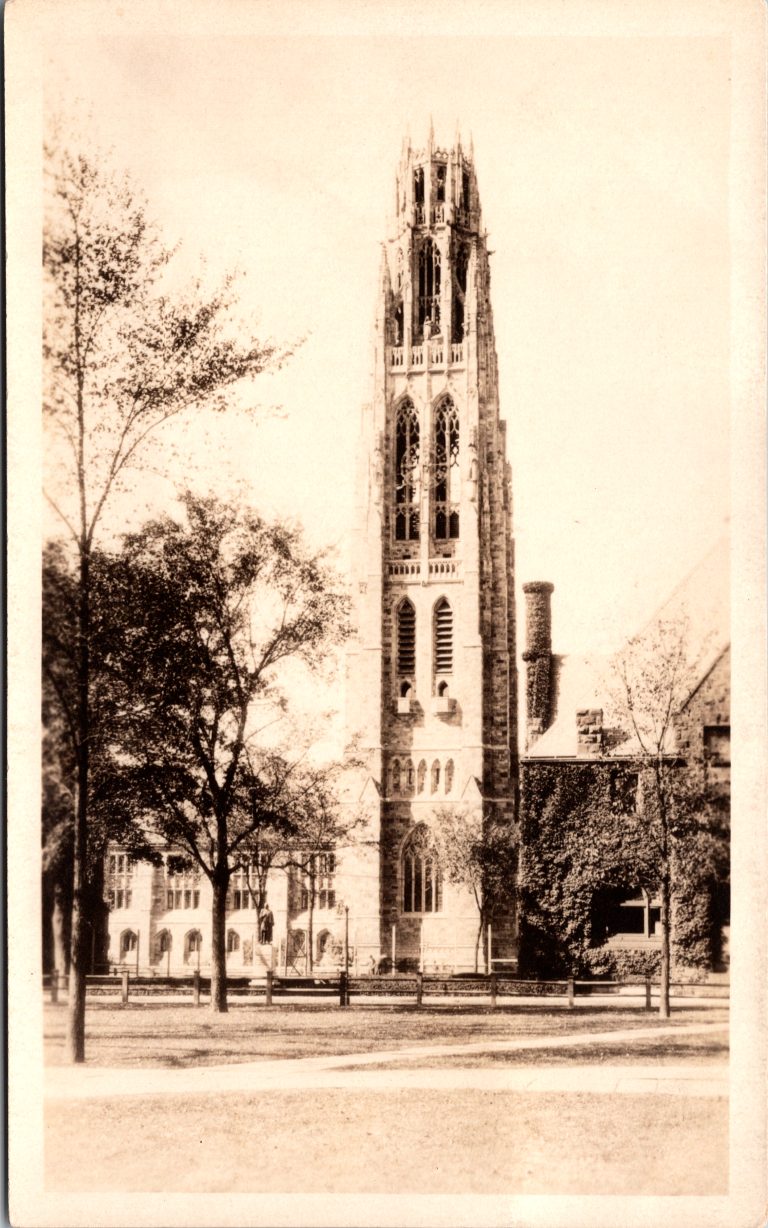
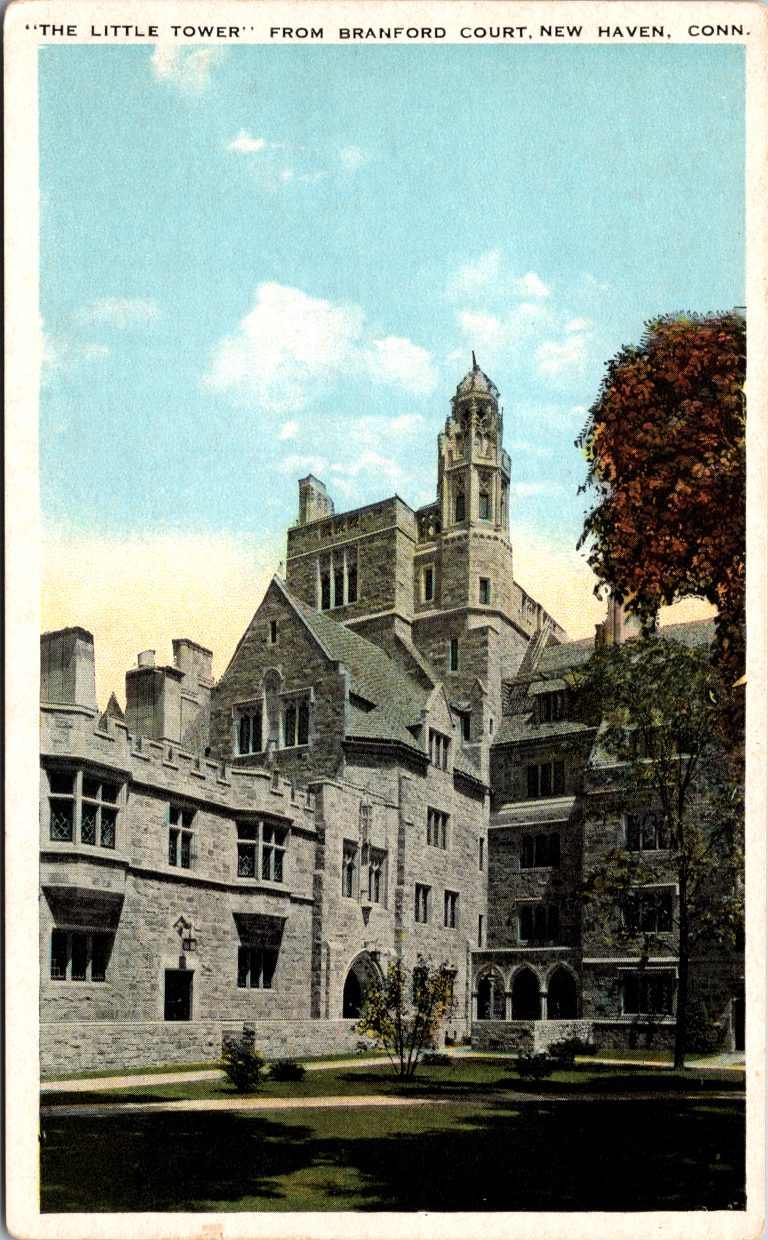
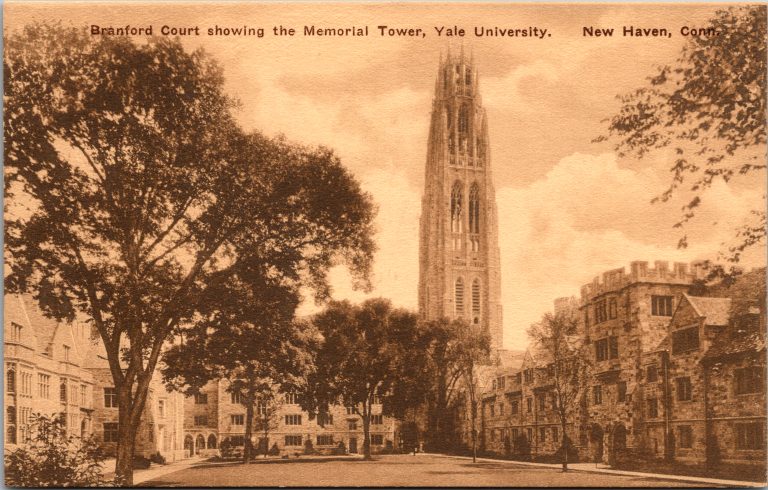
Harkness Tower was completed in 1922 as the campanile of the newly built Memorial Quadrangle (the complex that later became Branford and Saybrook Colleges), funded by Anna M. Harkness in memory of her son Charles William Harkness ’83. Designed by James Gamble Rogers and deliberately weathered to look medieval, it was for a time the tallest free-standing stone tower in the world. Its 54 bells make up the Yale Memorial Carillon, installed in 1922, massively enlarged in 1966, and now one of the most famous university carillons in the United States. The tower became the defining vertical emblem of Yale’s “Collegiate Gothic” era, establishing the campus skyline and Yale’s distinctive architectural identity for the 20th century.
Then-and-Now at Harkness Tower
In the below, the view on the left is what appears in one of the postcards from the collection, and the view on the right is a photo taken of the same camera angle in 2025. Use the slider to see how these views compare more than a century apart!
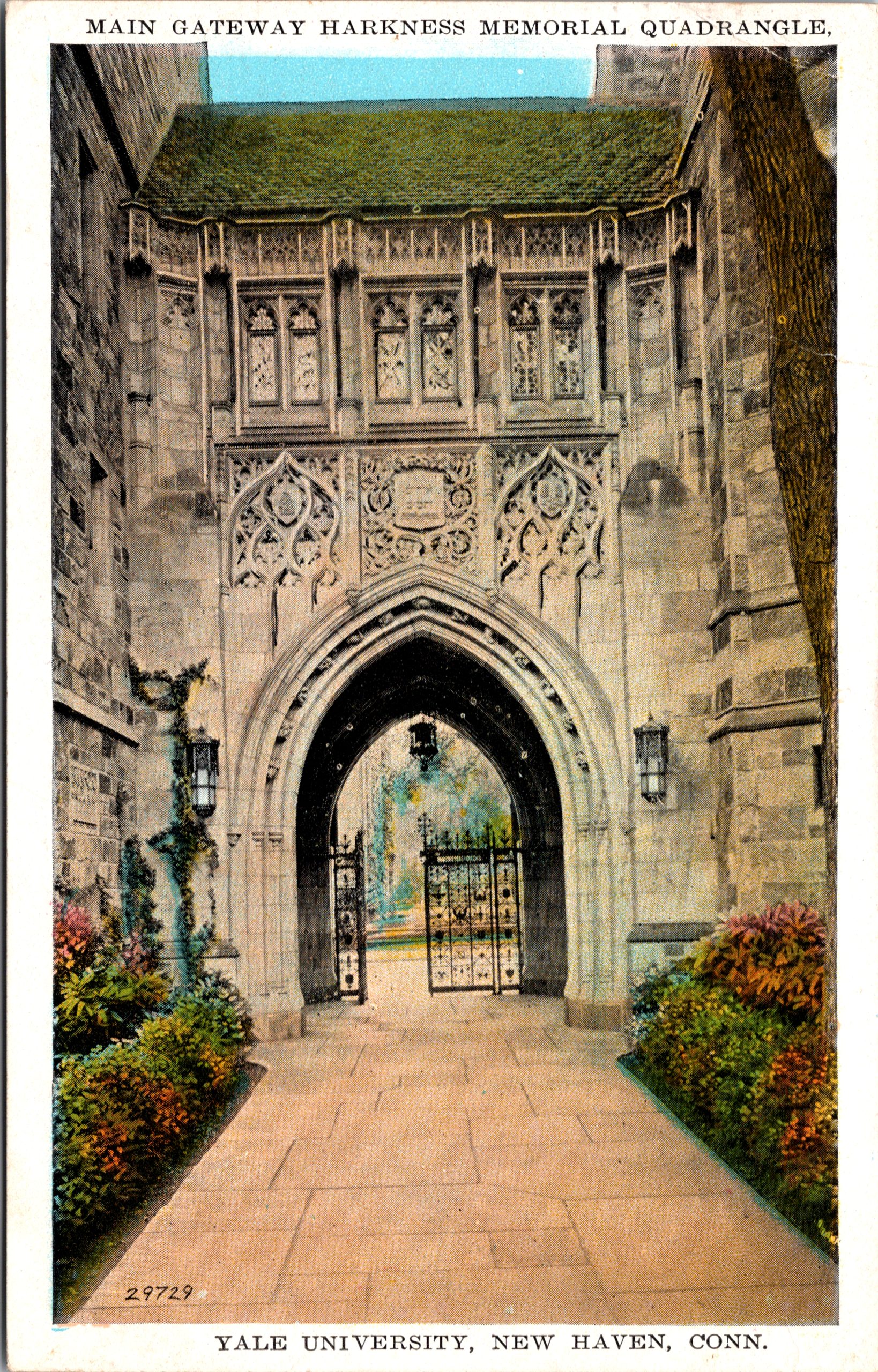
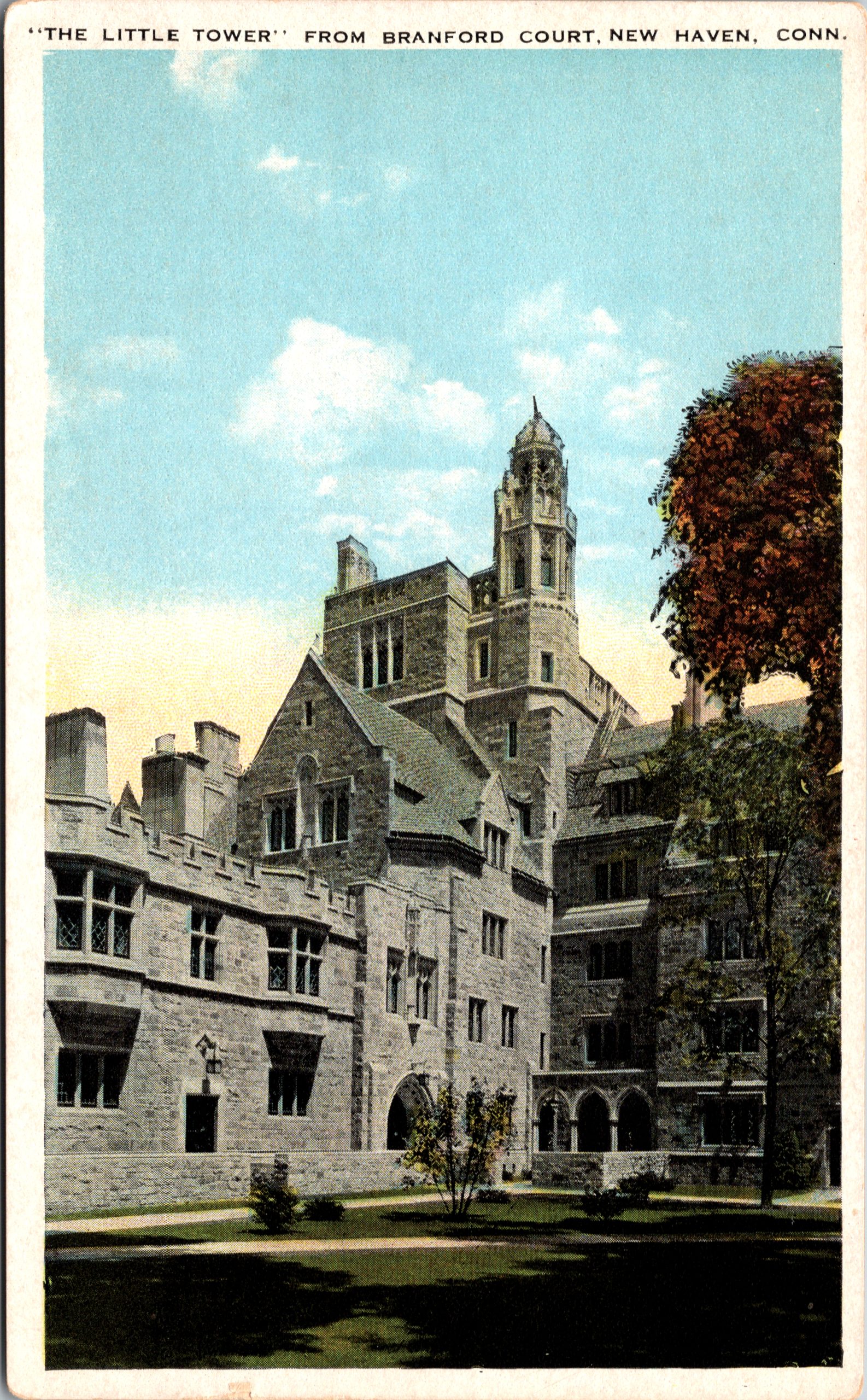
Postcard Views of Harkness Tower
Click or tap any of the postcard photos in the below gallery to zoom-in and explore further.
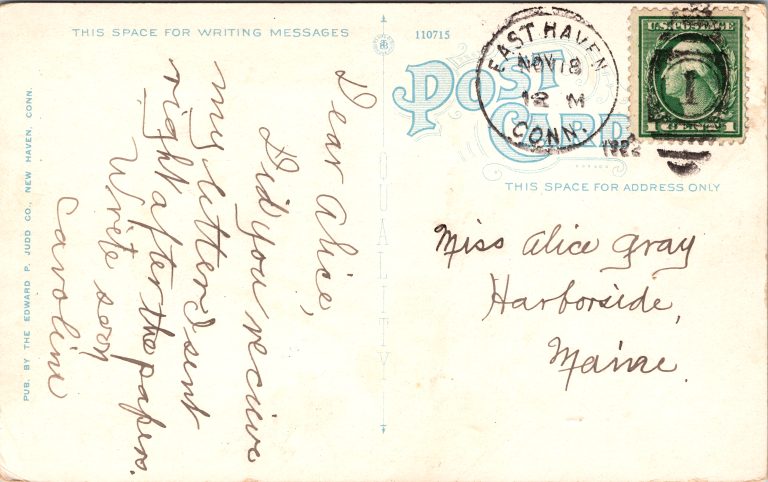
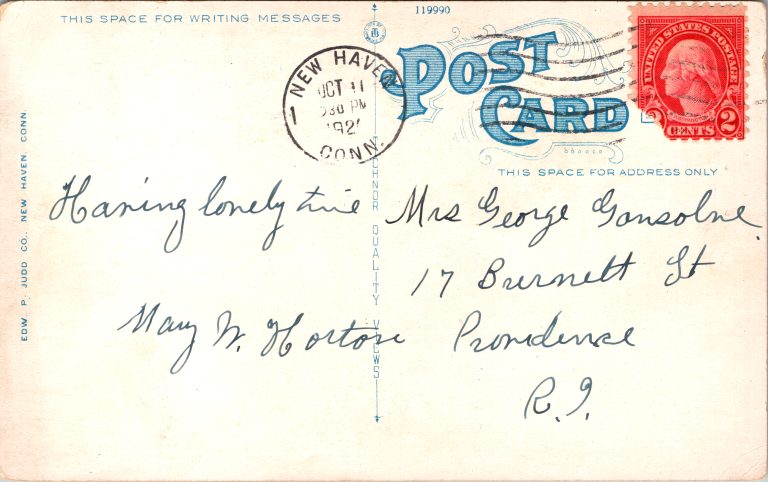
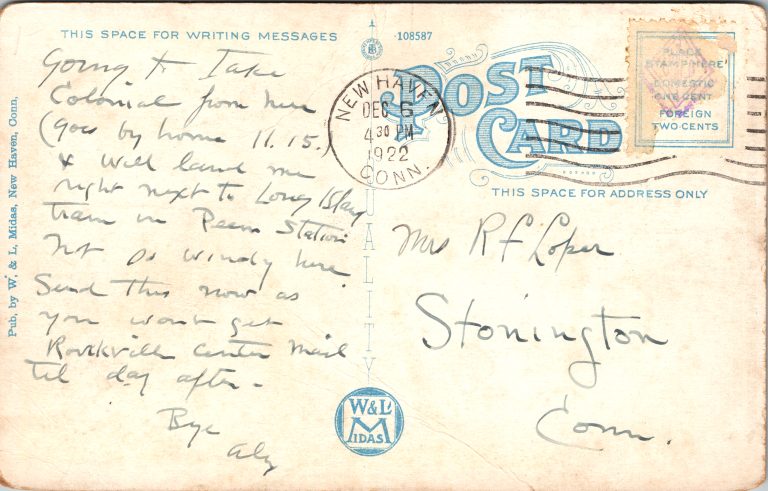
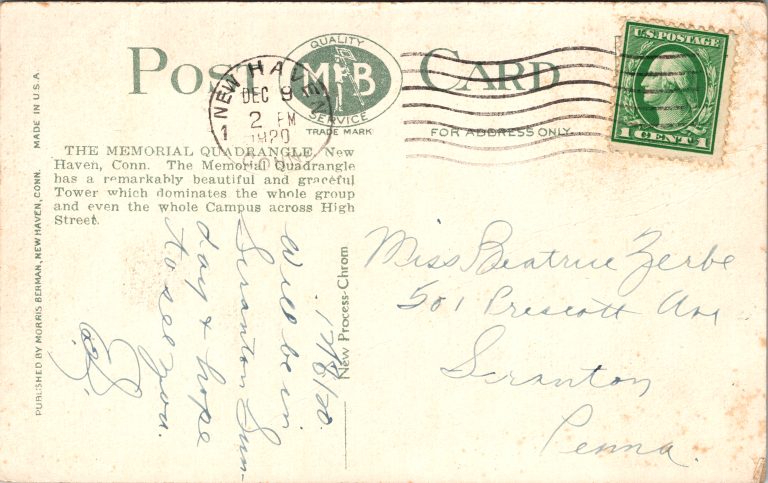
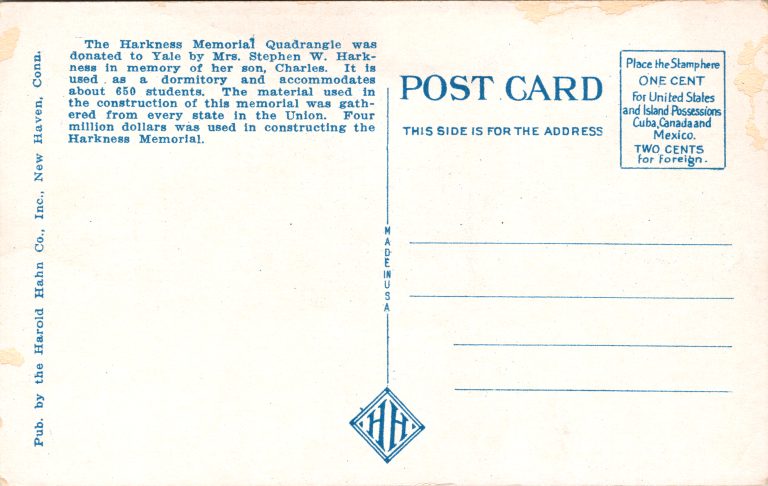
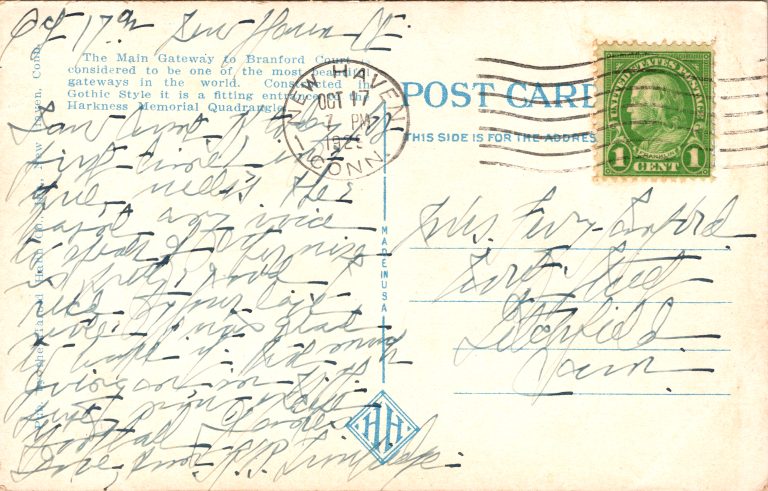
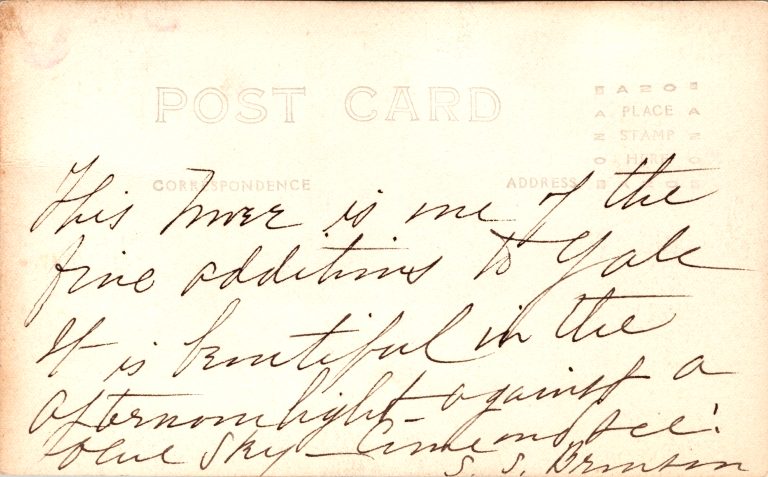
Front and Back of Harkness Tower Postcards
Mouse-over or tap any of the below postcards to see what the other side looks like!