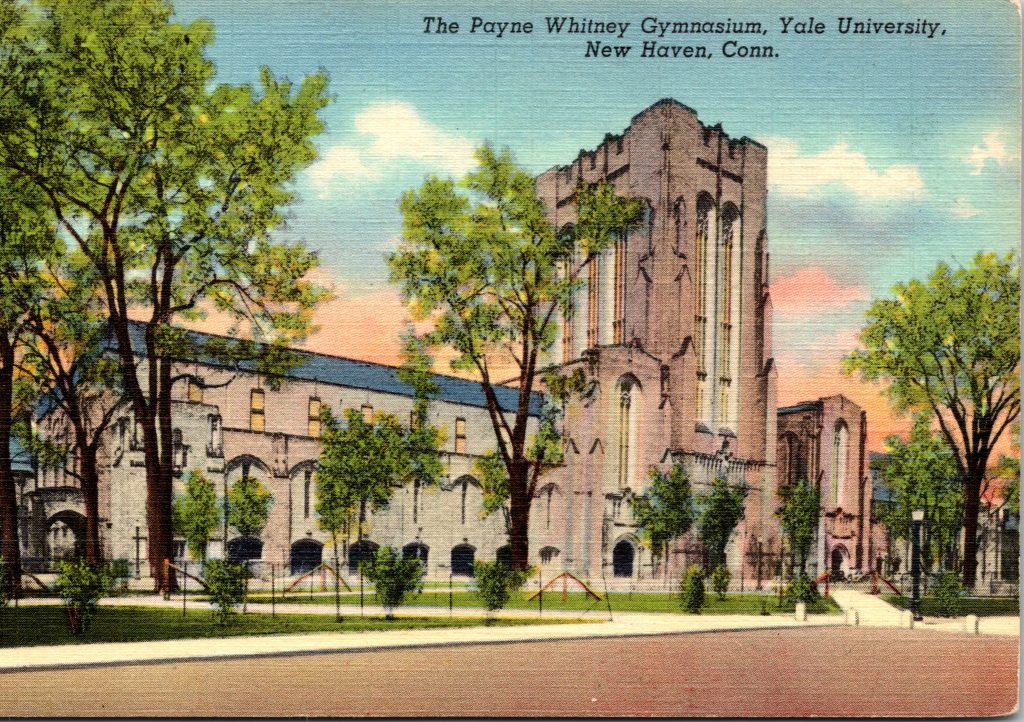
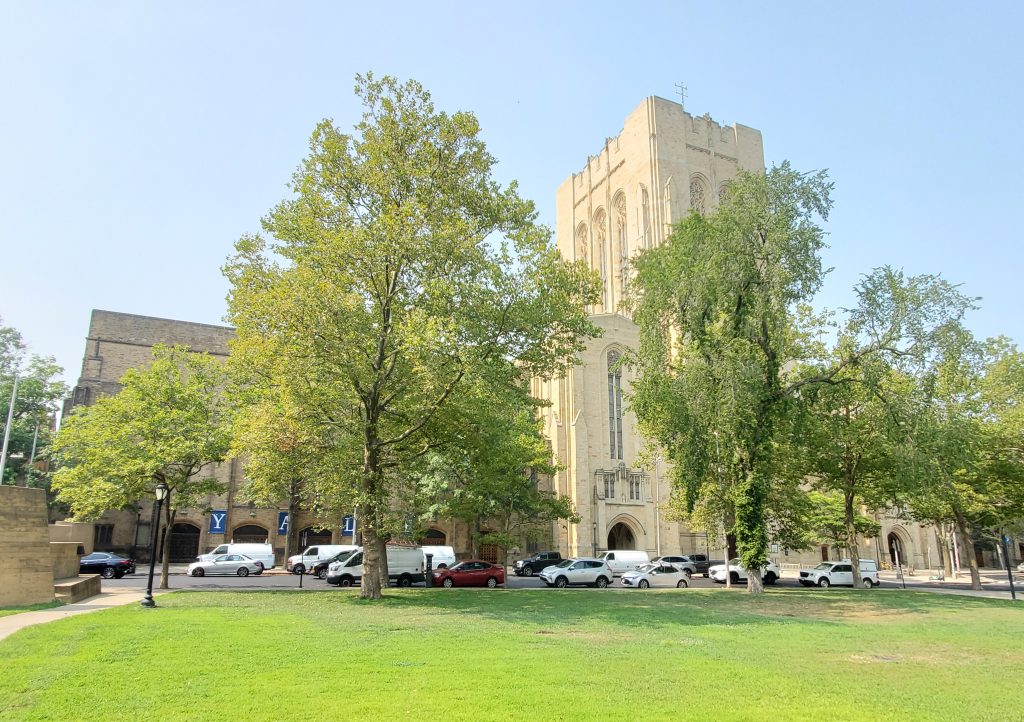
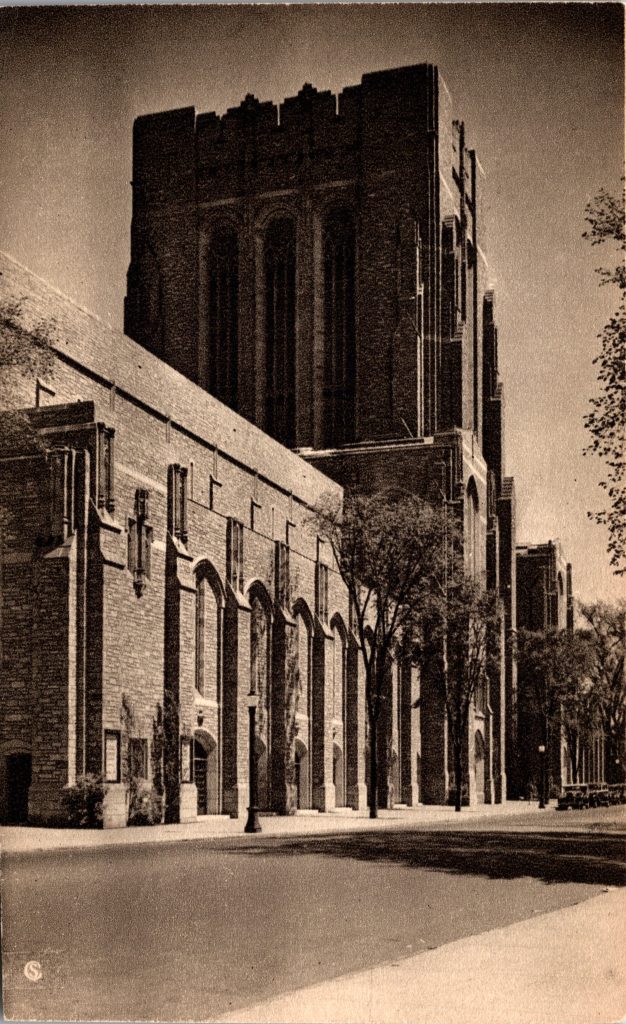
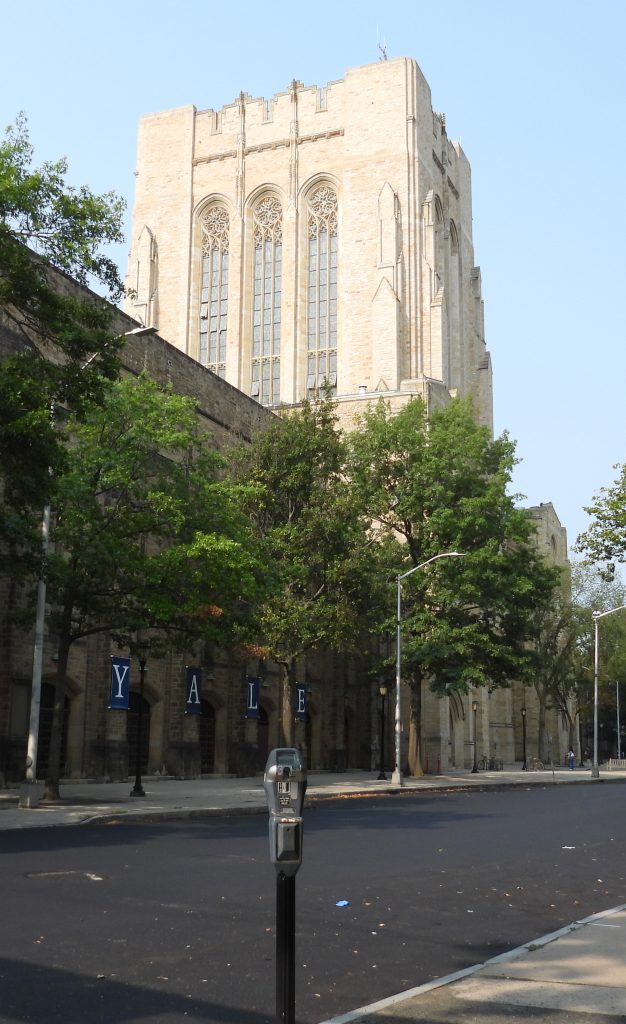
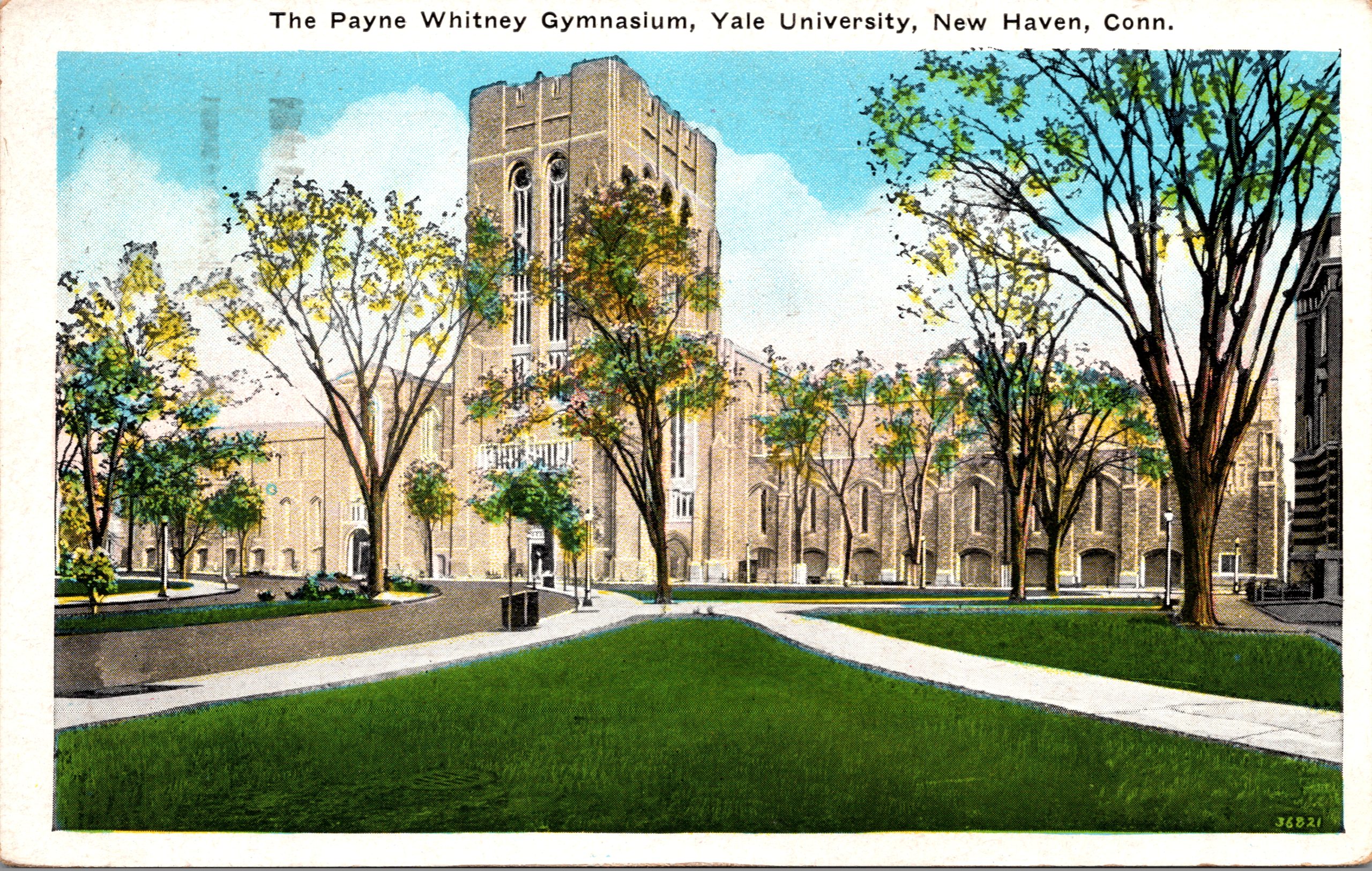
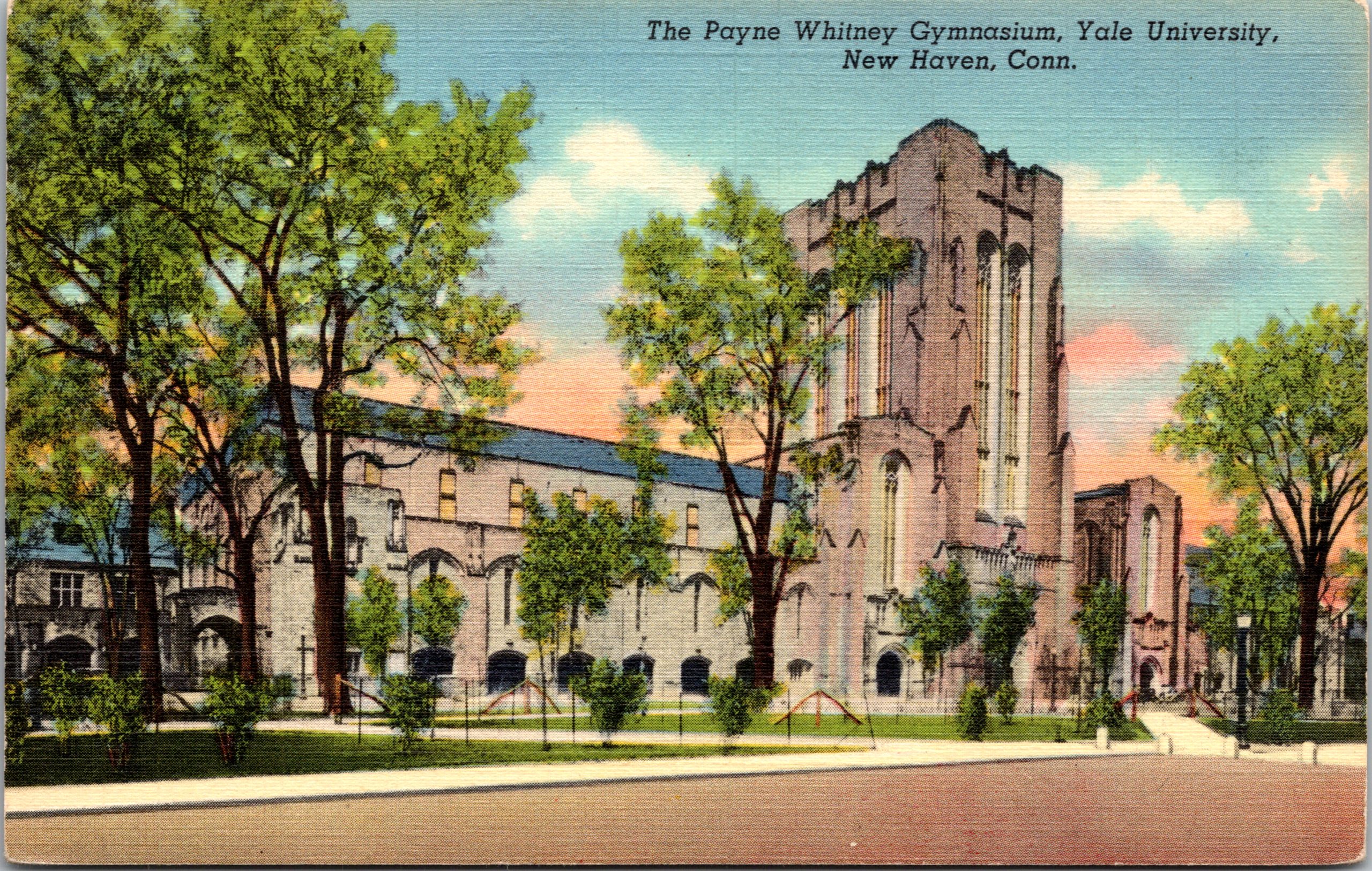
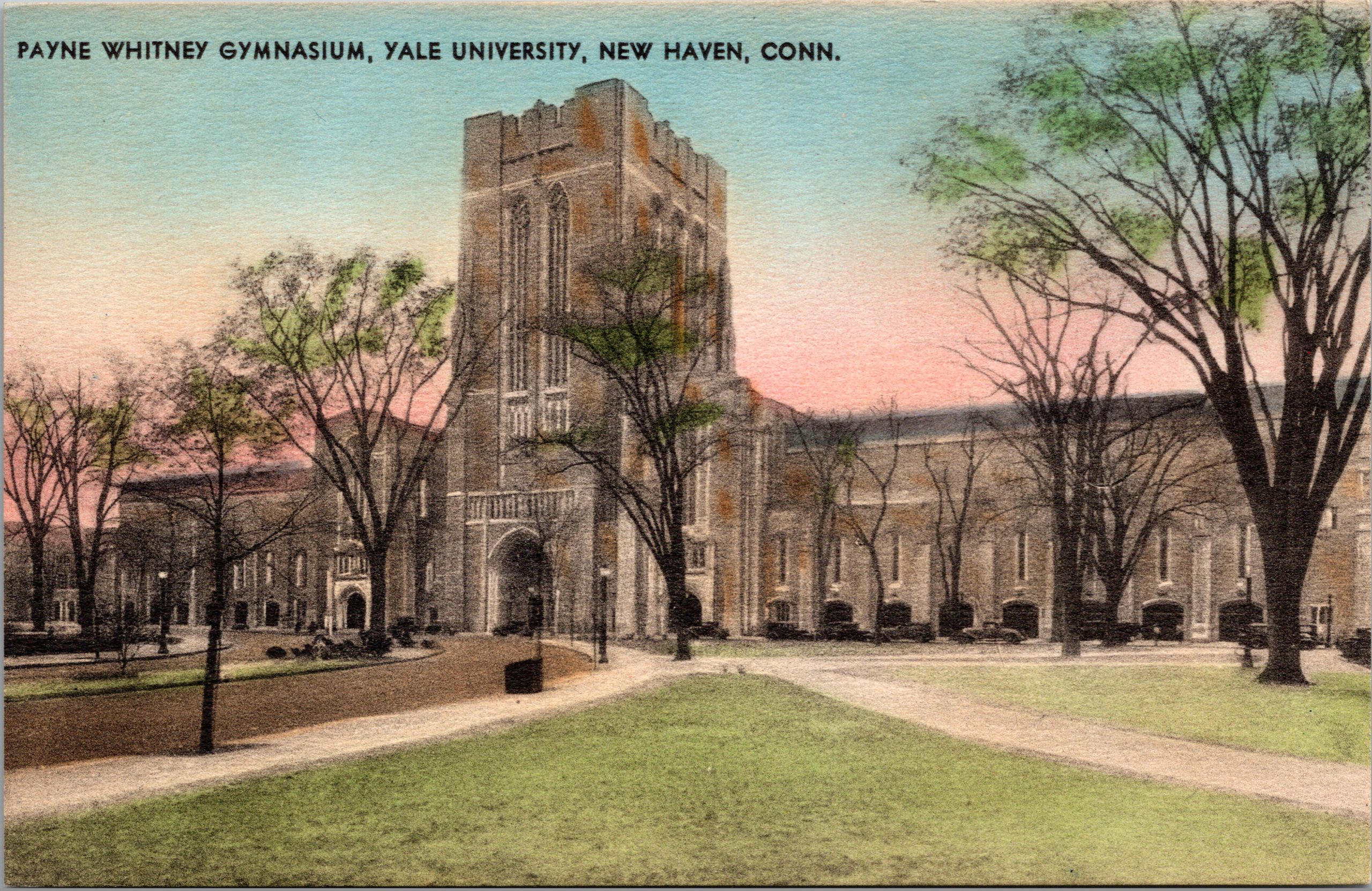
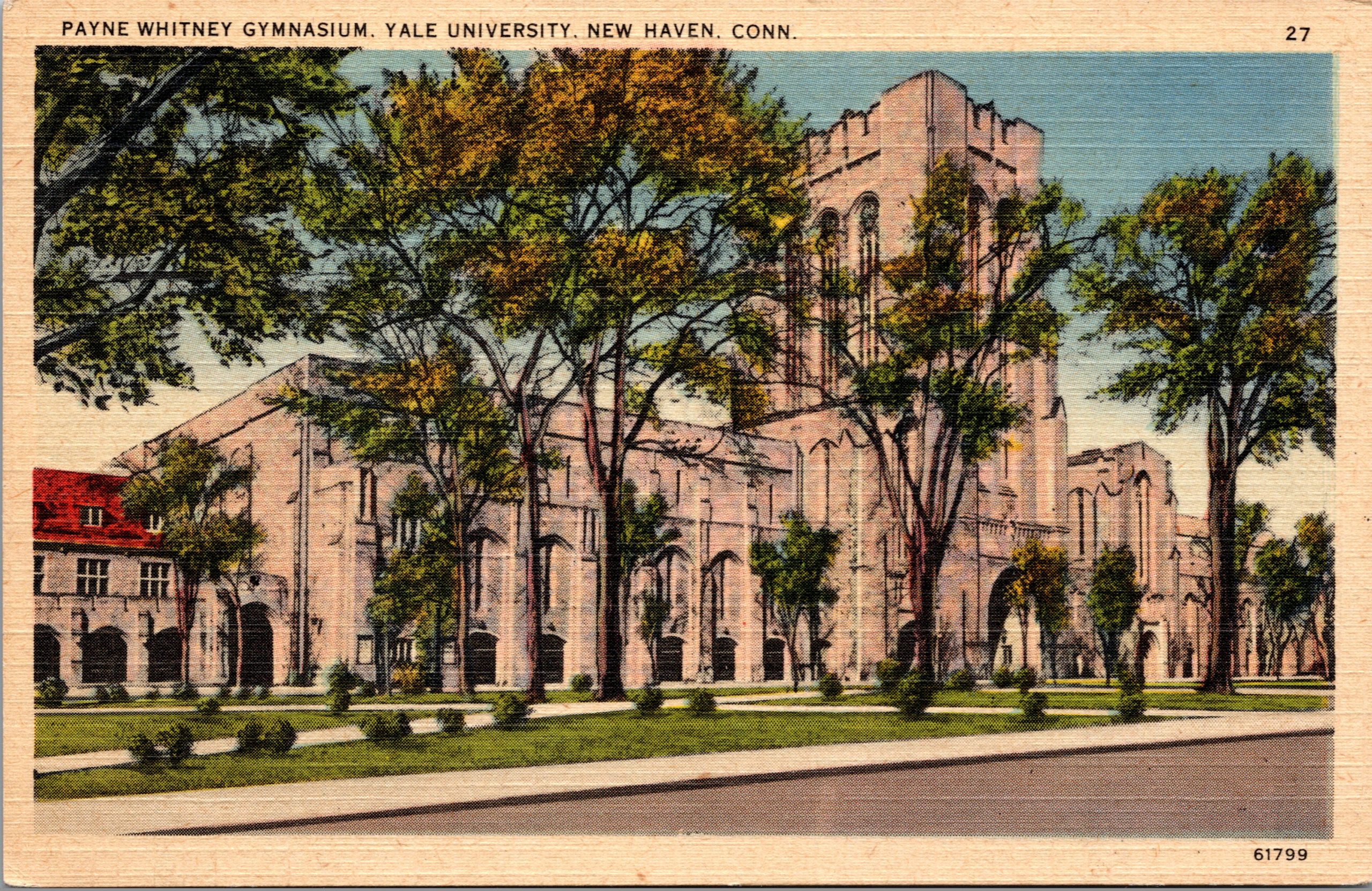
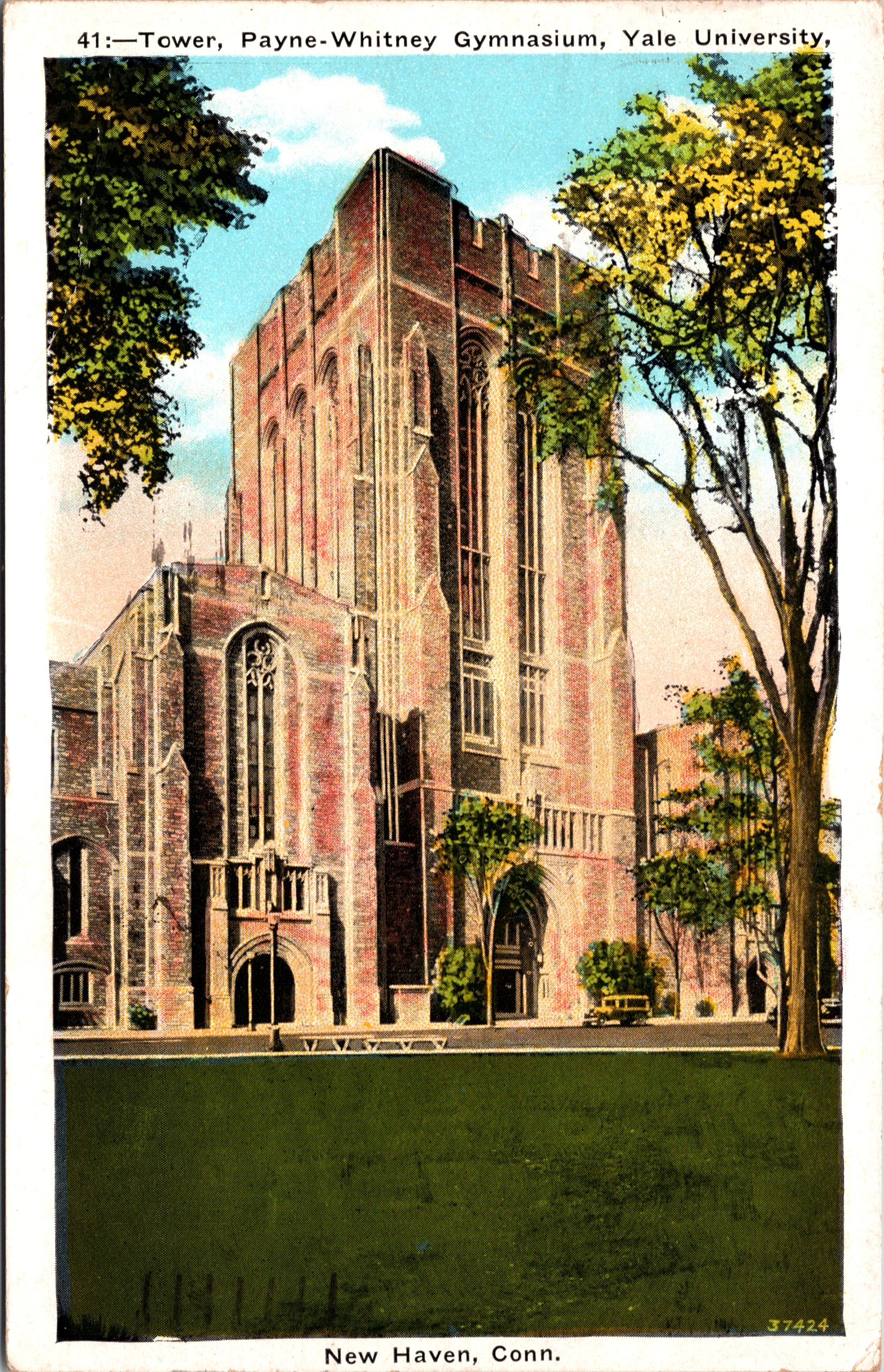
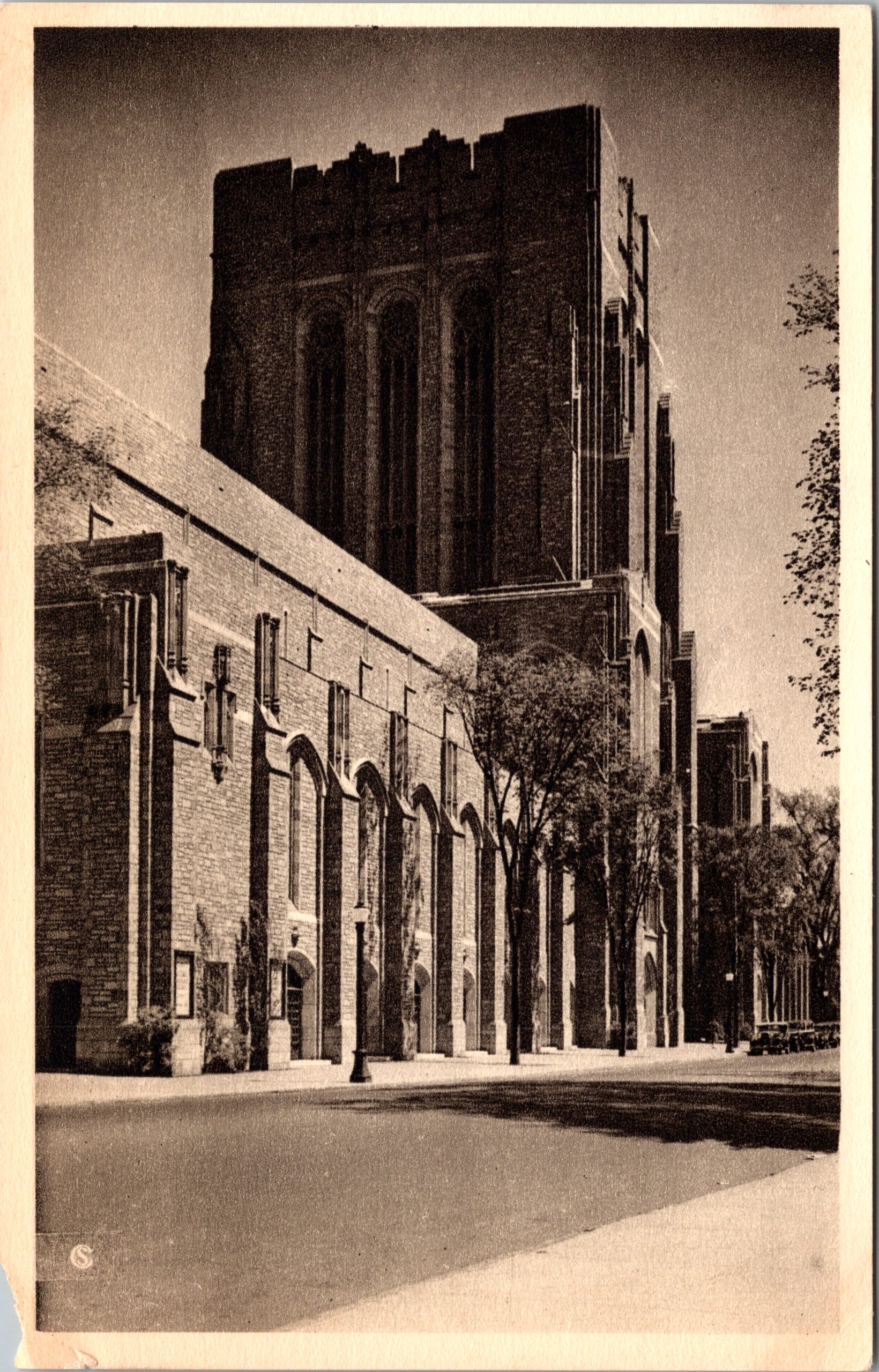
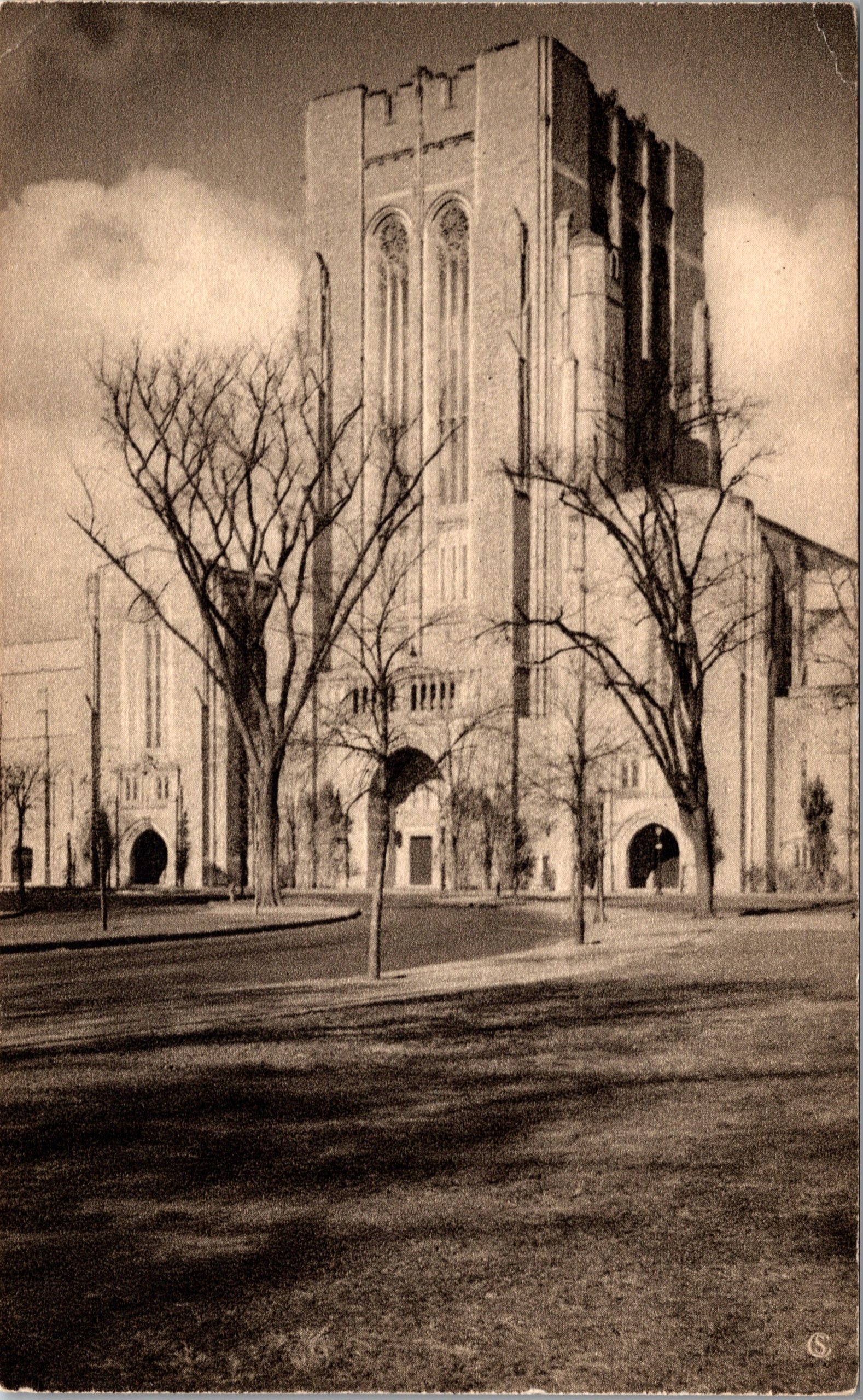
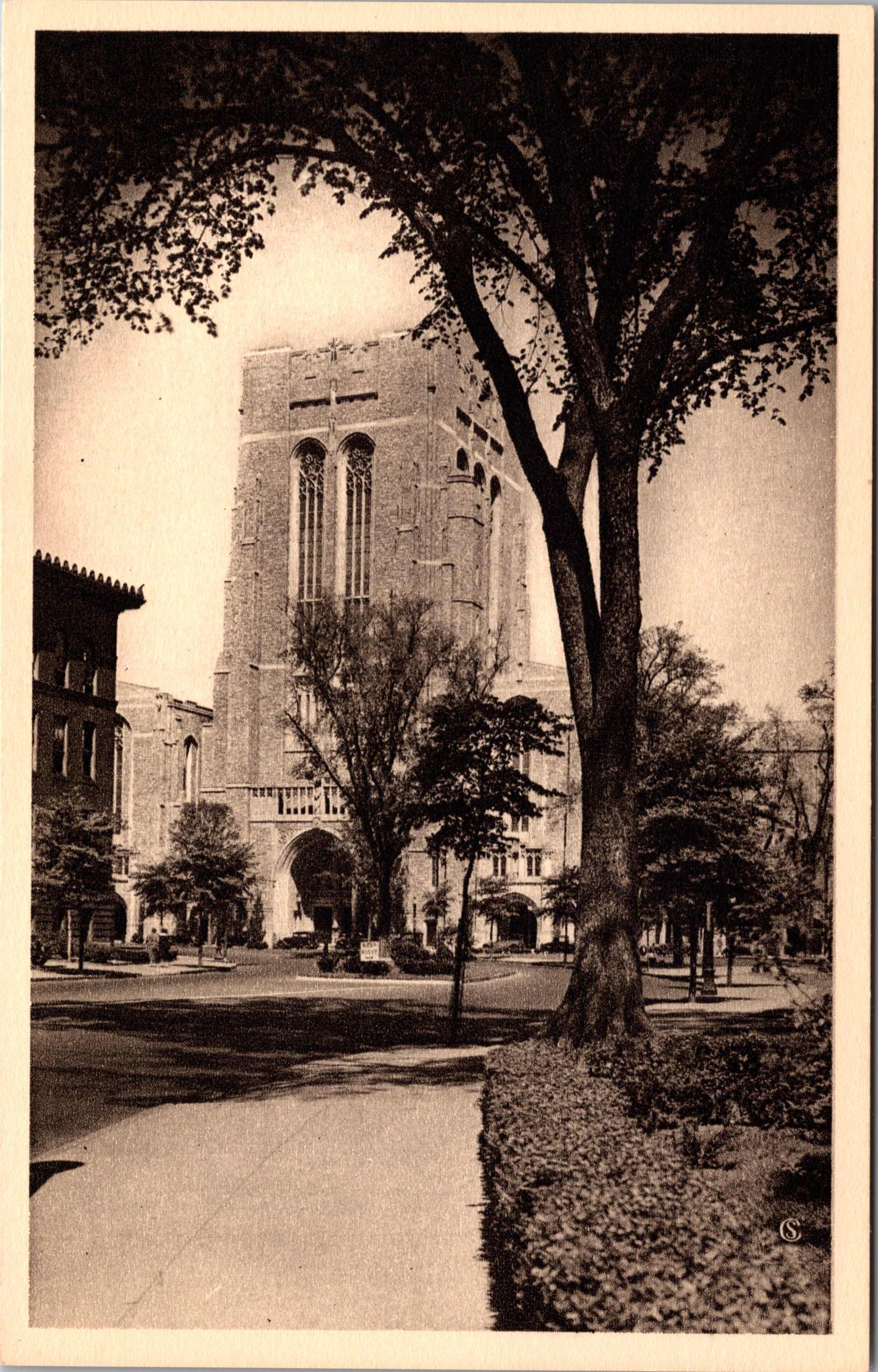
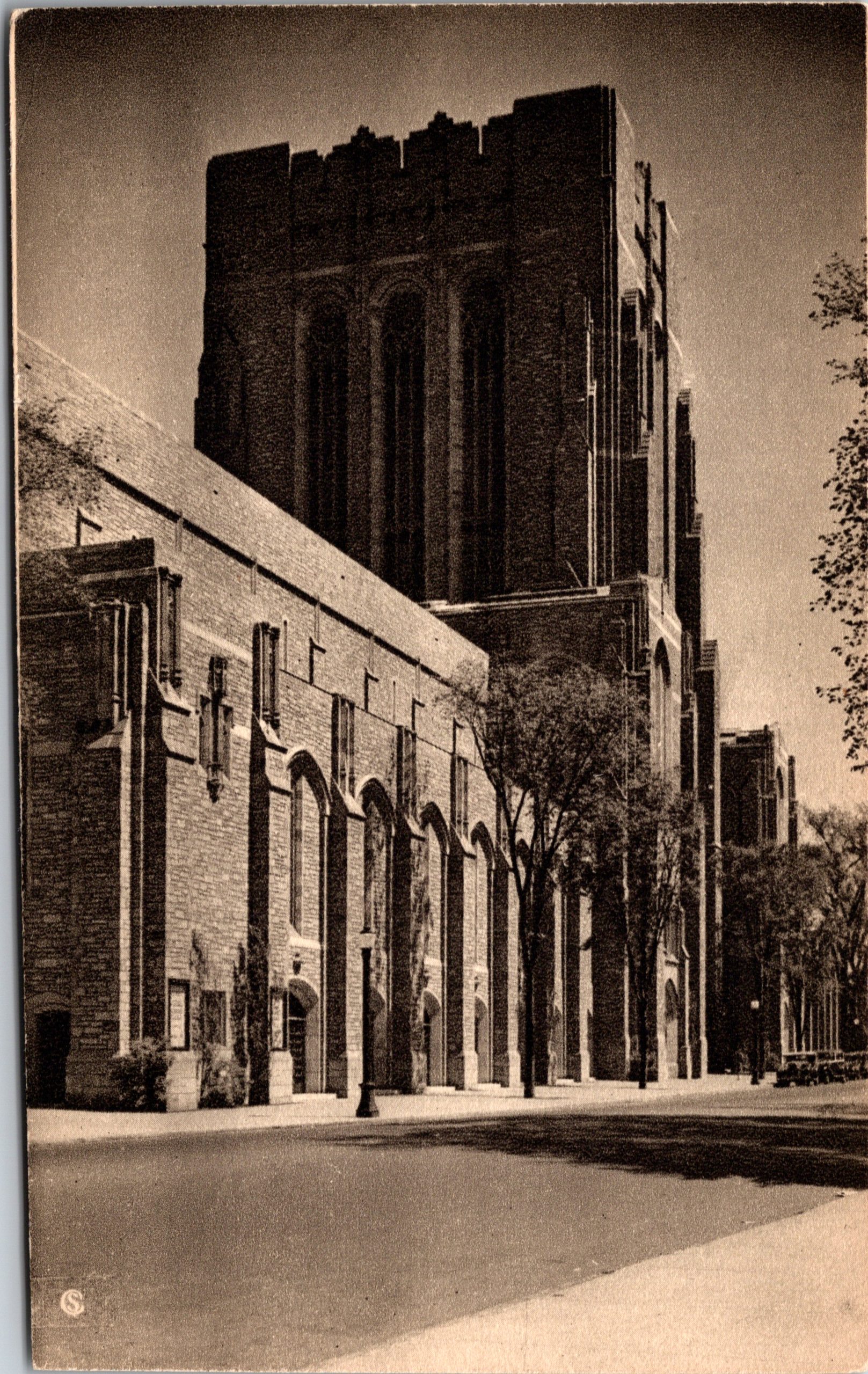
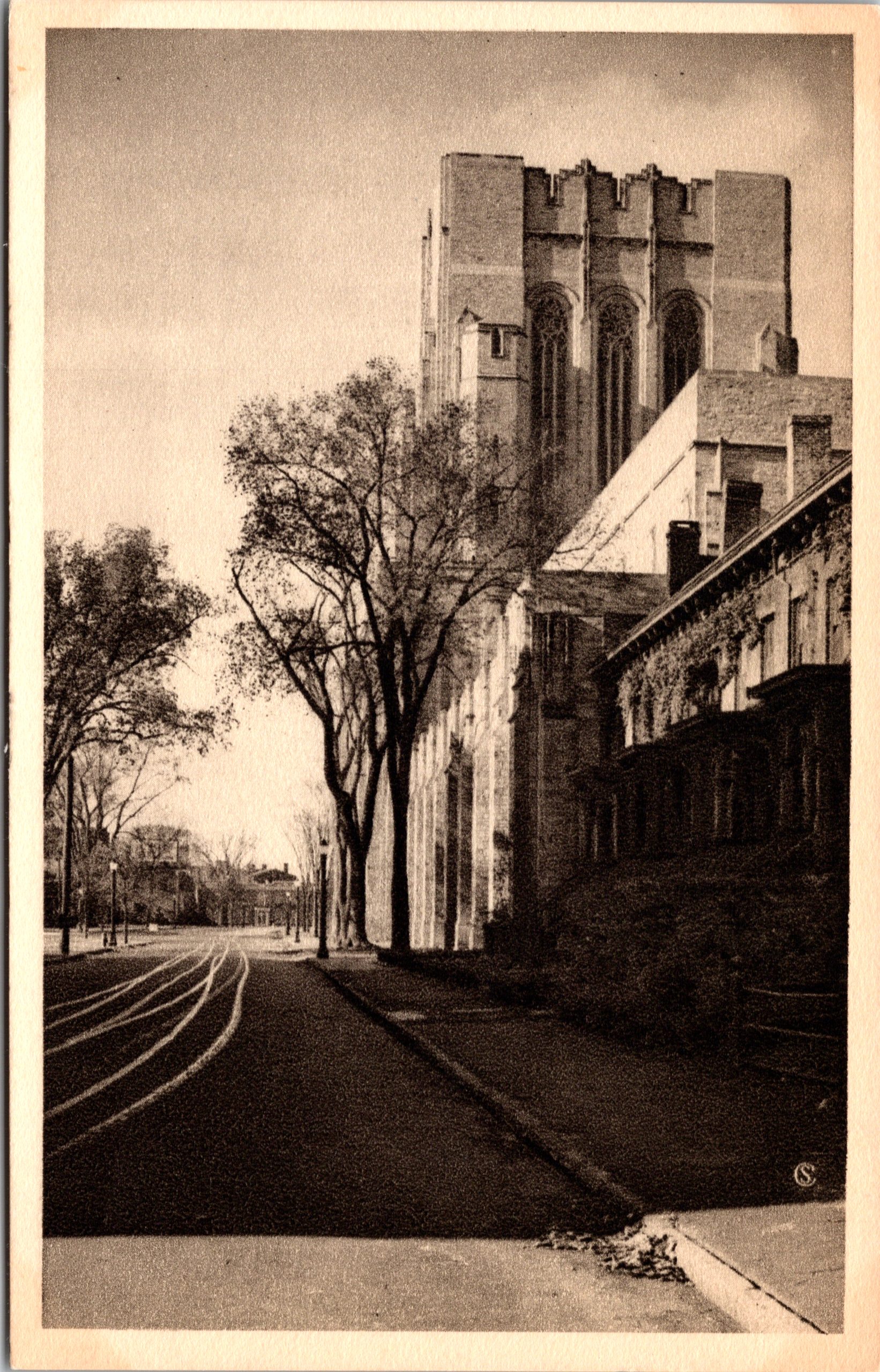
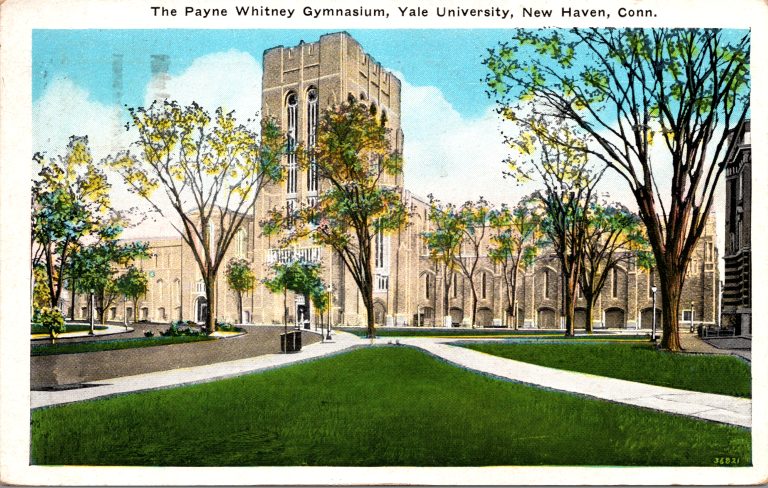
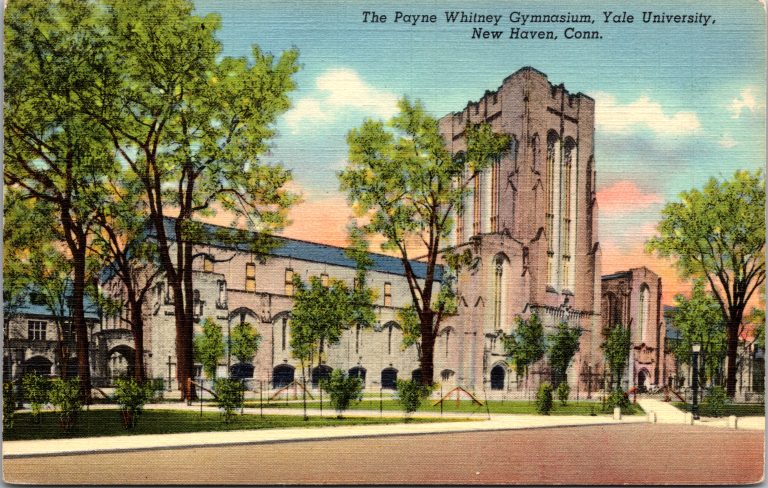
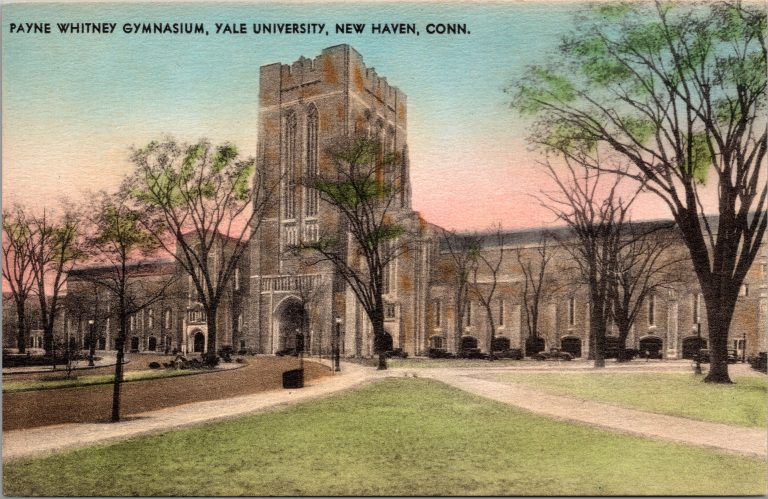
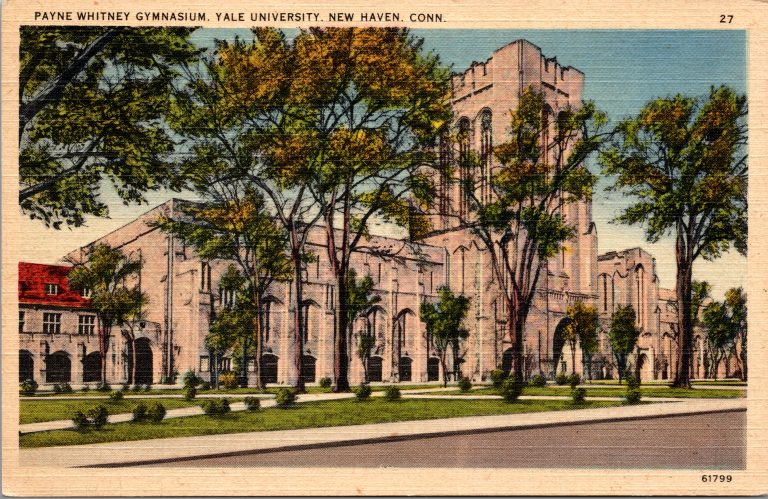
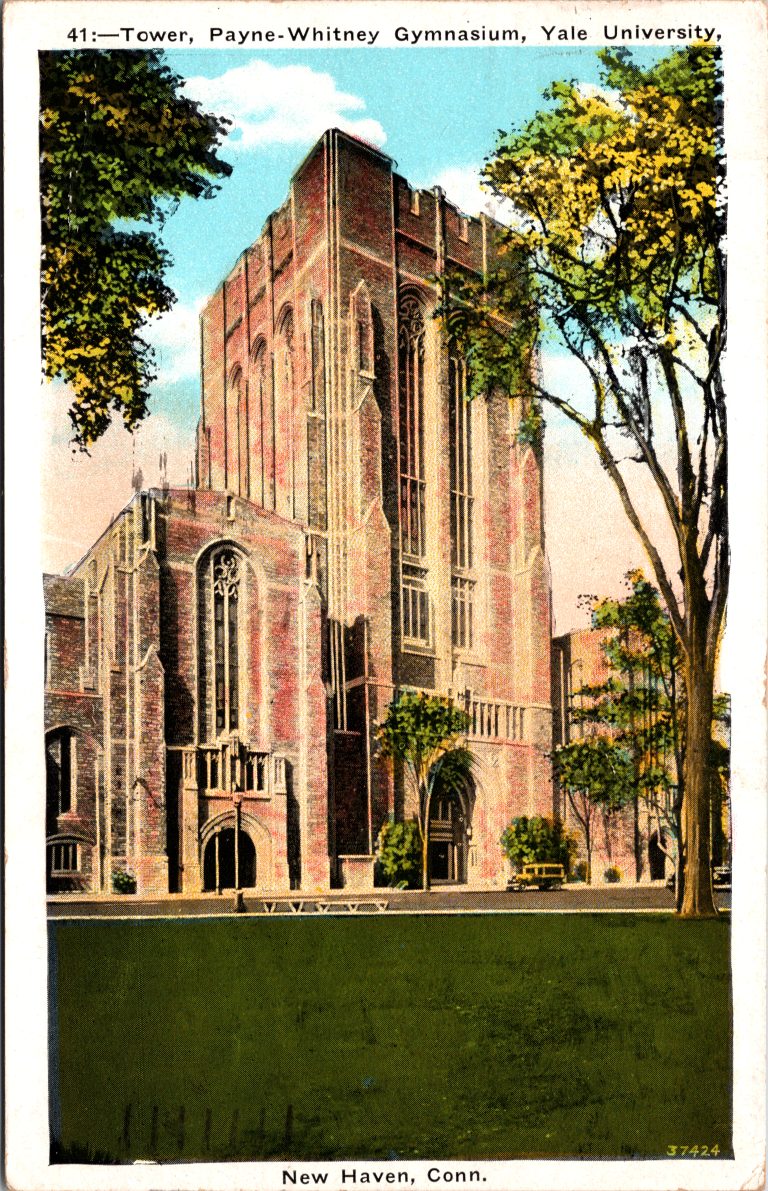
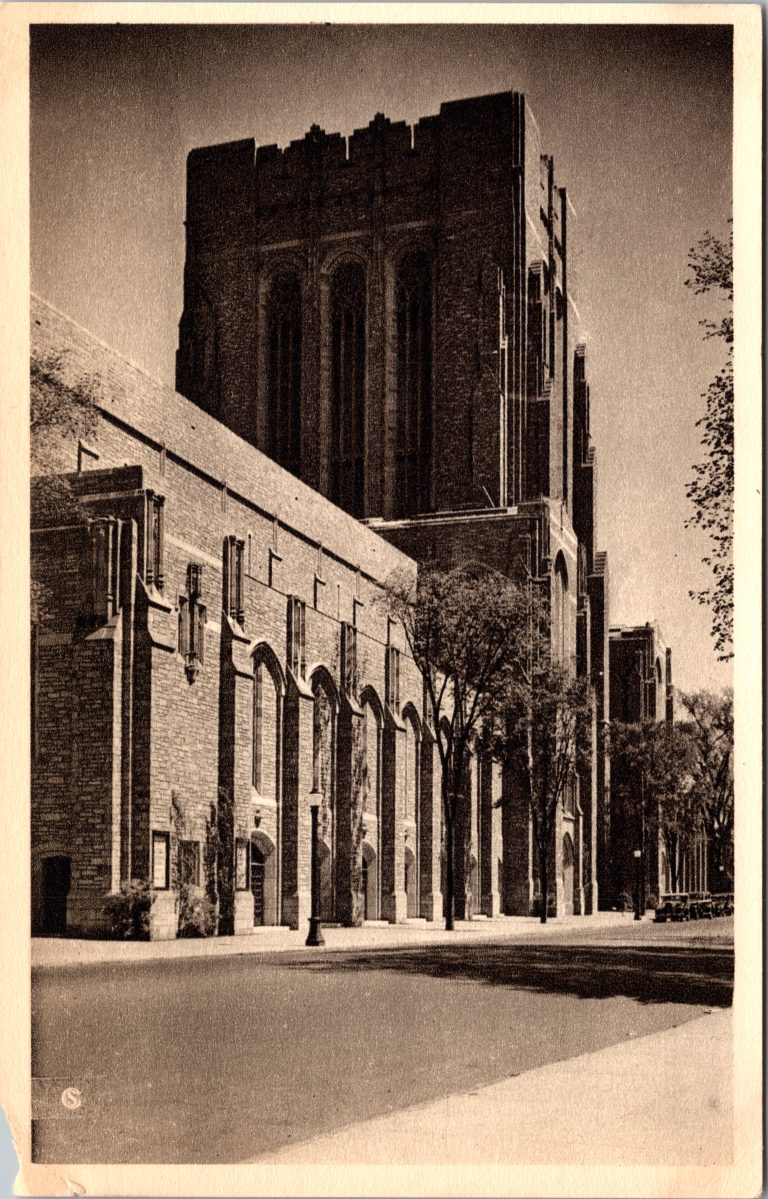
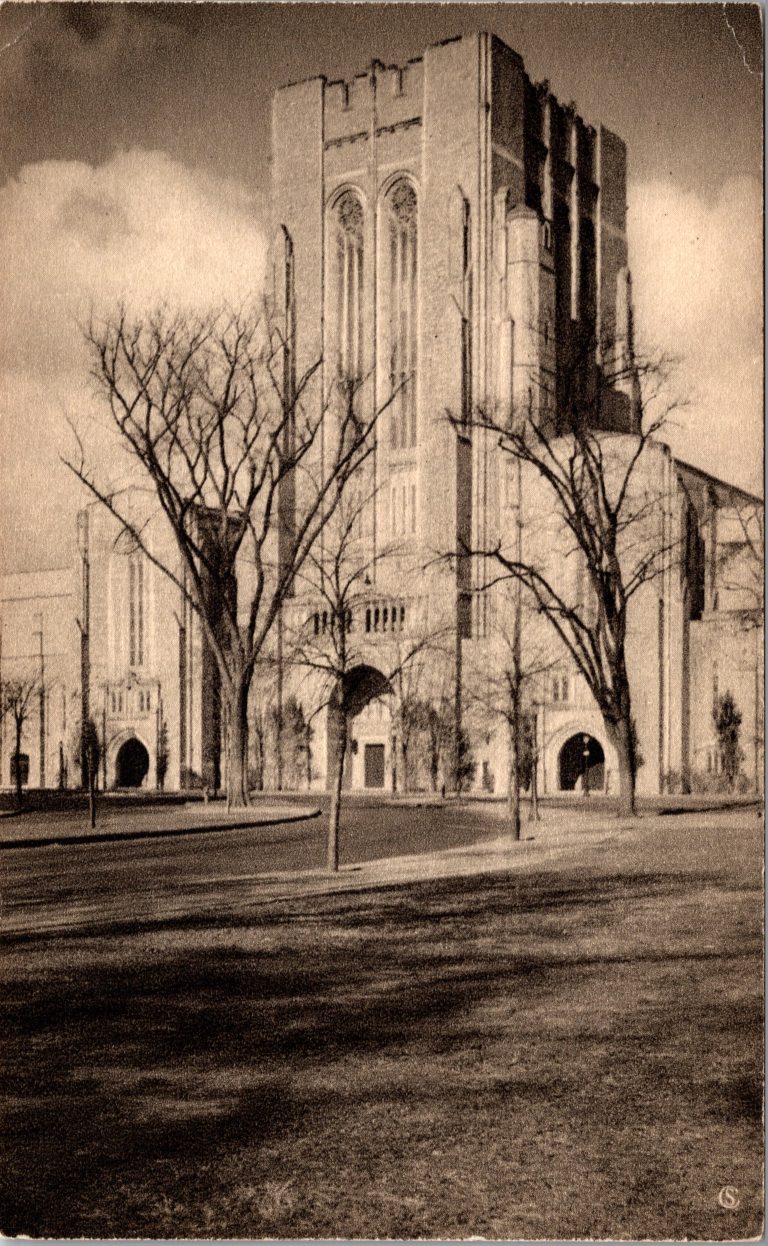
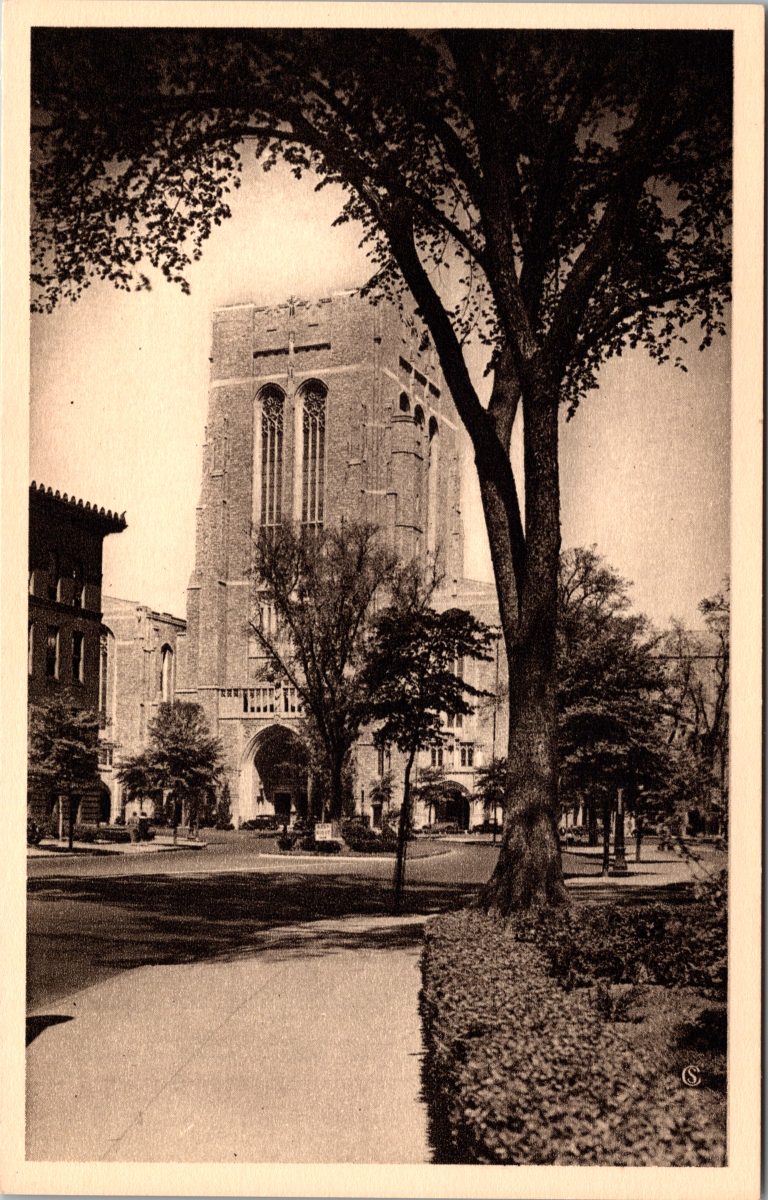
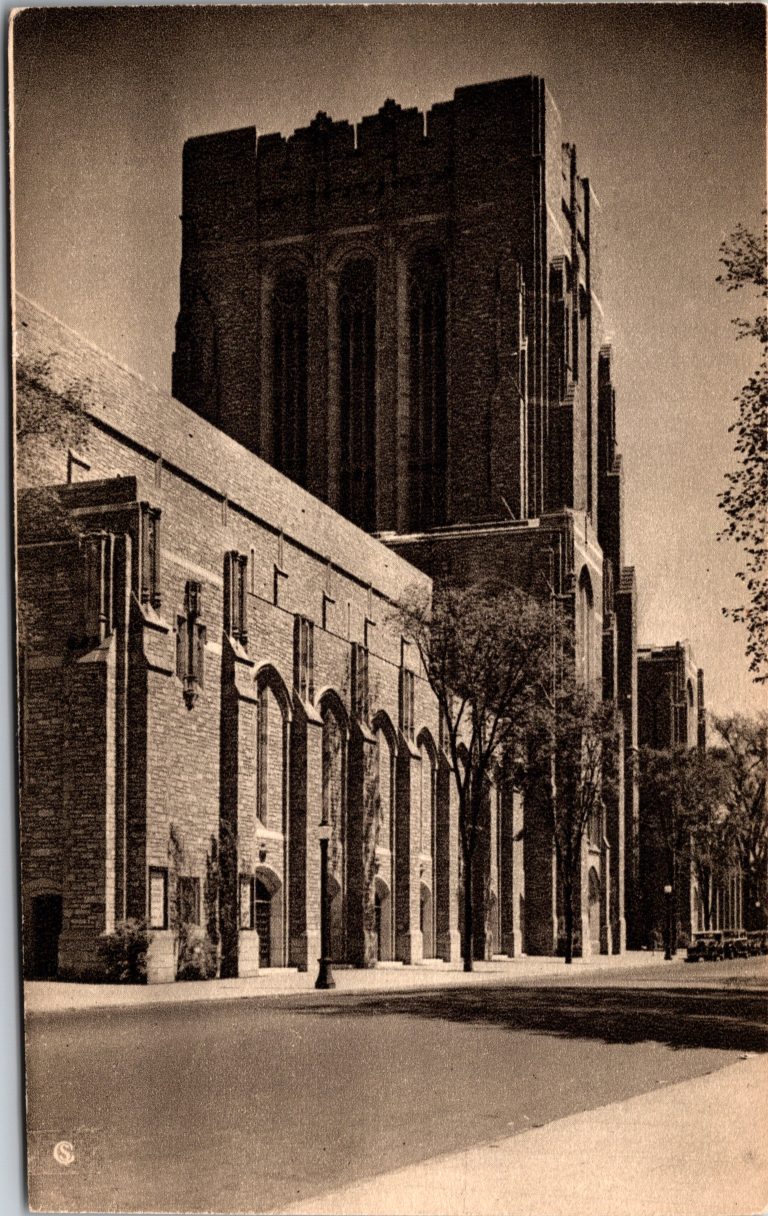
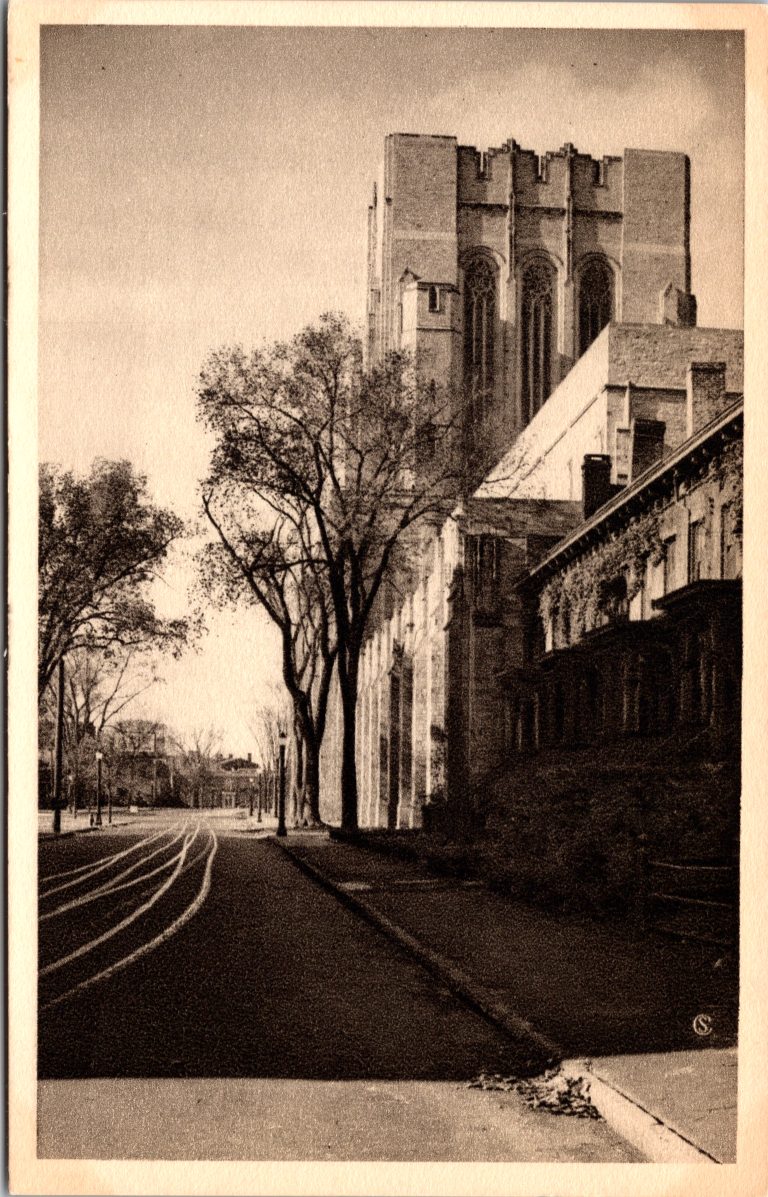
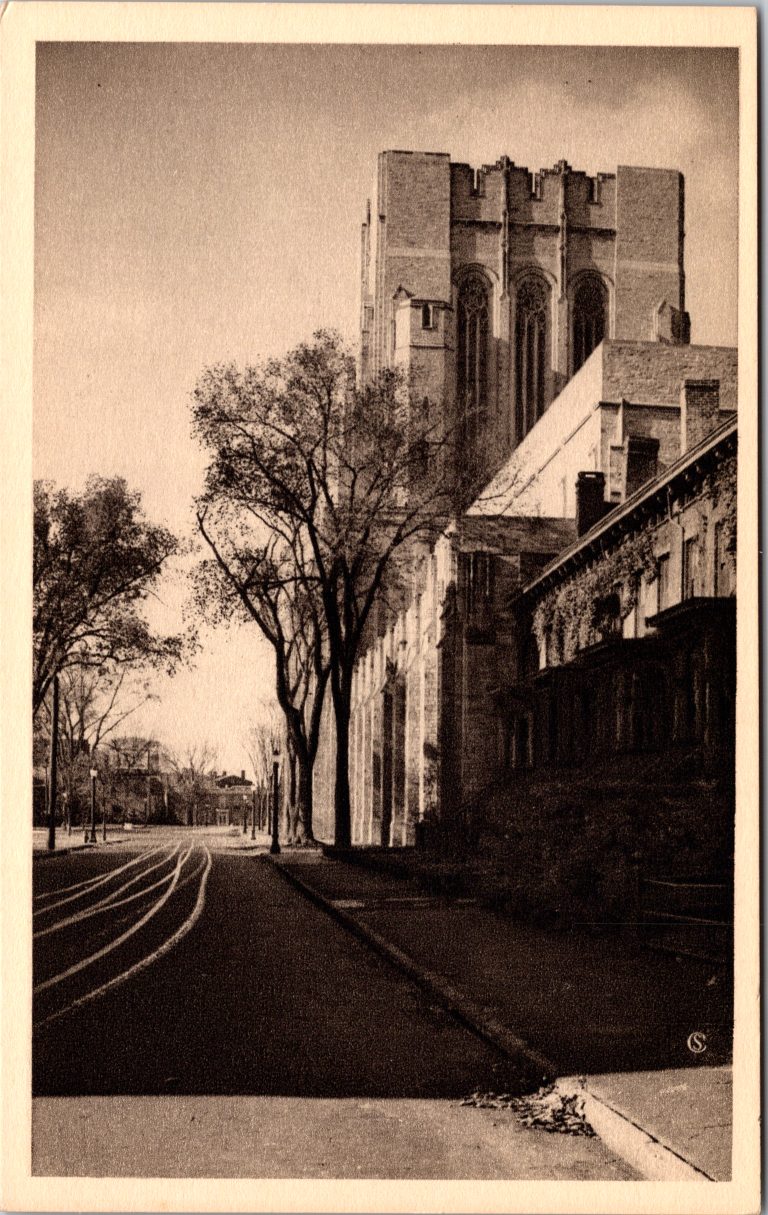
Payne Whitney Gymnasium, completed in 1932 and designed by architect John Russell Pope, was conceived as a “cathedral of sport” and remains one of the largest gymnasiums ever built—so vast it contains 30% more cubic volume than Sterling Memorial Library. Gifted in memory of Payne Whitney ’98 by his wife and children, the nine-story complex houses the John J. Lee Amphitheater and the famed Kiphuth Exhibition Pool. Over the years Payne Whitney has earned nicknames such as the “Cathedral of Sweat,” “Temple of the Body,” and “Yale’s great winter playground,” reflecting both its grandeur and its role in student life. Pope’s design was so celebrated that it won a silver medal in the architectural design competition at the 1932 Los Angeles Olympic Games. Varsity teams still train throughout Payne Whitney’s maze of courts, pools, tracks, and other spaces, and the gum also remains one of the most beloved recreational hubs for generations of Yale students.
Then-and-Now at Payne Whitney Gymnasium
In the below, the view on the left is what appears in one of the postcards from the collection, and the view on the right is a photo taken of the same camera angle in 2025. Use the slider to see how these views compare more than a century apart!
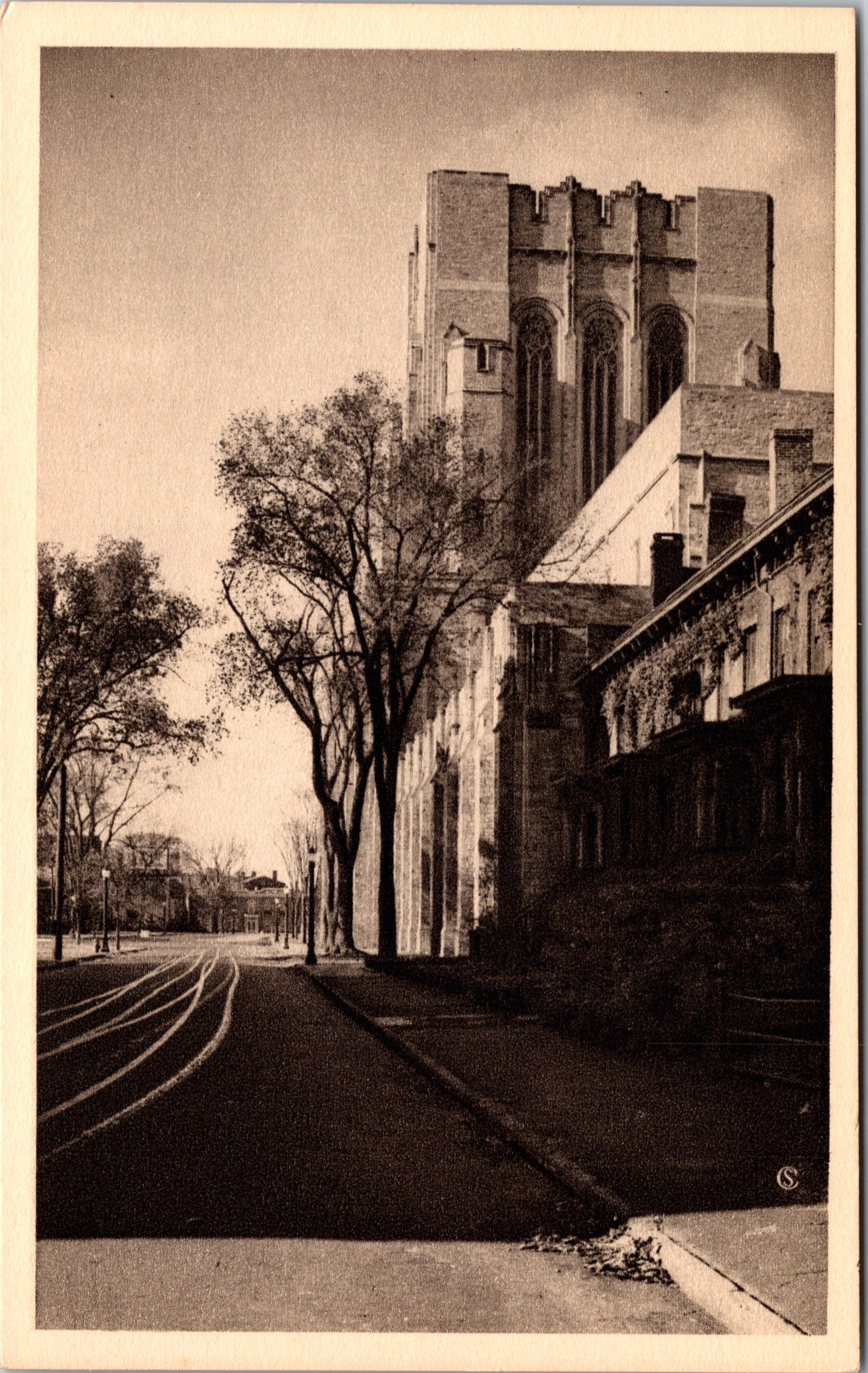
Postcard Views of Payne Whitney Gymnasium
Click or tap any of the postcard photos in the below gallery to zoom-in and explore further.
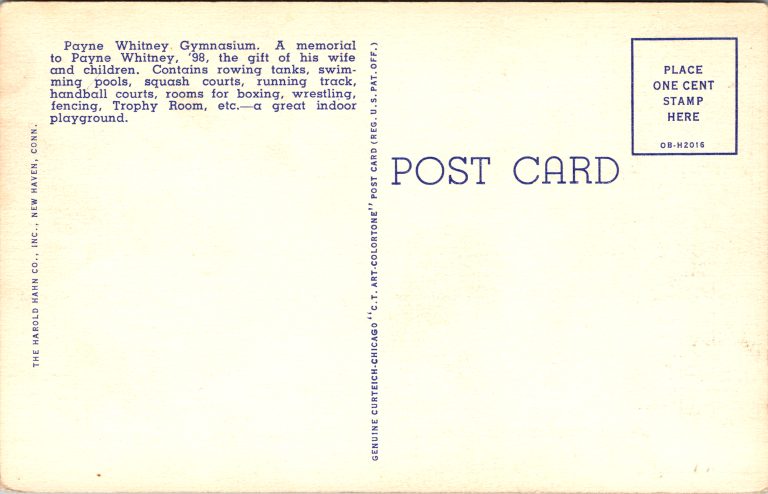
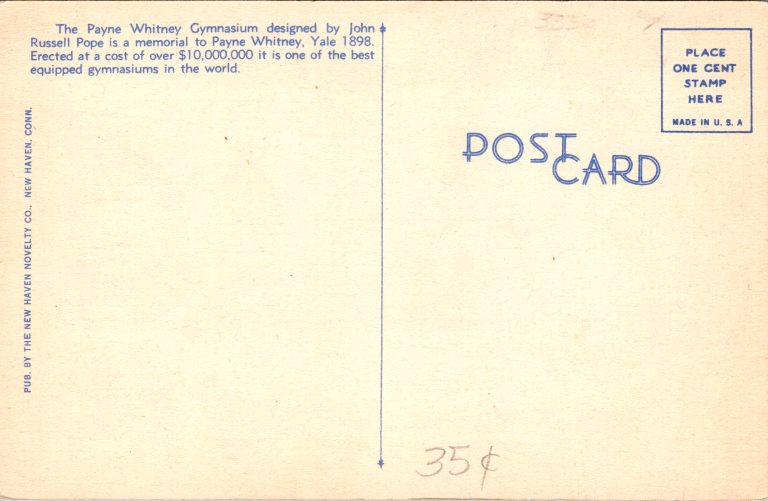
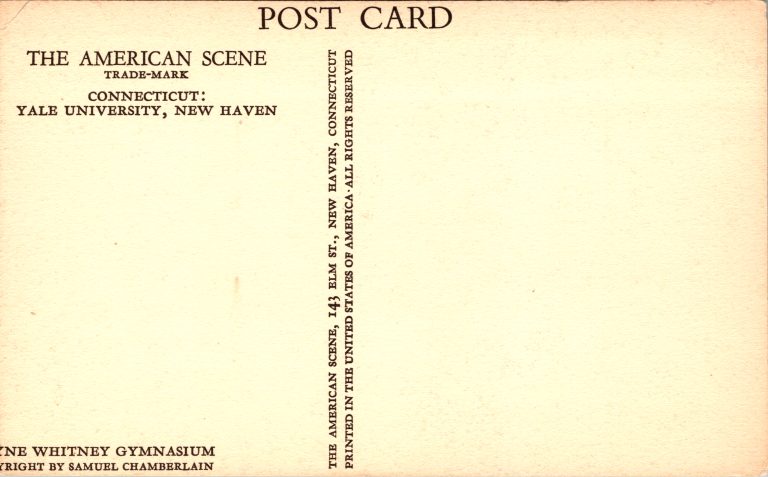
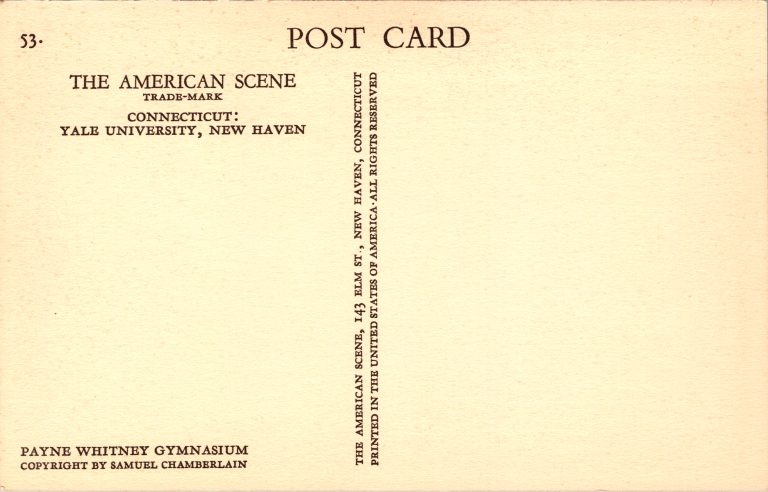
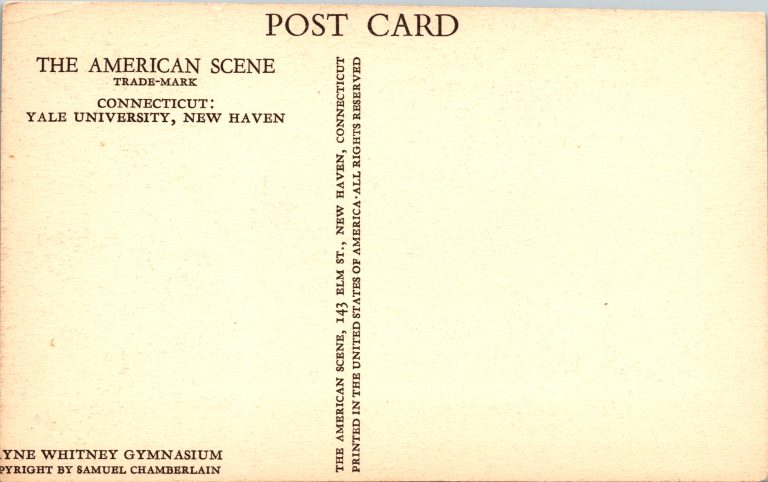
Front and Back of Payne Whitney Gymnasium Postcards
Mouse-over or tap any of the below postcards to see what the other side looks like!