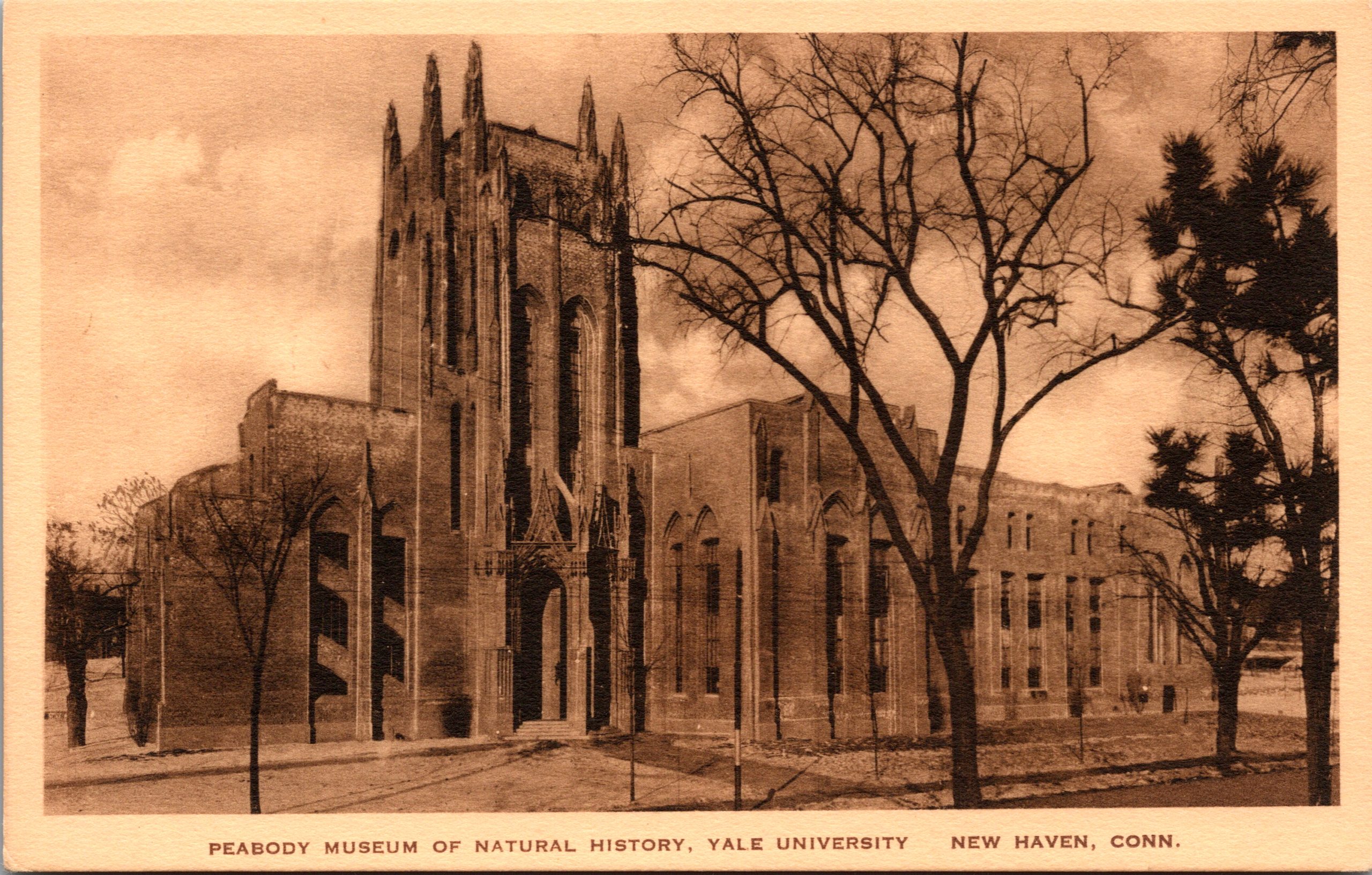
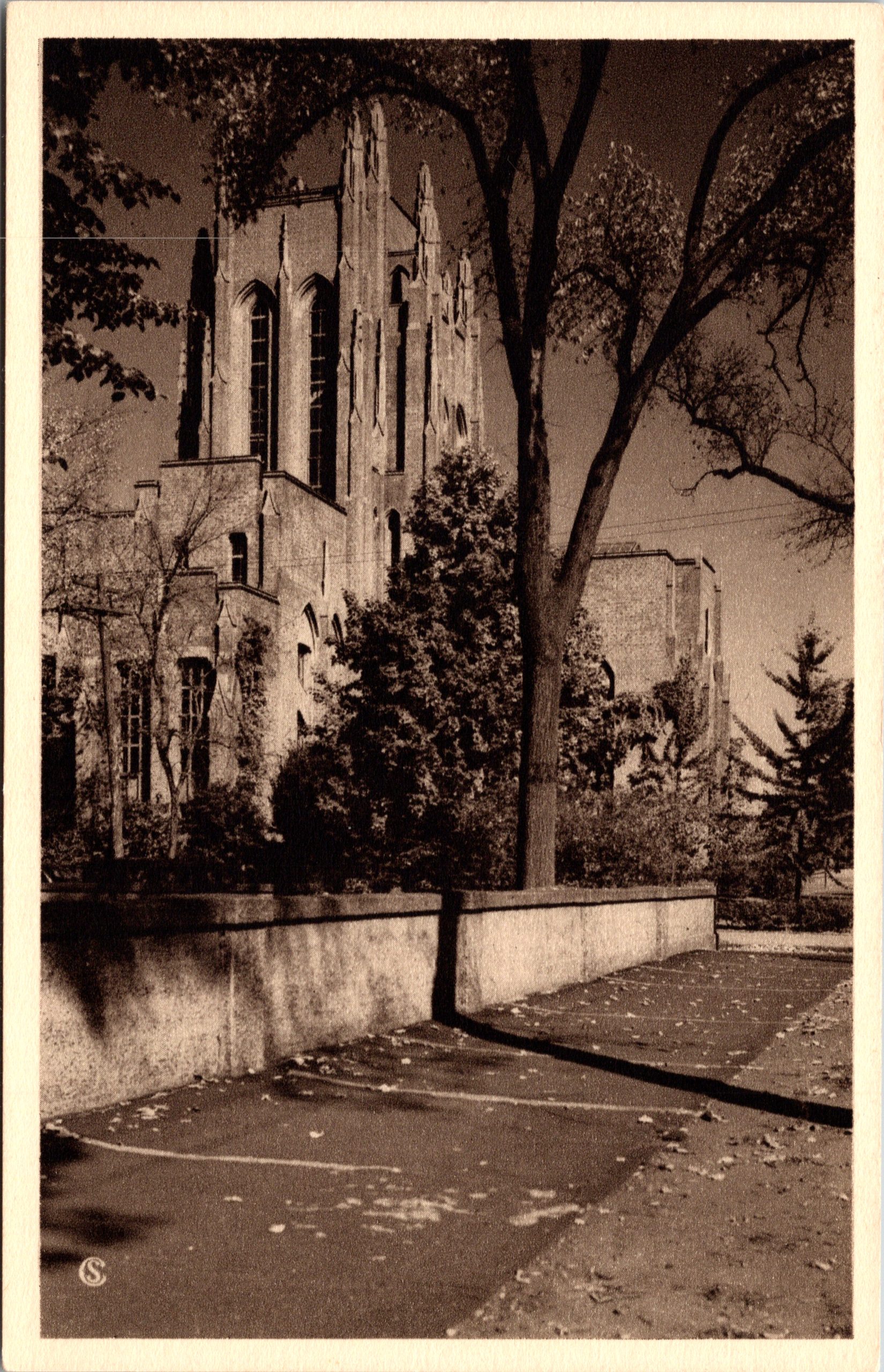
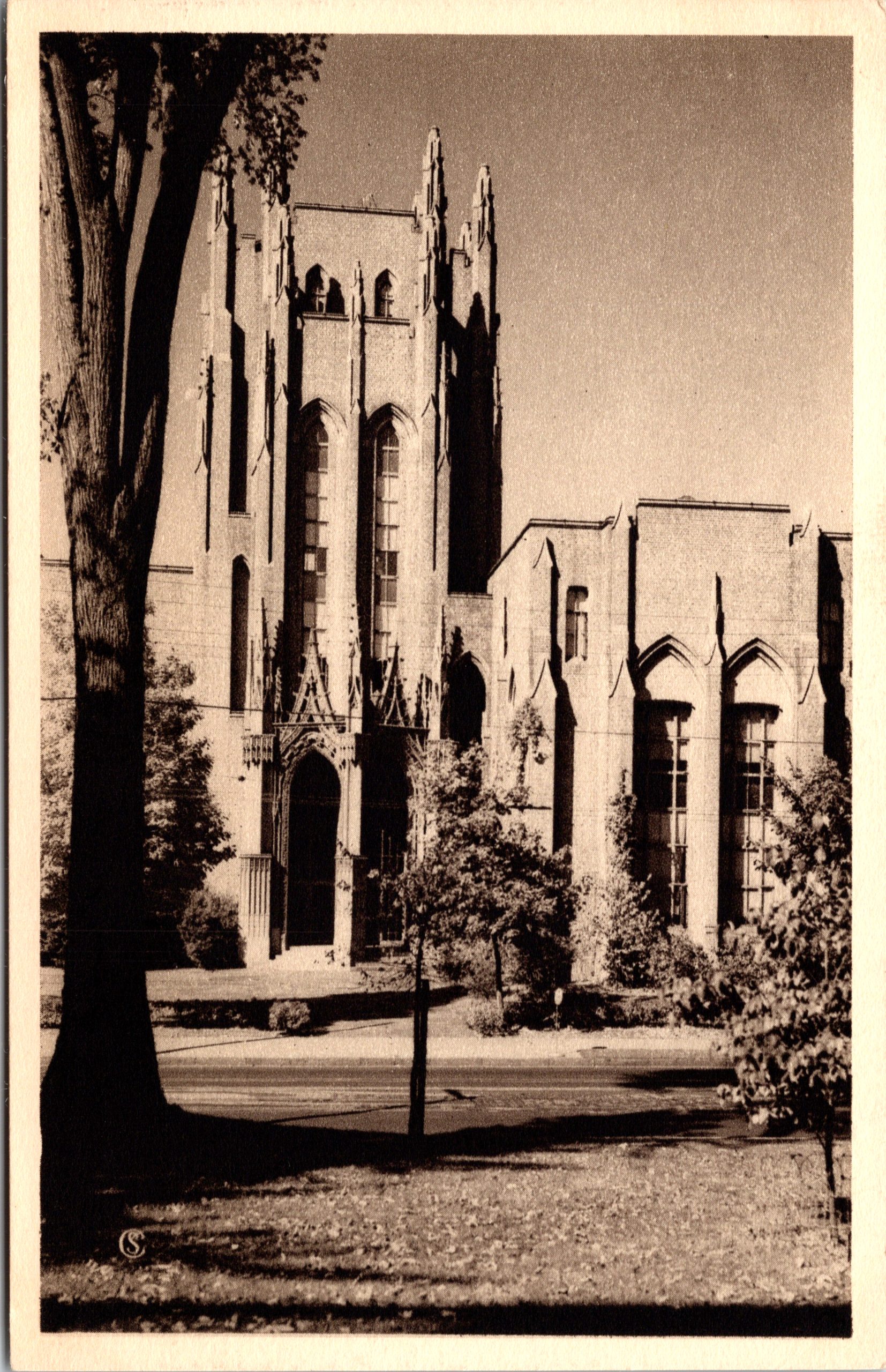
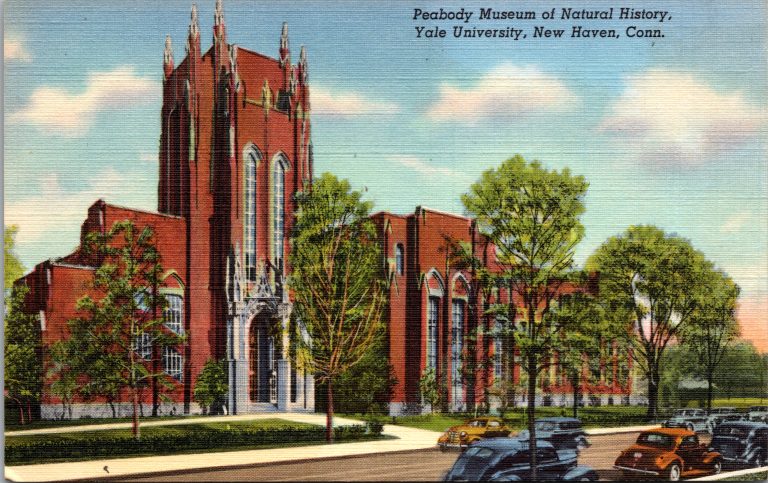
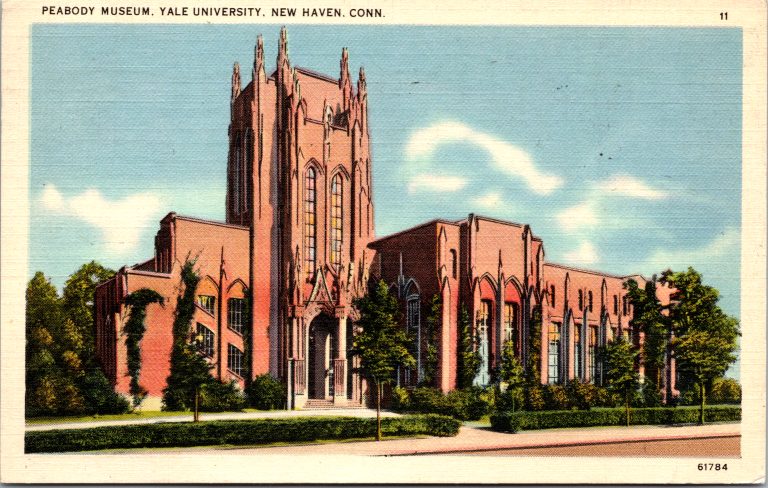
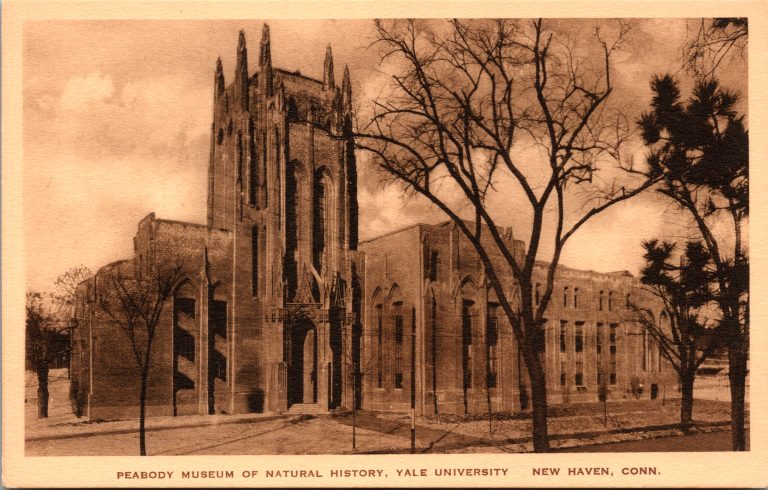
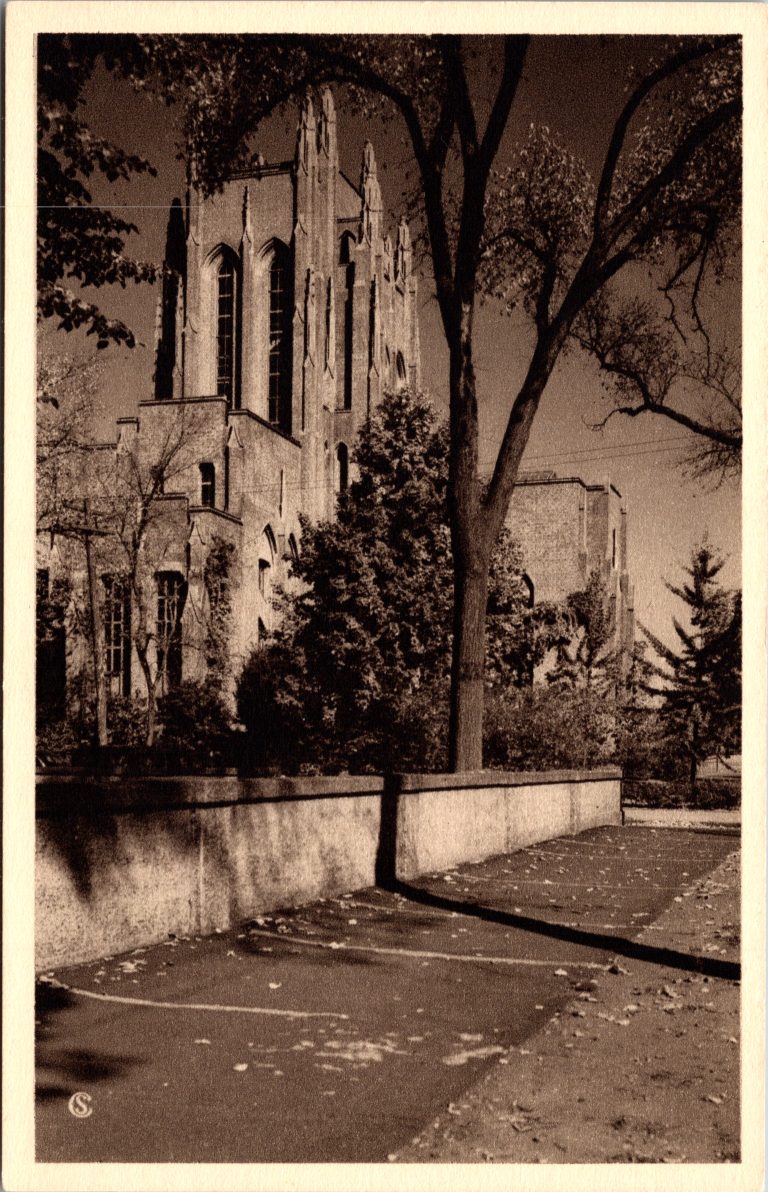
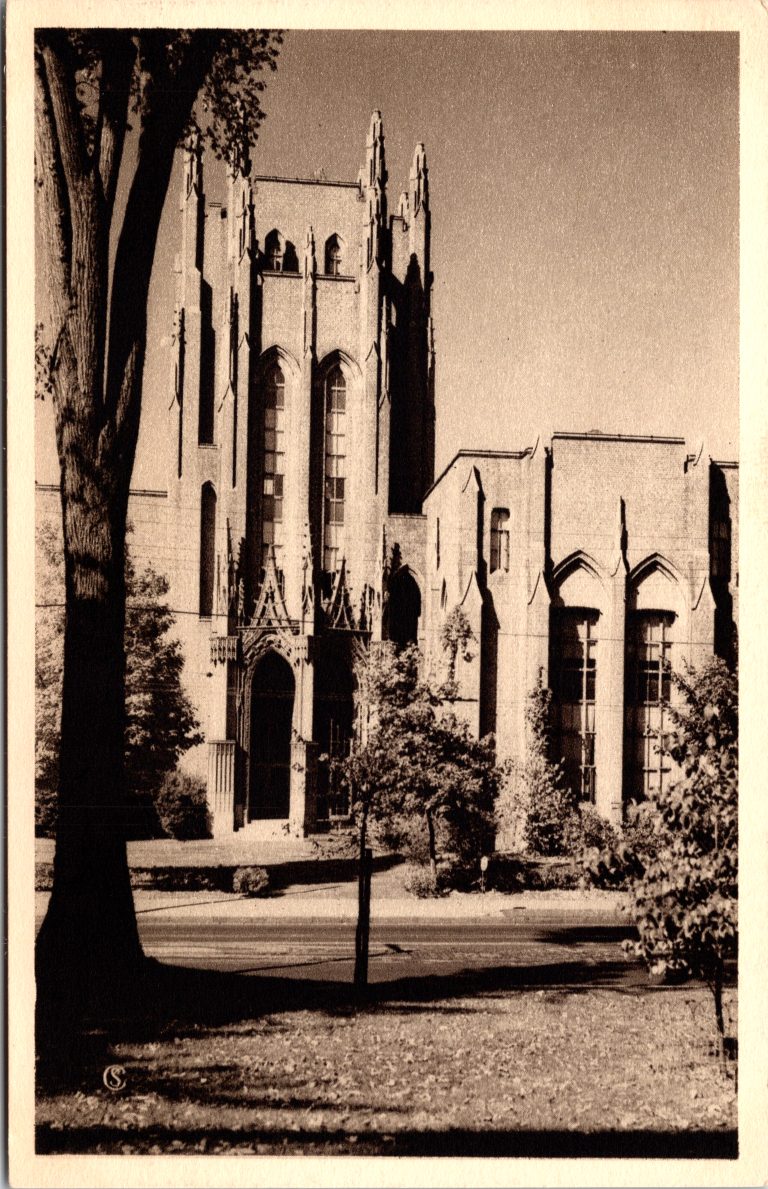
The Peabody Museum building at Yale, opened in 1925, was constructed to give a grand and permanent home to the university’s rapidly expanding collections in natural history, anthropology, and paleontology. Funded by George Peabody’s nephew Othniel Charles Marsh—Yale’s legendary archaeologist—the building was designed by Charles Klauder in a dignified, fortress-like Gothic style that echoed the rest of the growing campus. Replacing a predecessor museum located near the corner of High and Elm Streets (now the site of Saybrook College), the new museum became famous almost immediately for its dramatic exhibits, including Marsh’s unparalleled dinosaur fossils and, later, Rudolph F. Zallinger’s monumental mural The Age of Reptiles. Over the decades, the museum grew into one of the premier research centers in the world for paleontology and archaeology. Following a major renovation completed in the 2020s, the Peabody reopened with expanded galleries and a mission that blends cutting-edge science with the museum’s storied historic legacy.
Then-and-Now at the Peabody Museum
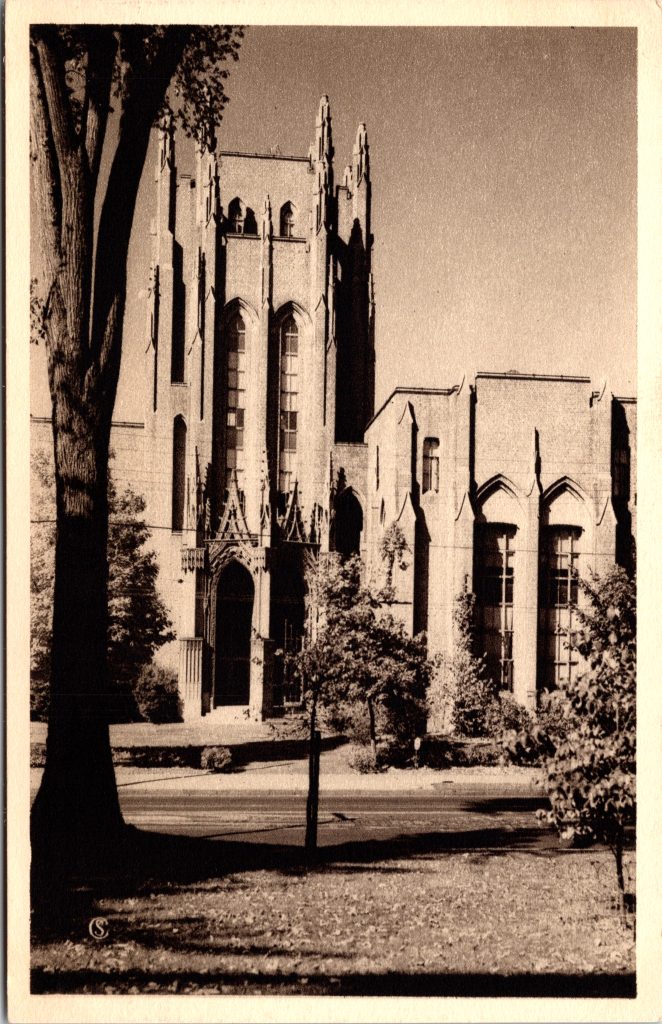
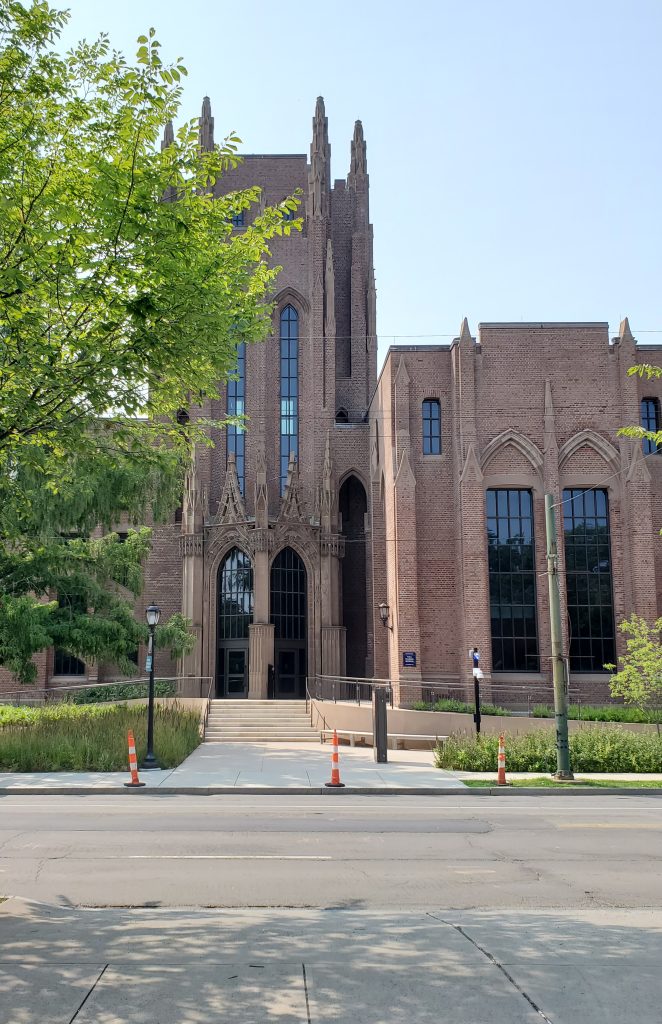
In the below, the view on the left is what appears in one of the postcards from the collection, and the view on the right is a photo taken of the same camera angle in 2025. Use the slider to see how these views compare more than a century apart!
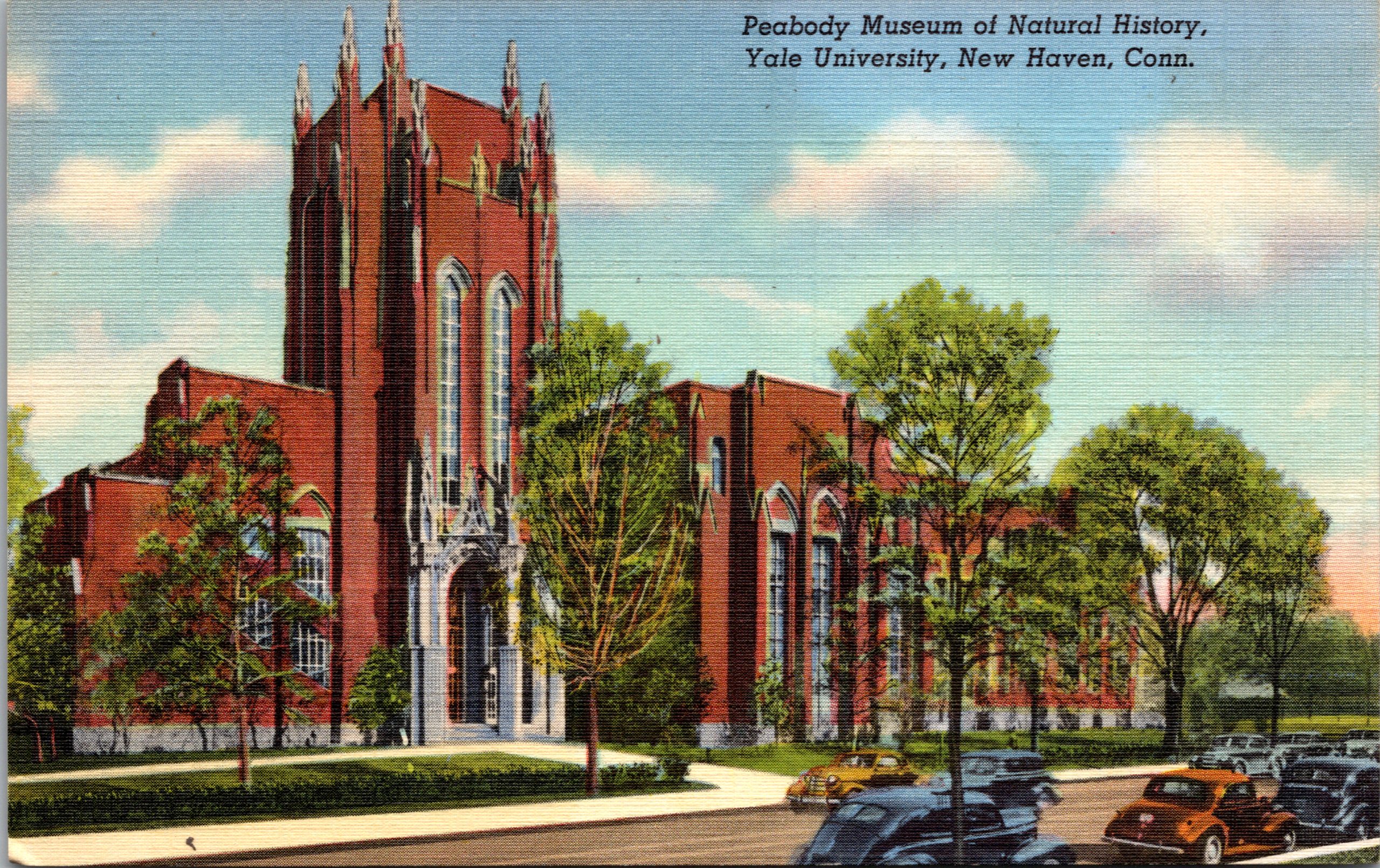
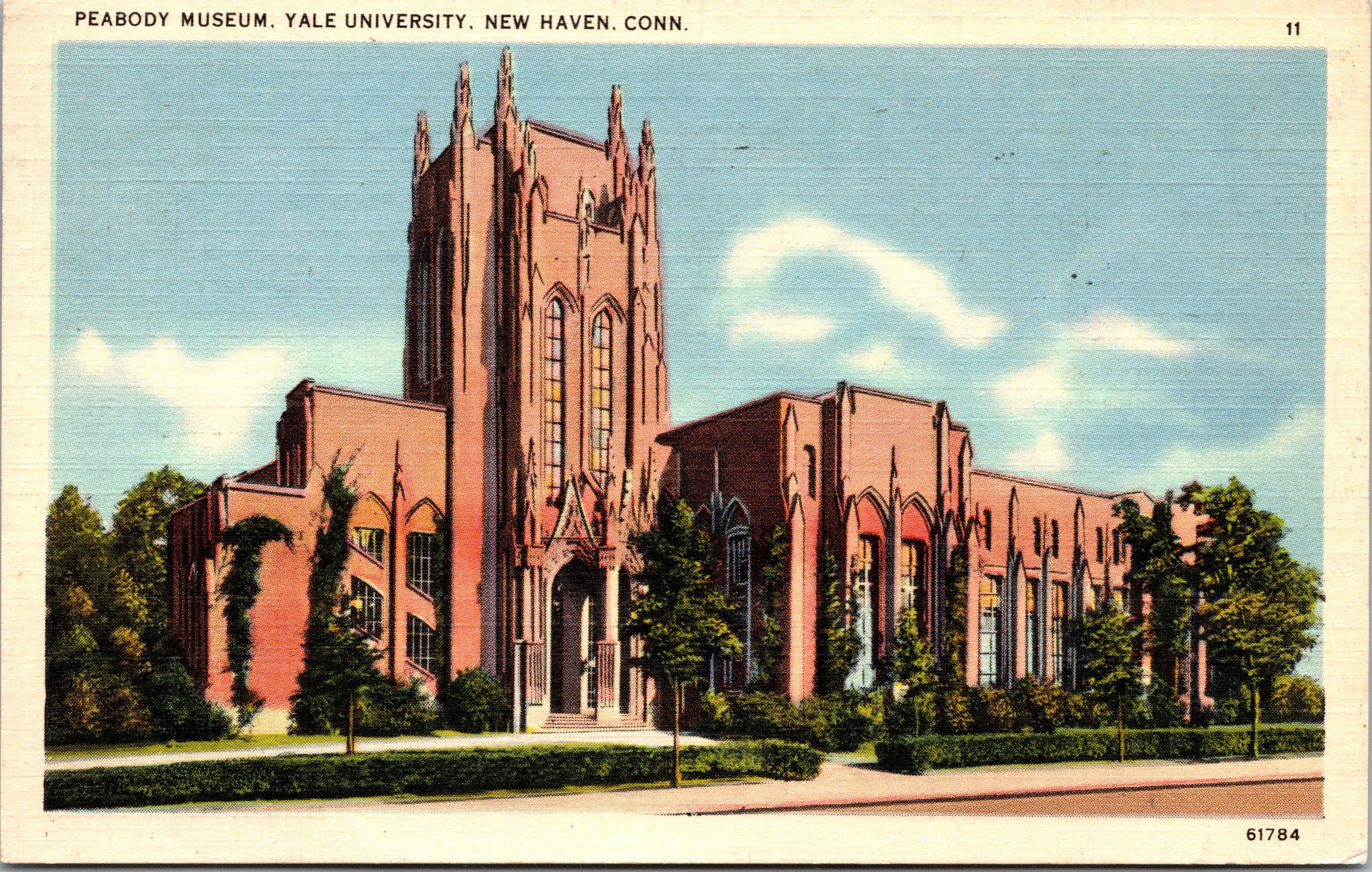
Postcard Views of the Peabody Museum
Click or tap any of the postcard photos in the below gallery to zoom-in and explore further.
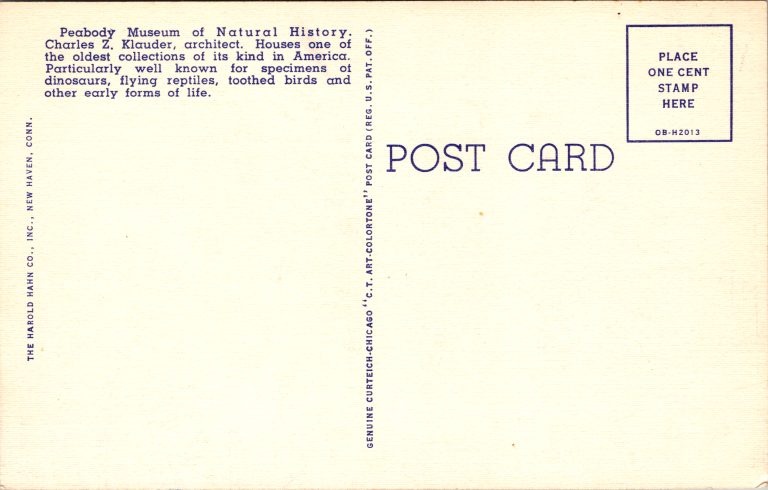
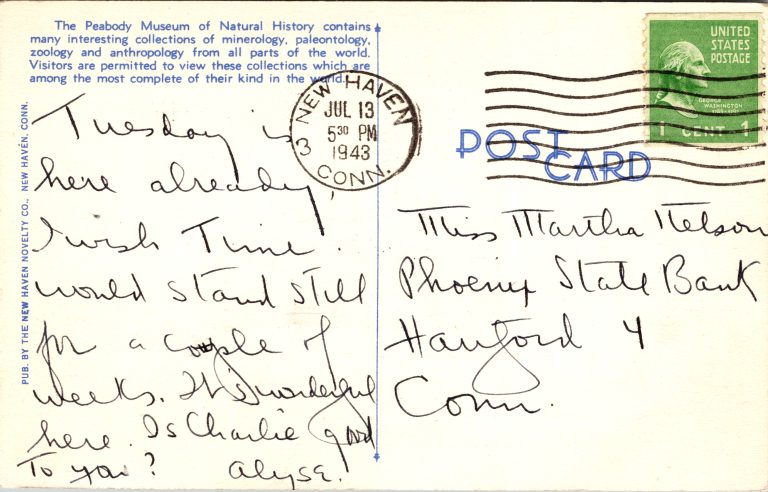
Front and Back of the Peabody Museum Postcards
Mouse-over or tap any of the below postcards to see what the other side looks like!